
Lucius Sergius Catilina, known in English as …
Years: 66BCE - 66BCE
Lucius Sergius Catilina, known in English as Catiline, is a member of the oldest patrician families in Rome, gens Sergia.
Although his family is of consular heritage, they are on the decline in both social and financial fortunes.
Virgil later gave the family an ancestor, Sergestus, who had come with Aeneas to Italy, presumably because they were notably ancient; but they had not been prominent for centuries.
The last Sergius to be consul had been Gnaeus Sergius Fidenas Coxo in 380 BCE.
Later, these factors will dramatically shape Catiline's ambitions and goals as he desires above all else to restore the political heritage of his family along with its financial power.
An able commander, Catiline had a distinguished military career, serving in the Social War with Pompey and Cicero under Gnaeus Pompeius Strabo in 89 BCE.
During the regime of Gaius Marius, Lucius Cornelius Cinna and Gnaeus Papirius Carbo, Catiline had played no major role, but remained politically secure.
He later supported Lucius Cornelius Sulla in the civil war of 84 BC–81 BCE.
It was during Sulla's proscriptions that Catiline allegedly tortured, maimed and then killed and beheaded his brother-in-law, Marcus Marius Gratidianus, at the tomb of Catulus, then carried the head through the streets of Rome and deposited it at Sulla's feet at the Temple of Apollo.
He was also accused of murdering his first wife and son so that he could marry the wealthy and beautiful Aurelia Orestilla, daughter of the Consul of 71 BCE, Gnaeus Aufidius Orestes.
He had served abroad in the early 70s BCE, h, possibly with Publius Servilius Vatia in Cilicia.
In 73 BCE, he had been brought to trial for adultery with the Vestal Virgin, Fabia, who is a half-sister of Cicero's wife, Terentia, but Quintus Lutatius Catulus, the principal leader of the Optimates, had testified in his favor, and eventually Catiline was acquitted.
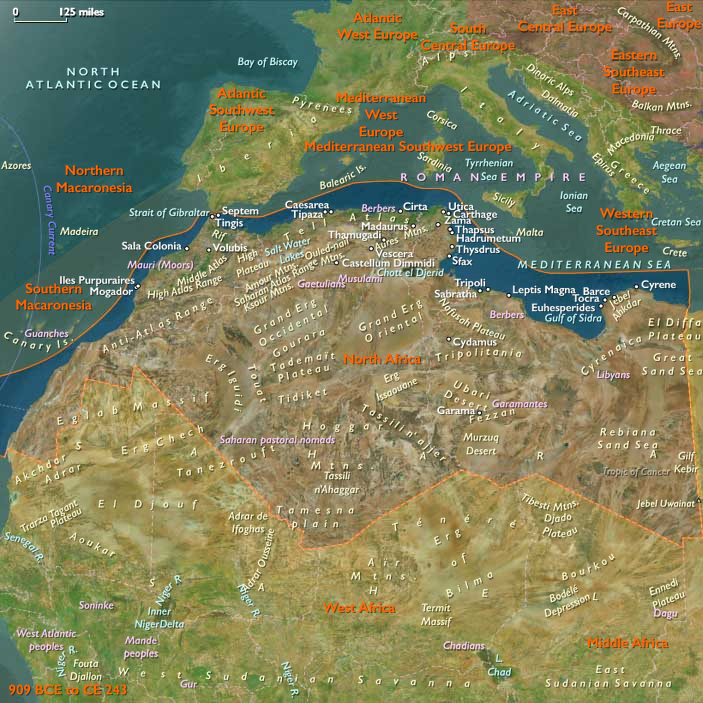
He was praetor in 68 BCE and for the past two years has served as the propraetorian governor for Africa.
Locations
People
Groups
Topics
Commodoties
Subjects
Regions
Subregions
Related Events
Showing 10 events out of 62630 total
Years: 66BCE - 66BCE
Locations
People
Groups
Topics
Commodoties
Subjects
Regions
Subregions