
Lucius Aemilius Paullus, an experienced soldier who …
Years: 168BCE - 168BCE
Lucius Aemilius Paullus, an experienced soldier who is one of the consuls for 168 BCE, is appointed by the senate to deal with the Macedonian war and restore discipline in the Balkan peninsula.
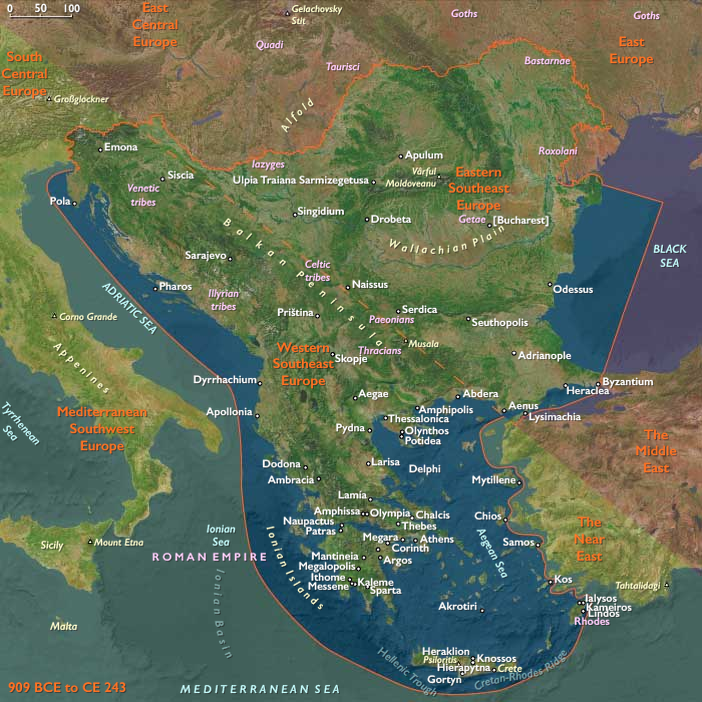
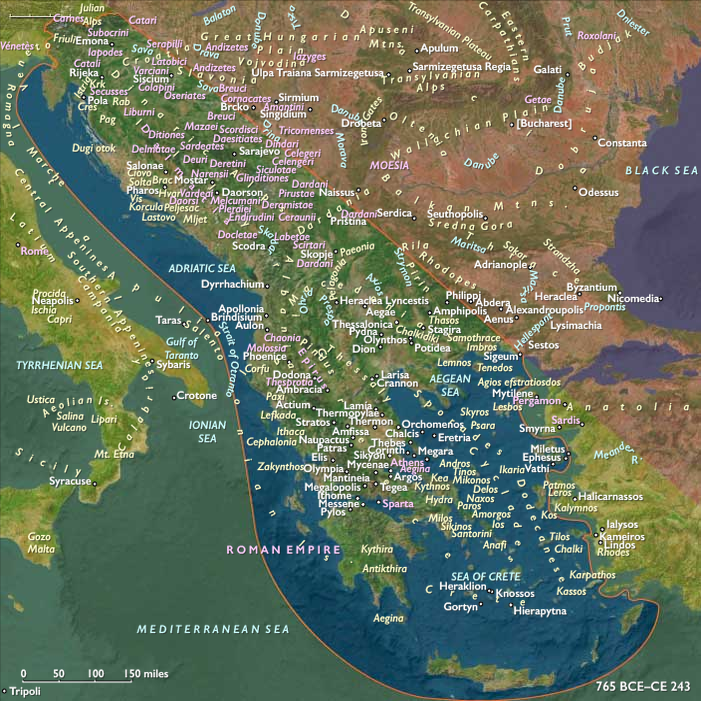
By means of adroit tactical maneuvering, Paullus entices Perseus from his impregnable position on the Elpeus (Mavrólongos) River to occupy a weaker position in the plain south of Pydna (now Kítros, Greece; the actual site was probably near Kateríni).
Sixteen-year-old Publius Cornelius Aemilianus, a son of the younger Lucius Aemilius Paullus and a nephew of the wife of Scipio Africanus, first serves with his natural father at the Battle of Pydna on June 22, 168, in which the Roman legionaries, whose short swords are more effective in close combat than are the long Macedonian pikes, penetrate the Macedonian phalanx, which is in a state of disorder after crossing broken ground.
The Roman allies defeat Perseus' left wing of Thracians and light troops.
Macedonian losses are great, and Perseus flees.
This defeat is largely due to the inflexibility of Macedonian phalanx tactics compared to the maniple-based tactics of the Roman legions.
This is not the final conflict between the two rivals, but it breaks the back of Macedonian power.
Thus ends the Third Macedonian War.
The failure of Perseus reveals his inability to reconcile the needs of Macedonia with the reality of Roman predominance.
Locations
People
Groups
- Molossians (Epirote tribe)
- Roman Republic
- Illyria, Kingdoms of
- Macedon, Antigonid Kingdom of
- Pergamon (Pergamum), Kingdom of
- Achaean League, Second
- Epirote League
- Macedonian Republics
Topics
Commodoties
Subjects
Regions
Subregions
Related Events
Showing 10 events out of 63247 total
Years: 168BCE - 168BCE
Locations
People
Groups
- Molossians (Epirote tribe)
- Roman Republic
- Illyria, Kingdoms of
- Macedon, Antigonid Kingdom of
- Pergamon (Pergamum), Kingdom of
- Achaean League, Second
- Epirote League
- Macedonian Republics
Topics
Commodoties
Subjects
Regions
Subregions