
Lübeck had become the "Queen of the …
Years: 1396 - 1396
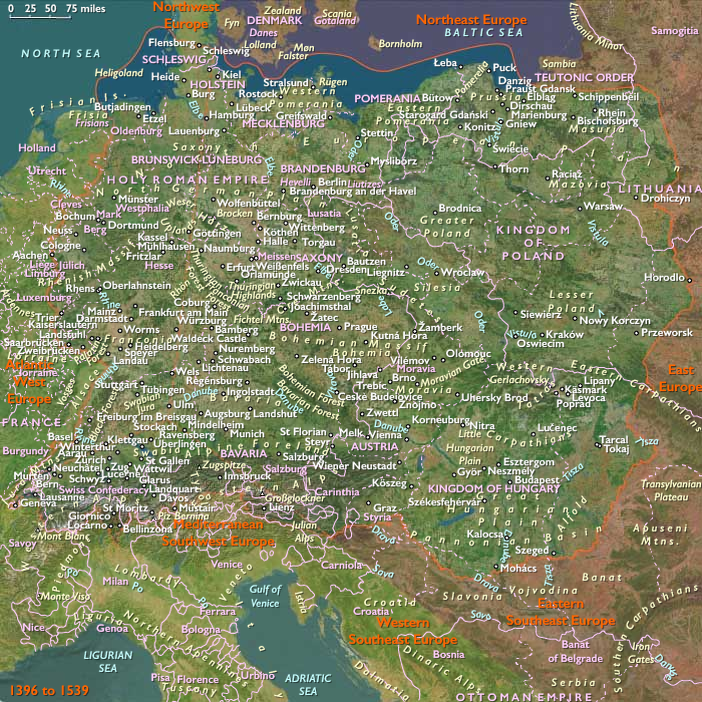
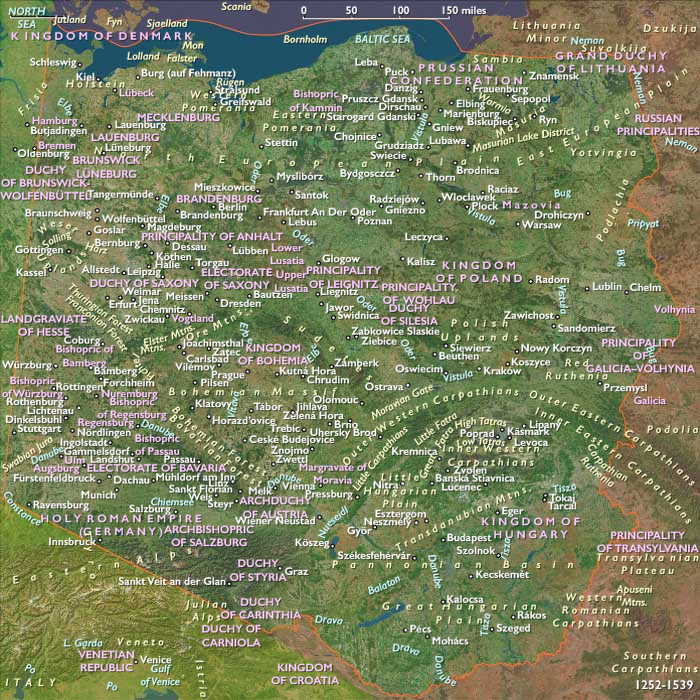
Lübeck had become the "Queen of the Hanseatic League" in the fourteenth century, being by far the largest and most powerful member of this medieval trade organization.
The League primarily trades timber, furs, resin (or tar), flax, honey, wheat, and rye from the east to Flanders and England with cloth (and, increasingly, manufactured goods) going in the other direction.
Metal ore (principally copper and iron) and herring come southwards from Sweden.
The League has a fluid structure, but its members share some characteristics.
First, most of the Hansa cities had either started as independent cities or gained independence through the collective bargaining power of the League.
Such independence remains limited, however.
The Hanseatic free imperial cities owe allegiance directly to the Holy Roman Emperor, without any intermediate tie to the local nobility.
Another similarity involves the cities' strategic locations along trade routes.
In fact, at the height of its power in the late 1300s, the merchants of the Hanseatic League have succeeded in using their economic clout (and sometimes their military might—trade routes need protecting, and the League's ships sailed well-armed)—to influence imperial policy.
The Hansa also wages a vigorous campaign against pirates.
From 1392, maritime trade of the League has faced danger from raids of the Victual Brothers and their descendants, privateers hired by Albert of Mecklenburg against Queen Margaret I of Denmark.
Locations
People
Groups
- Flanders, County of
- Sweden, Kingdom of
- England, (Plantagenet, Angevin) Kingdom of
- Mecklenburg, House of
- Lübeck, Free City of
- Holy Roman Empire
- Hanseatic League
- Denmark, Kingdom of (Personal Union of Denmark and Norway)
- Victual Brothers, or Likedeelers
Topics
Commodoties
Subjects
- Commerce
- Products
- Language
- Watercraft
- Labor and Service
- Conflict
- Faith
- Government
- Custom and Law
- Technology
- Movements
- Piracy
Regions
Subregions
Years: 1396 - 1396
Locations
People
Groups
- Flanders, County of
- Sweden, Kingdom of
- England, (Plantagenet, Angevin) Kingdom of
- Mecklenburg, House of
- Lübeck, Free City of
- Holy Roman Empire
- Hanseatic League
- Denmark, Kingdom of (Personal Union of Denmark and Norway)
- Victual Brothers, or Likedeelers
Topics
Commodoties
Subjects
- Commerce
- Products
- Language
- Watercraft
- Labor and Service
- Conflict
- Faith
- Government
- Custom and Law
- Technology
- Movements
- Piracy
Regions
Subregions