
...Varvarin in 1810. A statue to the …
Years: 1810 - 1810
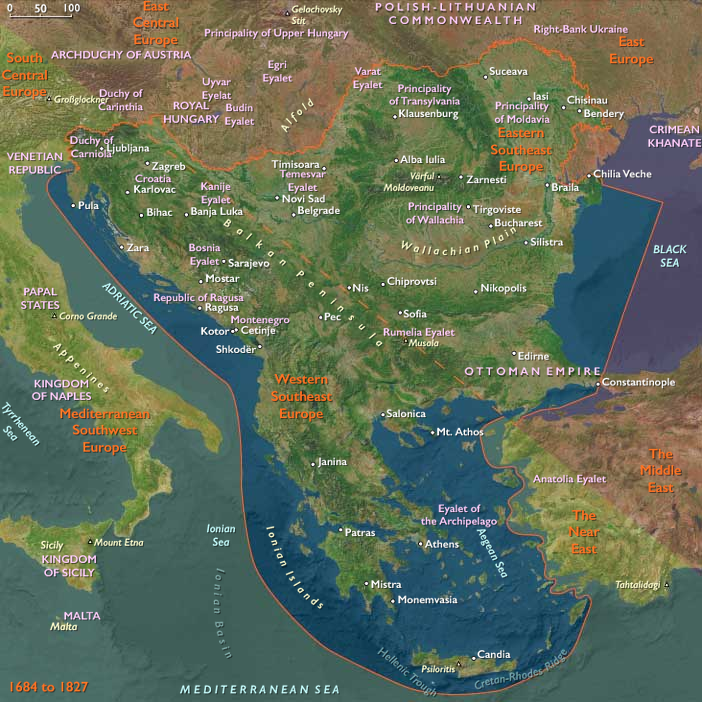
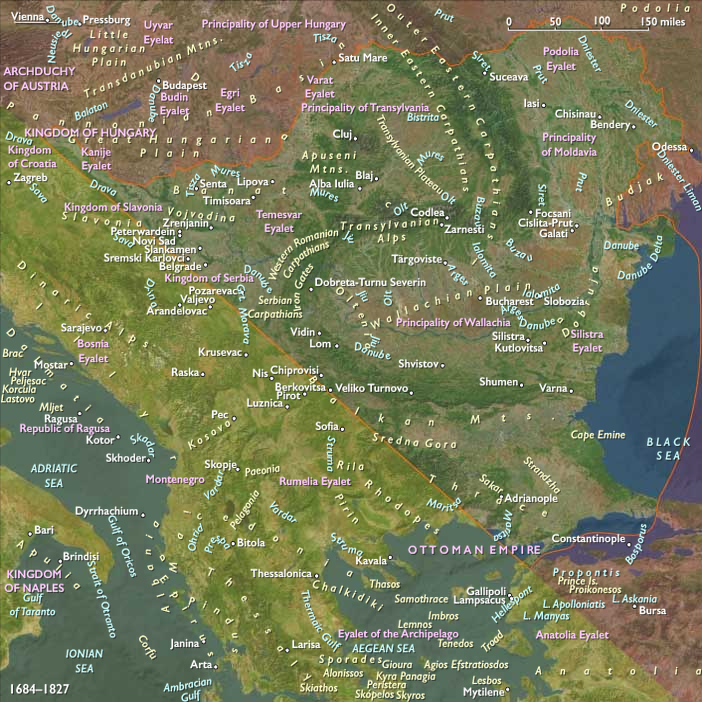
...Varvarin in 1810.
A statue to the Russian commander Joseph Cornelius O'Rourke and his men will be erected in 1910 on the centenary of their decisive victory in the battle, which frees the city from Turkish domination.
When the Turks threatened the southern edge of the empire, O'Rourke equipped a regiment at his own expense and marched to Serbia to fight against the Ottoman Empire.
The O'Rourke family were originally members of the Jacobite Irish nobility; they had fled Ireland after the defeat by the Protestant Williamites at the Battle of the Boyne in 1691.
The majority of the family had moved as refugees to France during this time.
The O'Rourkes are a prominent Gaelic aristocratic family who had lost lands in the Elizabethan and Cromwellian conquests, and several family members had emigrated to Russia.
The family members are descendants of ninth-century kings of Connacht and ruled the ancient kingdom of Breifne in the northwest of the country until they were unseated during the Elizabethan conquest in the sixteenth century.
During the reign of Elizabeth in Russia in the eighteenth century, one branch of the O'Rourkes moved to Livonia, a province of the Russian Empire at the time.
O'Rourke was born in Dorpat in 1772.
By this time, the family had intermarried and had been completely absorbed into Russian high society.
According to customs, O'Rourke was immediately enrolled at birth in the Russian Imperial Guard.
His father was Count Cornelius O'Rourke, who had retired in 1788 with the rank of Major-General.
After education in a military school and military training, he first saw action as a young man in Zürich against the French Revolutionary Army.
He served under General Kutuzov in 1805 at the Battle of Austerlitz and was awarded the Order of Saint George.
Locations
People
Groups
Topics
Subjects
Regions
Subregions
Years: 1810 - 1810
Locations
People
Groups
Topics
Subjects
Regions
Subregions