
Tropical West Southern Africa (1828–1971 CE) …
Years: 1828 - 1971
Tropical West Southern Africa (1828–1971 CE)
Cattle Frontiers, Colonial Conquest, and the Transformation of Wetland Societies
Geography & Environmental Context
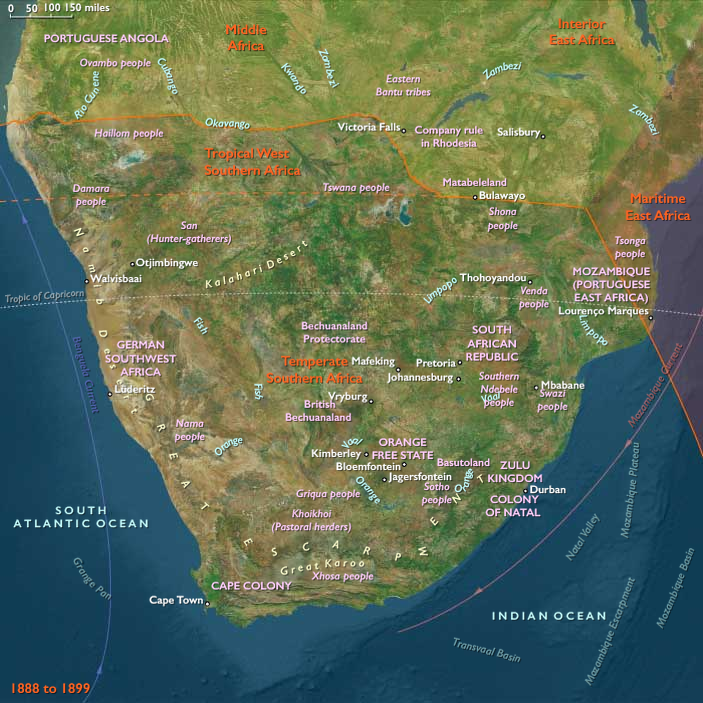
Tropical West Southern Africa includes northern Namibia, northern Botswana, the Etosha Salt Pan, the Skeleton Coast, the Okavango Delta, the Caprivi Strip (Bwabwata National Park), and the Chobe River basin. Anchors are the Etosha Pan, the Okavango Delta floodplains, the Chobe–Zambezi corridors, and the Atlantic Skeleton Coast. Ecological contrasts were profound: desert and savanna landscapes in Namibia, rich inland wetlands in the Okavango–Chobe, and salt and fog along the Skeleton Coast.
Climate & Environmental Shifts
The 19th century saw alternating droughts and wet cycles. Severe droughts in the mid-19th century devastated cattle herds, while the Okavango Delta and Chobe River sustained refuge zones of fishing, gardening, and foraging. The 20th century brought erratic Sahelian-like droughts in northern Namibia and Botswana, influencing colonial agricultural schemes. The Skeleton Coast remained inhospitable, its fogs legendary among sailors.
Subsistence & Settlement
-
Cattle and herding: Herero and related groups dominated inland Namibia, building cattle wealth and spiritual authority. Ovambo and Kavango societies cultivated millet, sorghum, and beans while keeping cattle and small stock.
-
Okavango and Chobe: Flood-retreat gardening, fishing, and seasonal hunting supported diversified riverine communities.
-
San foragers: Continued hunting and gathering across desert margins, often laboring for or trading with cattle herders.
-
Salt and trade: Etosha Pan remained a key salt source; salt caravans circulated into Herero and Ovambo networks.
-
Colonial shift: By the late 19th century, German South West Africa and British Bechuanaland Protectorate pressed settlements into reserves, missions, and administrative stations.
Technology & Material Culture
Traditional cattle culture—corrals, milking, hides—remained vital. Reed canoes plied Okavango channels; salt was packed and traded in bulk. Imported rifles, cloth, and iron tools entered via Angolan, Cape, and Zambezi traders. By the 20th century, missions and colonial stations introduced schools, clinics, and masonry dwellings. In Botswana, boreholes and windmills reshaped grazing.
Movement & Interaction Corridors
-
Precolonial trade: Ivory, cattle, salt, and captives flowed north toward Angola and east along the Zambezi.
-
Colonial expansion: German control in Namibia (from 1884) imposed settler ranching and railways, especially in Herero and Ovambo lands. British Bechuanaland (from 1885) linked Chobe and Okavango to Cape Town markets.
-
Missions and stations: Rhenish and Finnish missions in Ovamboland and Kavango spread Christianity and literacy.
-
20th-century labor migration: Ovambo, Kavango, and Caprivi men recruited to South African mines; Tswana and Chobe men entered South African and Rhodesian labor pools.
Cultural & Symbolic Expressions
-
Cattle cosmology: Herero rituals of cattle sacrifice and ancestor veneration continued, though challenged by colonial expropriation.
-
Oral tradition: San rock art and trance dances persisted in refugia, while Herero praise poetry remembered cattle, war, and exile.
-
Christianity: Mission churches translated hymns into Oshiwambo, Otjiherero, and Setswana; syncretism blended cattle ritual and Christian liturgy.
-
Memory of war: Herero and Nama remembered the genocidal wars of 1904–1907 in oral laments; Okavango and Chobe communities preserved river myths and ancestral spirit stories tied to crocodiles and hippos.
Environmental Adaptation & Resilience
-
Mobility: Pastoralists moved cattle across drought–flood cycles, though colonial boundaries increasingly restricted grazing.
-
Diversification: Fishing, gardening, and foraging persisted in Okavango and Chobe; salt and crafts buffered Ovambo economies.
-
Colonial engineering: Boreholes, dams, and fences restructured grazing and water use, often worsening overgrazing.
-
Labor remittances: By mid-20th century, wages from mines in South Africa became survival strategies for many households in northern Namibia and Botswana.
Political & Military Shocks
-
Herero and Nama Wars (1904–1907): German campaigns devastated Herero and Nama populations; survivors fled to Botswana or into reserves.
-
Colonial rule: German South West Africa (until 1915) gave way to South African mandate rule; Bechuanaland remained a British protectorate.
-
WWI & WWII: Military campaigns in Namibia and troop recruitment in Botswana linked the region to global wars.
-
Nationalism and independence: Herero and Ovambo political groups mobilized under South African rule, laying the groundwork for SWAPO. Botswana, after decades as a British protectorate, gained independence in 1966, while Namibia remained under South African occupation.
Transition
Between 1828 and 1971, Tropical West Southern Africa transformed from an autonomous landscape of cattle, salt, and riverine exchange into a colonial frontier marked by dispossession, genocide, and wage labor. Wetlands and salt pans remained cultural anchors, but settler ranching, missions, and colonial borders reshaped lifeways. The Herero genocide scarred collective memory; Okavango and Chobe societies endured through ecological adaptation and fishing-gardening traditions; Ovambo and Kavango people bore the brunt of labor migration. By 1971, Botswana had achieved independence, but Namibia remained under apartheid occupation—its salt pans, deltas, and savannas now theaters of both survival and resistance.
Groups
- Bantu peoples
- San (Bushmen)
- Ovambo people
- Herero people
- German Empire (“Second Reich”)
- German Southwest Africa
- Southwest Africa, German
- German Southwest Africa
- South Africa, Union of (British Dominion)
- South West Africa
- South Africa, Republic of
- SWAPO (South West African People's Organisation )
- Botswana, Republic of
- South West Africa (Namibia)
Topics
- Colonization of Africa, German
- Herero Resistance
- German Colonial Wars in Africa
- World War, First (World War I)
Commodoties
- Fish and game
- Water
- Hides and feathers
- Gem materials
- Domestic animals
- Grains and produce
- Ceramics
- Strategic metals
Subjects
Regions
Subregions
Years: 1828 - 1971
Groups
- Bantu peoples
- San (Bushmen)
- Ovambo people
- Herero people
- German Empire (“Second Reich”)
- German Southwest Africa
- Southwest Africa, German
- German Southwest Africa
- South Africa, Union of (British Dominion)
- South West Africa
- South Africa, Republic of
- SWAPO (South West African People's Organisation )
- Botswana, Republic of
- South West Africa (Namibia)
Topics
- Colonization of Africa, German
- Herero Resistance
- German Colonial Wars in Africa
- World War, First (World War I)
Commodoties
- Fish and game
- Water
- Hides and feathers
- Gem materials
- Domestic animals
- Grains and produce
- Ceramics
- Strategic metals
Subjects
Regions
Subregions