
Lower Egypt, known as Ta-Mehu, which means …
Years: 3357BCE - 3214BCE
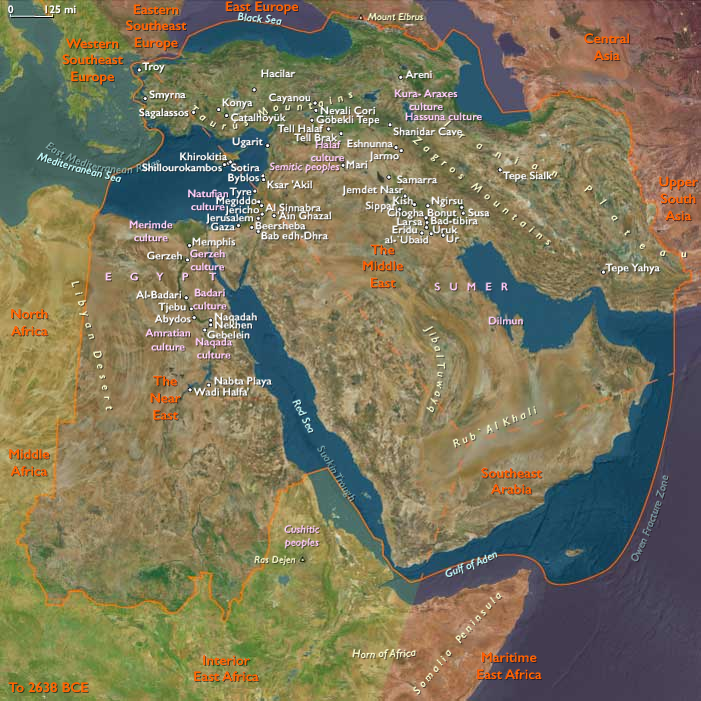
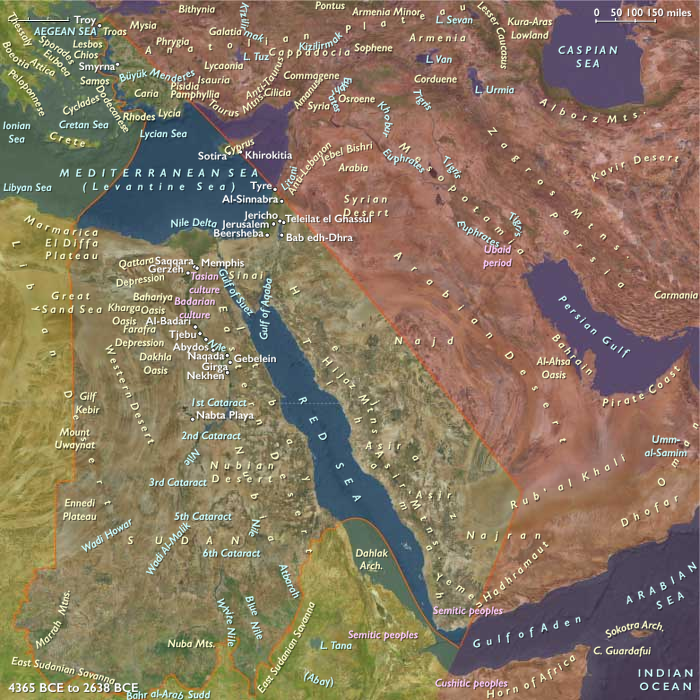
Lower Egypt, known as Ta-Mehu, which means "land of papyrus," is divided into twenty nomes, the first of which is at el-Lisht.
Because Lower Egypt is mostly undeveloped scrubland, undeveloped for human life and filled with all types of plant life such as grasses and herbs, the organization of the nomes will continue to undergo several changes.
In mythology, the earth deity Geb, original ruler of Egypt, invested Horus with the rule over Lower Egypt.
The Low Red Crown Deshret represents Lower Egypt with its patron deity; its symbols are the papyrus and the bee.
Seth is the lord of Deshret, the Red Land that comprises the deserts and foreign lands on either side of Kemet, the fertile Nile river basin.
It is considered a region of chaos, without law and full of dangers.
Deshret, from ancient Egyptian, is also the formal name for the Red Crown of Lower Egypt.
The end has a curly wire on it, representing the proboscis of a honeybee.
Deshret or DSRT also represents the insect known as the honeybee.
The Red Crown in Egyptian language hieroglyphs eventually will be used as the vertical letter “n.” The original language "n" hieroglyph from the Predynastic Period and the Old Kingdom was the horizontal letter n, (N-water ripple (n hieroglyph)).
No Red Crown has survived, and it is unknown how it was constructed and what materials were used.
Copper, reeds, cloth, and leather have been suggested, but this is purely speculative.
Locations
Groups
- Polytheism (“paganism”)
- Egypt (Ancient), Predynastic
- Gerzeh culture (Naqada II)
- Egypt, Lower
- Egypt, Upper
Topics
- Subboreal Period during the Neolithic Subpluvial
- Early Bronze Age I (Near and Middle East)
- Subboreal Period
Commodoties
Subjects
Regions
Subregions
Related Events
Showing 10 events out of 68735 total
Years: 3357BCE - 3214BCE
Locations
Groups
- Polytheism (“paganism”)
- Egypt (Ancient), Predynastic
- Gerzeh culture (Naqada II)
- Egypt, Lower
- Egypt, Upper
Topics
- Subboreal Period during the Neolithic Subpluvial
- Early Bronze Age I (Near and Middle East)
- Subboreal Period
Commodoties
Subjects
Regions
Subregions