
Maritime East Asia (532–675 CE): Imperial Reunification, …
Years: 532 - 675
Maritime East Asia (532–675 CE): Imperial Reunification, State Consolidation, and Cultural Innovation
Between 532 CE and 675 CE, Maritime East Asia—comprising lower Primorsky Krai, the Korean Peninsula, the Japanese Archipelago below northern Hokkaido, Taiwan, and southern, central, and northeastern China—witnesses dramatic imperial reunifications, dynamic state interactions, cultural flourishing, and critical technological advancements.
Sui Dynasty Reunification and Grand Projects in China
China is reunified under the short-lived but impactful Sui Dynasty (581–617), often likened to the earlier Qin Dynasty due to its centralized rule and ambitious, ruthless governance. The Sui emperors undertake monumental projects, notably the completion of the Grand Canal, facilitating vital north-south transportation and economic integration. Other extensive construction efforts include rebuilding sections of the Great Wall. However, these accomplishments heavily strain resources, requiring burdensome taxes and compulsory labor, ultimately leading to widespread unrest. Disastrous military campaigns against Goguryeo (Korea) further weaken the dynasty, leading to its collapse by 617.
Tang Dynasty: A Golden Age of Chinese Civilization
The succeeding Tang Dynasty (618–907) marks a zenith in Chinese cultural, political, and territorial expansion, with its capital at Chang'an becoming a cosmopolitan hub of cultural exchange. Tang rulers solidify an extensive imperial territory surpassing the earlier Han Empire, incorporating significant parts of Central Asia. This period sees extraordinary cultural flowering, bolstered by interactions with India and the Middle East.
Buddhism, having entered China centuries earlier, is now fully integrated and sinicized, becoming a cornerstone of traditional Chinese culture. The introduction of block printing revolutionizes access to literature and education, significantly broadening literacy. The Tang period also refines the civil service examination system, creating a meritocratic scholar-official class that maintains political stability and administration, a system enduring in various forms until the twentieth century.
Power Struggles and Alliances on the Korean Peninsula
The Korean Peninsula sees intensified interactions between Silla, Baekje, and Goguryeo, frequently involving Chinese dynasties. In 551 CE, Silla allies with Baekje against Goguryeo, subsequently betraying Baekje to seize territories along the Han River. In response, Baekje recedes and consolidates in the southwestern region, while Silla strengthens its position by aligning with China's Sui and later Tang dynasties against Goguryeo.
The military encounters are notable, particularly the disastrous Sui invasion of Goguryeo in 612 CE, where the revered Goguryeo commander Eulji Mundeok decisively defeats the numerically superior Sui forces. Later, in 645 CE, Tang Emperor Taizong again attempts invasion, only to be repulsed at the famous siege of Ansisong (An Si Fortress), affirming Goguryeo’s formidable military reputation.
Yamato Centralization and Introduction of Buddhism in Japan
In Japan, the Yamato court, based near modern-day Nara, expands its central control significantly during this era. Through a structured administration modeled on Chinese Confucian systems, the Yamato rulers implement extensive public land management, administrative reforms, and promote specialized occupations in farming, fishing, craftsmanship, and religious rituals.
Buddhism officially enters Japan from Korea around 538 CE, profoundly influencing cultural and religious life. The Soga clan, closely aligned with the Yamato court, becomes a significant advocate of Buddhism and Confucian governmental systems. Despite initial resistance from traditional Shintoist factions such as the Nakatomi and Mononobe clans, Buddhism gains royal endorsement under Emperor Kimmei and subsequently through the influential Prince Shotoku, who vigorously promotes foreign learning, Buddhist principles, and Confucian ethics, leading to lasting integration into Japanese culture.
Technological and Cultural Developments
Advances in technology and architecture mark this period. The use of iron and agricultural technologies continues to advance throughout the region. Buddhist-inspired architectural innovations, including prominent pagoda structures, flourish in China, Korea, and Japan, highlighting the shared cultural and religious influences across Lower East Asia.
Legacy of the Age: Imperial Ambitions and Cultural Integration
Thus, the age from 532 to 675 CE represents an era of significant imperial ambition, territorial conflicts, and profound cultural integration, shaping Maritime East Asia’s historical trajectory. The interplay of political authority, cultural exchange, and technological innovation in this age profoundly influences the future historical and cultural dynamics of the region.
People
Groups
- Buddhism
- Silla, Kingdom of
- Baekje (or Paekche), Kingdom of
- Goguryeo (Koguryo), Kingdom of
- Japan, Yamato Kofun Period
- Western Shu, Han Chinese state of
- Buddhists, Zen or Chán
- Japan, Yamato Early Asuka Period
- Liang Dynasty, Western (Chinese dynasty)
- Chen Dynasty (Chinese Southern dynasty)
- Sui Dynasty (Imperial Chinese dynasty)
- Chinese Empire, Tang Dynasty
- Japan, Yamato Hakuho (Late Asuka) Period
Topics
- Three Kingdoms of Korea
- Six Dynasties Period in China
- Migration Period
- Migration Period Pessimum
- Goguryeo–Sui Wars
- Sui to Tang, Transition From
- Silla–Tang Wars
Subjects
Regions
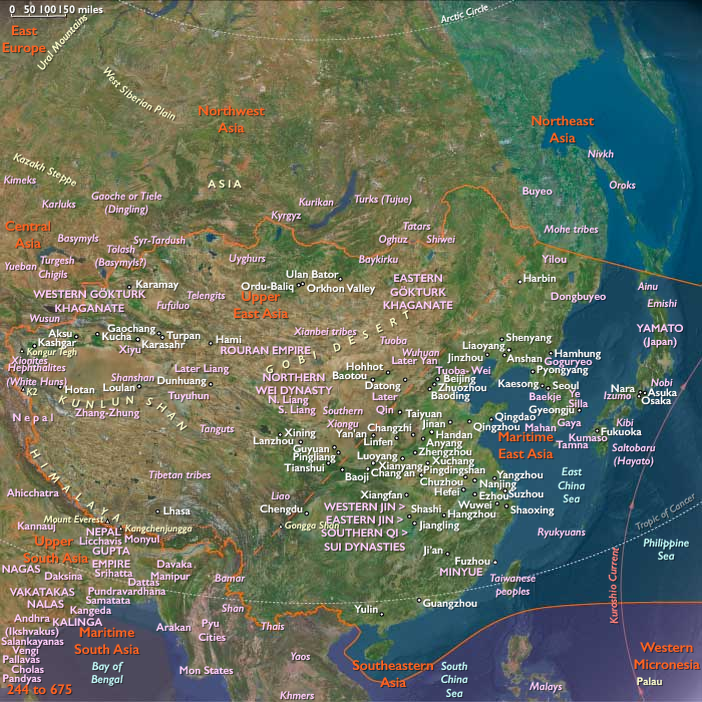
Subregions
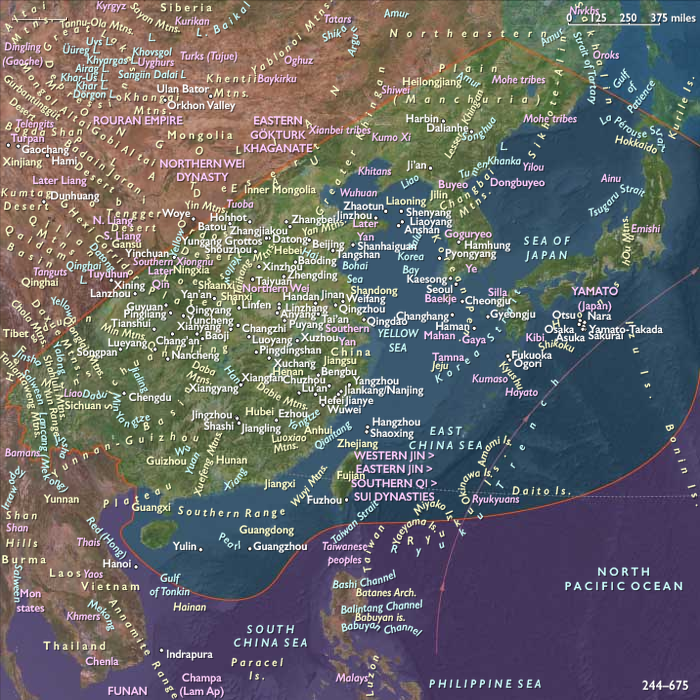
Years: 532 - 675
People
Groups
- Buddhism
- Silla, Kingdom of
- Baekje (or Paekche), Kingdom of
- Goguryeo (Koguryo), Kingdom of
- Japan, Yamato Kofun Period
- Western Shu, Han Chinese state of
- Buddhists, Zen or Chán
- Japan, Yamato Early Asuka Period
- Liang Dynasty, Western (Chinese dynasty)
- Chen Dynasty (Chinese Southern dynasty)
- Sui Dynasty (Imperial Chinese dynasty)
- Chinese Empire, Tang Dynasty
- Japan, Yamato Hakuho (Late Asuka) Period
Topics
- Three Kingdoms of Korea
- Six Dynasties Period in China
- Migration Period
- Migration Period Pessimum
- Goguryeo–Sui Wars
- Sui to Tang, Transition From
- Silla–Tang Wars
Subjects
Regions
Subregions