
Maritime East Asia (2008–2019 CE): Shifting Power …
Years: 2008 - 2019
Maritime East Asia (2008–2019 CE): Shifting Power Dynamics, Economic Realignments, and Diplomatic Strains
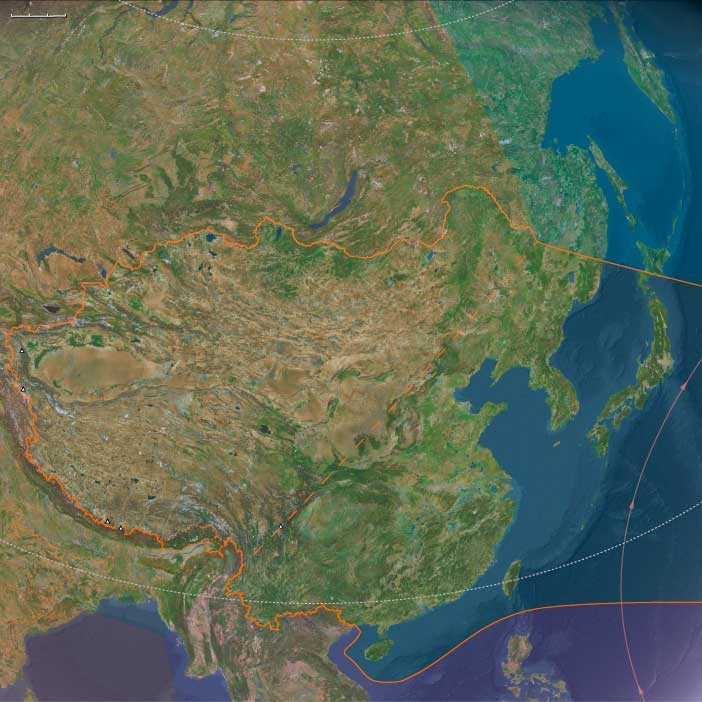
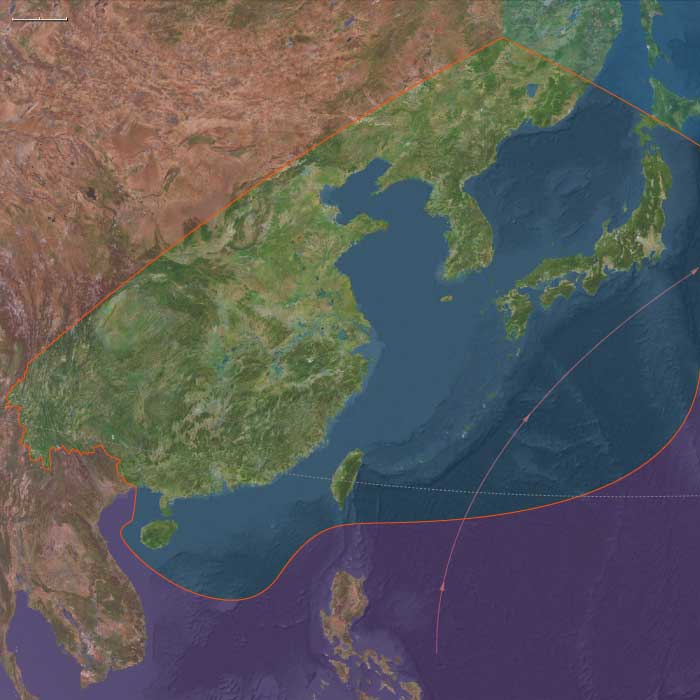
Between 2008 and 2019 CE, Maritime East Asia—including lower Primorsky Krai, the Korean Peninsula, the Japanese Archipelago south of northern Hokkaido, Taiwan, and southern, central, and northeastern China—enters an era defined by shifting geopolitical landscapes, evolving economic models, deepening integration, and intensifying regional security challenges. This period highlights China's accelerated rise, Japan’s cautious resurgence, Korea’s complex political transitions, Taiwan’s democratic vibrancy, and regional geopolitical tensions involving major global actors.
China: Ascending Global Influence and Domestic Realignments
Under the leadership of Hu Jintao (until 2013) and subsequently Xi Jinping (2013–present), China continues its impressive economic growth trajectory, though at a moderated pace compared to previous decades. Xi Jinping consolidates political authority, launching ambitious initiatives like the Belt and Road Initiative (BRI, 2013), aimed at extending China’s economic and strategic reach globally.
Domestically, Xi emphasizes party discipline, anti-corruption campaigns, and a more assertive foreign policy posture. Internally, social surveillance technologies expand significantly, notably in regions like Xinjiang. Economic reforms move toward high-tech and innovation-driven sectors, as exemplified by strategies like “Made in China 2025.” Nevertheless, China faces growing international scrutiny due to human rights issues, environmental degradation, trade disputes, and territorial tensions, particularly in the South China Sea and over Taiwan.
Japan: Economic Resilience and Strategic Reorientation
After decades of stagnation, Japan under Prime Minister Shinzo Abe (2012–2020) initiates aggressive economic reforms known as “Abenomics,” incorporating monetary easing, fiscal stimulus, and structural reform to rejuvenate growth. Although achieving mixed results economically, Japan demonstrates resilience, with moderate recovery, improved employment rates, and sustained global competitiveness in technology, manufacturing, and innovation sectors.
Politically, Abe pursues a more assertive defense and foreign policy, revising the nation’s pacifist constitution interpretation (2015) to allow collective self-defense, strengthening alliances, notably with the United States, Australia, and India. Japan faces significant demographic challenges, with declining birthrates, population aging, and workforce shortages, prompting cautious consideration of immigration reforms.
Korean Peninsula: Divergent Trajectories and Historic Diplomatic Moves
South Korea: Democratic Stability and Diplomatic Activism
South Korea, under conservative presidents Lee Myung-bak (2008–2013) and Park Geun-hye (2013–2017), emphasizes economic growth, U.S.-South Korea alliance strengthening, and firm North Korea policies. Yet, Park's impeachment in 2017 due to corruption scandals marks a political turning point, ushering in progressive President Moon Jae-in (2017–2022), who emphasizes engagement with North Korea and domestic socioeconomic reforms.
Moon pursues the revitalization of inter-Korean dialogue, leading to historic summits with North Korean leader Kim Jong-un in 2018. Despite warming relations, nuclear diplomacy stalls amid complicated U.S.-North Korean negotiations. South Korea also faces internal debates on social justice, inequality, gender rights, and democratic transparency, reflecting robust civic engagement.
North Korea: Nuclear Ambitions and International Diplomacy
Under Kim Jong-il until his death in 2011 and succeeded by Kim Jong-un, North Korea sharply accelerates its nuclear weapons and ballistic missile programs. Between 2013 and 2017, Pyongyang conducts multiple nuclear tests and missile launches, prompting stringent international sanctions and escalating tensions.
In 2018, Kim Jong-un shifts course, engaging in unprecedented diplomacy: multiple summits with Moon Jae-in, and historic encounters with U.S. President Donald Trump (Singapore Summit, 2018, and Hanoi Summit, 2019). Despite initial optimism, these engagements yield limited results, as fundamental disagreements persist over denuclearization, sanctions relief, and verification mechanisms.
Taiwan: Democratic Consolidation and Cross-Strait Tensions
Taiwan continues strengthening its vibrant democracy. The Kuomintang (KMT) briefly regains power under Ma Ying-jeou (2008–2016), who pursues cross-strait economic rapprochement, notably through the Economic Cooperation Framework Agreement (ECFA, 2010). However, growing skepticism of economic integration fuels backlash, leading to the election of the pro-independence Democratic Progressive Party (DPP) candidate Tsai Ing-wen in 2016.
Tsai advocates a cautious stance on China, promoting Taiwanese identity and democratic resilience, resulting in heightened cross-strait tensions. Under her administration, Taiwan's international profile rises through initiatives such as the New Southbound Policy, strengthening relations with Southeast Asia, India, and Australia amid increased diplomatic pressures from Beijing, which further isolates Taiwan diplomatically.
Primorsky Krai: Economic Revival and Regional Ambitions
Primorsky Krai experiences moderate economic revitalization through increased trade, investment, and regional integration, notably hosting the 2012 Asia-Pacific Economic Cooperation (APEC) summit in Vladivostok. Russia invests substantially in infrastructure upgrades, hoping to transform Vladivostok into a Pacific commercial hub. However, structural issues remain, including population decline, underdeveloped industries, bureaucratic inefficiencies, and challenges balancing regional development with geopolitical considerations in the Pacific region.
Regional and Global Geopolitical Shifts
East Asia's geopolitics increasingly reflect strategic competition, primarily between China and the United States, influencing the regional security landscape significantly. China’s expanding military presence in the South China Sea, tensions over Taiwan, and North Korea’s nuclear provocations drive intense security dynamics. The United States bolsters alliances and regional presence through strategies such as the Pivot to Asia (under President Barack Obama), aimed at counterbalancing China's rising influence.
Simultaneously, economic integration deepens, evidenced by multilateral trade agreements like the Comprehensive and Progressive Agreement for Trans-Pacific Partnership (CPTPP), initiated after the U.S. withdrawal from the TPP in 2017, and the Regional Comprehensive Economic Partnership (RCEP) negotiations. Despite geopolitical friction, economic interdependence remains a crucial stabilizing factor.
Cultural and Technological Innovation
The region emerges as a global leader in technology and innovation. China becomes central in global technology infrastructure, 5G telecommunications, artificial intelligence, and e-commerce platforms like Alibaba and Tencent. South Korea’s entertainment industry, particularly K-pop and Korean dramas, achieves global popularity, significantly influencing popular culture worldwide. Japan maintains its position as a global innovation powerhouse in robotics, automation, and gaming industries, despite demographic pressures.
Legacy of the Era: Geopolitical Realignment and Economic Interdependence
The period 2008 to 2019 CE profoundly reshapes Maritime East Asia's strategic, economic, and political landscapes. China’s assertive rise redefines global geopolitics, challenging traditional alliances and prompting regional strategic recalibrations. Japan cautiously renews its global economic and diplomatic roles despite domestic challenges. South Korea continues democratic maturity amid complicated diplomacy with the North, which itself navigates precarious paths of nuclear brinksmanship and diplomacy. Taiwan asserts democratic strength amid mounting pressures from China, and Primorsky Krai seeks greater regional integration, confronting persistent structural difficulties.
Overall, this transformative era underscores the interplay between intensified geopolitical rivalry and unprecedented economic interdependence, establishing enduring patterns that shape Lower East Asia's trajectory well into the twenty-first century
People
- Barack Obama
- Chen Shui-bian
- Donald Trump
- Hu Jintao
- Kim Dae-jung
- Kim Jong Il
- Kim Jong Un
- Lee Myung-bak
- Ma Ying-jeou
- Park Geun-hye
- Roh Moo-hyun
- Shinzo Abe
- Tsai Ing-wen
- Xi Jinping
Groups
- United States of America (US, USA) (Washington DC)
- Kuomintang (KMT)
- Communist Party of China
- United Nations, The (U.N.)
- Korea, Democratic People's Republic of (North Korea)
- Taiwan (Republic of China)
- China, People's Republic of
- ASEAN
- Korea, (Sixth) Republic of (South Korea)
- Japan, Heisei Period
- Russian Federation
- WTO (World Trade Organization)
- Belt and Road Initiative (BRI or B&R)
Commodoties
Subjects
Regions
Subregions
Years: 2008 - 2019
People
- Barack Obama
- Chen Shui-bian
- Donald Trump
- Hu Jintao
- Kim Dae-jung
- Kim Jong Il
- Kim Jong Un
- Lee Myung-bak
- Ma Ying-jeou
- Park Geun-hye
- Roh Moo-hyun
- Shinzo Abe
- Tsai Ing-wen
- Xi Jinping
Groups
- United States of America (US, USA) (Washington DC)
- Kuomintang (KMT)
- Communist Party of China
- United Nations, The (U.N.)
- Korea, Democratic People's Republic of (North Korea)
- Taiwan (Republic of China)
- China, People's Republic of
- ASEAN
- Korea, (Sixth) Republic of (South Korea)
- Japan, Heisei Period
- Russian Federation
- WTO (World Trade Organization)
- Belt and Road Initiative (BRI or B&R)
Commodoties
Subjects
Regions
Subregions