
Marirtime East Asia (1984–1995 CE): Economic Miracles, …
Years: 1984 - 1995
Marirtime East Asia (1984–1995 CE): Economic Miracles, Political Realignments, and Regional Integration
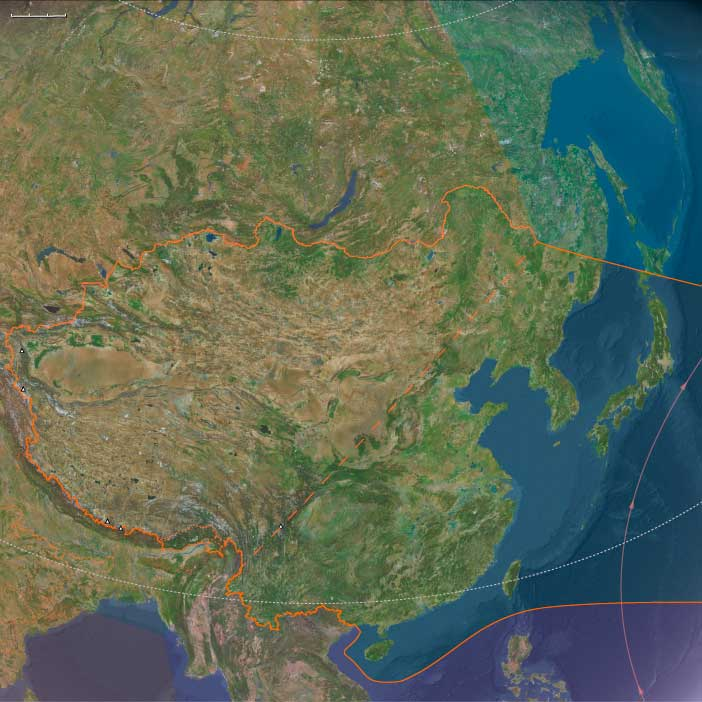
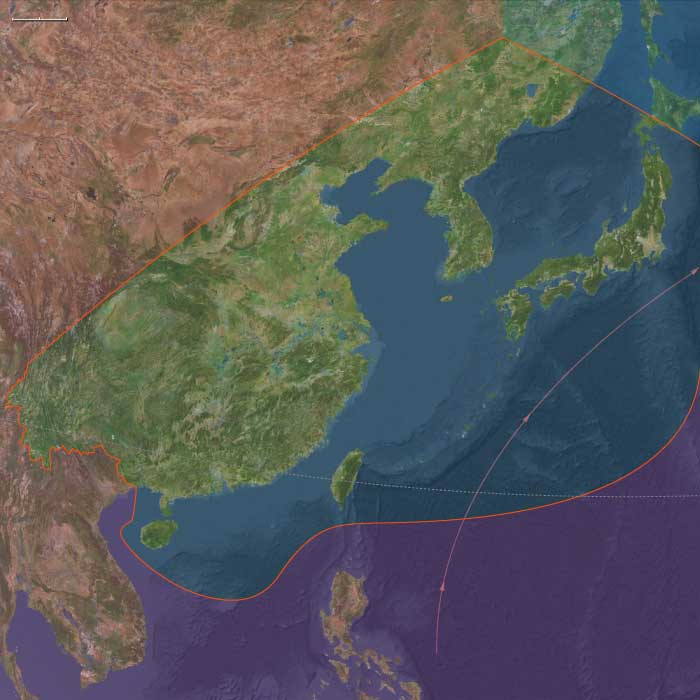
Between 1984 and 1995 CE, Maritime East Asia—covering lower Primorsky Krai, the Korean Peninsula, the Japanese Archipelago south of northern Hokkaido, Taiwan, and southern, central, and northeastern China—experiences a critical decade of robust economic growth, political liberalization, and intensified regional integration. This period witnesses the maturation of Asia’s economic "tigers," dramatic democratic transformations, and realignment of geopolitical relations that reshape regional and global dynamics.
China: Accelerated Economic Liberalization and Tiananmen Square
China's transformative era, launched under Deng Xiaoping’s economic reforms, accelerates dramatically from 1984 onward. Policies such as the "Socialist Market Economy" allow rapid privatization, foreign investment, and export-oriented industrialization, establishing China as an emerging global economic power. The flourishing coastal Special Economic Zones (SEZs), including Shenzhen and Shanghai’s Pudong District (opened 1993), symbolize China's modern economic revival.
However, rapid economic change outpaces political reform, fueling social tensions. In 1989, mass demonstrations led by students and workers demanding democracy and transparency culminate in the Tiananmen Square Protests, violently suppressed by military force. The government's subsequent political tightening contrasts sharply with continued economic liberalization under Deng’s renewed reform push in 1992. Despite Western sanctions following Tiananmen, China's economic growth remains resilient, laying foundations for its future rise.
Japan: Bubble Economy, Recession, and International Influence
Japan’s economy reaches unprecedented heights in the late 1980s, driven by soaring real estate prices, stock market values, and easy credit—culminating in the infamous Japanese asset price "bubble." The Japanese government and corporate conglomerates (keiretsu) enjoy global prominence, leading international investment and acquiring overseas assets aggressively. However, this period of rapid economic expansion abruptly ends with the bubble’s burst in 1990–1991, initiating a prolonged economic stagnation known as the "Lost Decade."
Politically, the long-dominant Liberal Democratic Party (LDP) experiences increased turbulence, resulting in political instability and short-lived opposition governments in 1993–1994. Despite economic setbacks, Japan remains influential internationally, continuing its extensive aid programs and diplomatic engagement throughout East and Southeast Asia.
Korea: Democratic Breakthrough and Divergent Paths
In South Korea, the era of military dictatorship finally yields to democratic pressures. The 1987 June Democracy Movement, marked by mass protests against the authoritarian regime of Chun Doo-hwan, leads to the establishment of democratic elections and constitutional reforms. Roh Tae-woo, elected in 1987, institutes substantial political liberalization, although full democratization and political reconciliation occur gradually.
Economically, South Korea emerges as an advanced industrial power, hosting the highly successful 1988 Seoul Olympics, showcasing its remarkable modernization and vibrant culture to the world. The nation’s semiconductor, automotive, electronics, and shipbuilding industries achieve global prominence, further cementing South Korea’s role as an economic leader.
Conversely, North Korea under Kim Il-sung (died 1994, succeeded by son Kim Jong-il) continues its isolationist and authoritarian policies. Economic hardships deepen following the collapse of its main patron, the Soviet Union (1991), leading to severe food shortages and economic stagnation. Despite these setbacks, North Korea intensifies its nuclear ambitions, culminating in the first nuclear crisis with the United States in 1994, resolved temporarily by the Agreed Framework.
Taiwan: Democratization, Economic Expansion, and Cross-Strait Tensions
Taiwan experiences rapid economic growth driven by its booming electronics industry, particularly semiconductor manufacturing, becoming a critical node in global technology supply chains. Politically, the administration of Chiang Ching-kuo initiates liberalization in the late 1980s, lifting martial law (1987) after 38 years, allowing new political parties to emerge, notably the opposition Democratic Progressive Party (DPP).
In 1988, Lee Teng-hui becomes the first Taiwan-born president, accelerating democratic reforms, culminating in Taiwan’s first direct presidential elections planned for 1996. These democratic advances occur amid heightened cross-strait tensions, as the People's Republic of China (PRC) continues asserting claims over Taiwan, opposing Taiwanese independence aspirations vigorously.
Primorsky Krai: Post-Soviet Uncertainty and Strategic Reorientation
With the disintegration of the Soviet Union (1991), Primorsky Krai transitions from a militarized Soviet frontier into part of the Russian Federation’s far eastern territory. This transition brings severe economic dislocation due to reduced military spending and withdrawal of state subsidies, prompting regional instability and economic hardship. Vladivostok and the broader region experience population decline and increased economic vulnerability, prompting efforts at cross-border economic cooperation with China, Japan, and South Korea to stimulate trade and investment.
Regional Integration and Globalization
Throughout the era, regional integration intensifies significantly. Economic interdependence grows dramatically, notably through expanding trade, investment, and manufacturing networks linking China, Japan, South Korea, and Taiwan. These connections form the economic backbone of modern East Asia, enhancing mutual prosperity while intensifying competition and political complexities.
New diplomatic initiatives emerge, including increased multilateral forums like the Asia-Pacific Economic Cooperation (APEC, established 1989), fostering dialogue and economic collaboration. The ASEAN Regional Forum (ARF), formed in 1994, also strengthens dialogue, incorporating East Asian countries into broader regional discussions on security and trade.
Legacy of the Era: Economic Realignment, Democratic Transformation, and Persistent Tensions
The years 1984 to 1995 represent a pivotal era in Maritime East Asia, characterized by extraordinary economic growth, democratic breakthroughs, and profound geopolitical realignments. China accelerates its global economic integration while resisting democratic reform. Japan faces significant economic challenges, marking the end of its rapid postwar expansion. South Korea embraces democratic reform while solidifying its economic powerhouse status. Taiwan achieves substantial democratic gains amid rising cross-strait tensions, while North Korea remains isolated yet increasingly provocative. Primorsky Krai grapples with its post-Soviet identity and economy, turning to regional partnerships to mitigate instability.
These transformative events profoundly shape contemporary East Asia, laying the groundwork for future interactions, prosperity, and challenges that will define the region into the 21st century.
People
Groups
- United States of America (US, USA) (Washington DC)
- Russian Soviet Federated Socialist Republic
- Kuomintang (KMT)
- Communist Party of China
- Union of Soviet Socialist Republics (USSR), or Soviet Union
- Japan, Showa Period
- United Nations, The (U.N.)
- Taiwan (Republic of China protectorate)
- Korea, Democratic People's Republic of (North Korea)
- Korea, (First) Republic of (South Korea)
- China, People's Republic of
- Taiwan (Republic of China)
- China, Republic of (Taiwan)
- ASEAN
- Russian Federation
Topics
Commodoties
Subjects
Regions
Subregions
Years: 1984 - 1995
People
Groups
- United States of America (US, USA) (Washington DC)
- Russian Soviet Federated Socialist Republic
- Kuomintang (KMT)
- Communist Party of China
- Union of Soviet Socialist Republics (USSR), or Soviet Union
- Japan, Showa Period
- United Nations, The (U.N.)
- Taiwan (Republic of China protectorate)
- Korea, Democratic People's Republic of (North Korea)
- Korea, (First) Republic of (South Korea)
- China, People's Republic of
- Taiwan (Republic of China)
- China, Republic of (Taiwan)
- ASEAN
- Russian Federation
Topics
Commodoties
Subjects
Regions
Subregions