
Maritime East Asia (1972–1983 CE): Diplomatic Shifts, …
Years: 1972 - 1983
Maritime East Asia (1972–1983 CE): Diplomatic Shifts, Economic Transformation, and Political Realignment
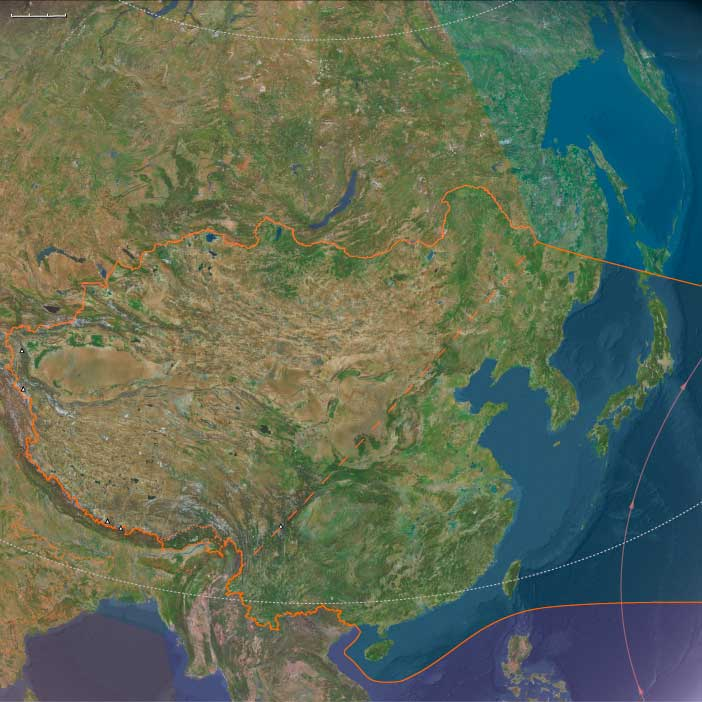
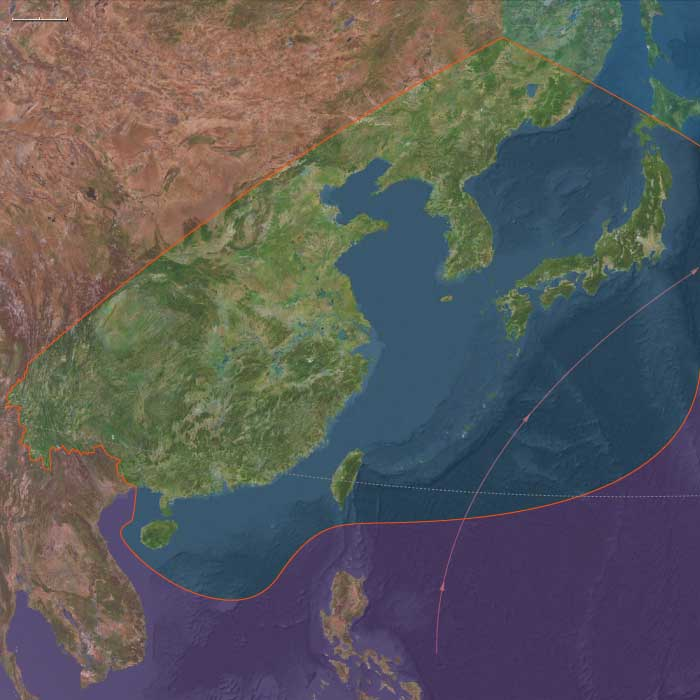
Between 1972 and 1983 CE, Maritime East Asia—comprising lower Primorsky Krai, the Korean Peninsula, the Japanese Archipelago south of northern Hokkaido, Taiwan, and southern, central, and northeastern China—experiences profound changes marked by shifting diplomatic alignments, dramatic economic transformations, and evolving political dynamics. This era is defined by significant reorientations in regional relationships and the emergence of new socioeconomic paradigms that shape the modern landscape of East Asia.
China: Opening to the World and Economic Reform under Deng Xiaoping
Following the turmoil of the Cultural Revolution (1966–1976) and the death of Mao Zedong (1976), China embarks on a dramatic policy shift under pragmatic leader Deng Xiaoping. Deng initiates a sweeping series of economic and social reforms, known as the Reform and Opening Up (Gaige Kaifang), starting officially in 1978. These measures decentralize the economy, introduce market-oriented practices, and establish Special Economic Zones (SEZs) such as Shenzhen (1980) to attract foreign investment and technology.
Diplomatically, China redefines its international status by normalizing relations with former adversaries. U.S. President Richard Nixon’s historic visit to China in 1972, resulting in the landmark Shanghai Communiqué, signals a profound realignment in global geopolitics. In 1979, the People’s Republic of China formally establishes diplomatic relations with the United States, which ends official recognition of the rival government in Taiwan.
These reforms significantly boost economic growth, but the period also sees continued political control by the Chinese Communist Party (CCP), exemplified by Deng’s policy of the Four Modernizations (agriculture, industry, national defense, and science and technology), balancing cautious political liberalization with authoritative governance.
Japan: Economic Powerhouse and Technological Leadership
Japan’s postwar economic boom reaches new heights between 1972 and 1983, cementing its position as a global economic powerhouse. Advances in technology and manufacturing propel the nation into becoming a world leader in electronics, automotive production, robotics, and consumer goods. Japanese corporations such as Sony, Toyota, Honda, Toshiba, and Panasonic achieve global prominence, exporting their innovative products worldwide.
Economic growth fosters prosperity and a rapidly rising standard of living, but also leads to environmental concerns and urban crowding. Politically, the long-dominant Liberal Democratic Party (LDP) maintains its hold on government, promoting economic stability, infrastructural development, and international diplomacy aligned with Western allies, particularly the United States.
Japan’s economic success strengthens its diplomatic role in East Asia, enhancing its influence through aid programs and investments across the region, notably in Southeast Asia.
Korea: Divergent Paths and Deepening Division
The Korean Peninsula remains starkly divided along ideological lines.
In South Korea, President Park Chung-hee’s authoritarian regime prioritizes rapid industrialization, implementing ambitious economic policies that produce the so-called “Miracle on the Han River”. Export-oriented industries, including electronics, automobiles, shipbuilding, steel, and chemicals, flourish dramatically. However, Park’s increasingly repressive rule, culminating in his assassination in 1979, leads to further political instability. General Chun Doo-hwan assumes power after a military coup, and the violent suppression of the Gwangju Democratization Movement (1980) deepens internal dissent, ultimately fueling demands for democratization that will shape future political developments.
In North Korea, leader Kim Il-sung maintains tight control under the ideology of Juche, promoting self-reliance and isolation. North Korea continues heavy investment in military capabilities, further isolating itself economically and diplomatically. While the regime maintains internal stability through severe repression and ideological indoctrination, its economy stagnates, setting the stage for future hardships.
Taiwan: Economic Prosperity and Diplomatic Isolation
Taiwan continues to flourish economically under the government of the Republic of China (ROC), solidifying its reputation as one of Asia’s economic “tigers” with rapid growth driven by manufacturing and export-oriented industrialization, especially in textiles, electronics, and semiconductors. This period marks the early stages of Taiwan’s rise as a global technology hub.
Politically, the Kuomintang (KMT)-led government under President Chiang Ching-kuo maintains strict authoritarian control but begins gradual liberalization and democratization measures in the late 1970s and early 1980s. Taiwan suffers a diplomatic setback, however, with the loss of its seat at the United Nations (1971) and the United States’ establishment of formal diplomatic relations with mainland China (1979), leaving Taiwan diplomatically isolated. Despite this, the Taiwan Relations Act (1979) enacted by the U.S. ensures continued informal ties and military support, stabilizing Taiwan’s geopolitical position.
Primorsky Krai: Strategic Soviet Frontier and Military Expansion
The Soviet Union’s lower Primorsky Krai, bordering China and facing the Sea of Japan, remains strategically significant during this era. The Soviets bolster their Pacific naval fleet and regional military infrastructure in response to Cold War tensions, particularly following Sino-Soviet hostility. Vladivostok develops as a key Soviet naval and military base, strengthening Moscow’s ability to project power in East Asia. Relations between China and the Soviet Union remain tense, but gradual diplomatic efforts in the early 1980s begin easing decades of hostility.
Regional Realignment and Global Integration
The period between 1972 and 1983 reshapes Maritime East Asia profoundly. China’s embrace of market reforms transforms its economy and alters regional dynamics. Japan emerges as a global economic leader, reshaping its image internationally through technology and trade. Korea’s division deepens as South Korea rises economically but struggles politically, while North Korea remains isolated and militarized. Taiwan experiences rapid economic growth but diplomatic isolation. Primorsky Krai continues as a pivotal Cold War frontier region.
Collectively, these transformative years significantly redefine East Asia’s geopolitical, economic, and social landscapes, setting enduring trajectories for future development, cooperation, and conflict in the region.
People
Groups
- United States of America (US, USA) (Washington DC)
- Matsushita Electric Industrial Co., Ltd.
- Kuomintang (KMT)
- Communist Party of China
- Union of Soviet Socialist Republics (USSR), or Soviet Union
- Japan, Showa Period
- Toyota Motor Corporation
- Toshiba Corporation
- Taiwan (Republic of China protectorate)
- United Nations, The (U.N.)
- Korea, Democratic People's Republic of (North Korea)
- Korea, (First) Republic of (South Korea)
- Honda Motor Co., Ltd.
- China, Republic of (Taiwan)
- Taiwan (Republic of China)
- China, People's Republic of
- Sony Corporation
Topics
Commodoties
Subjects
Regions
Subregions
Years: 1972 - 1983
People
Groups
- United States of America (US, USA) (Washington DC)
- Matsushita Electric Industrial Co., Ltd.
- Kuomintang (KMT)
- Communist Party of China
- Union of Soviet Socialist Republics (USSR), or Soviet Union
- Japan, Showa Period
- Toyota Motor Corporation
- Toshiba Corporation
- Taiwan (Republic of China protectorate)
- United Nations, The (U.N.)
- Korea, Democratic People's Republic of (North Korea)
- Korea, (First) Republic of (South Korea)
- Honda Motor Co., Ltd.
- China, Republic of (Taiwan)
- Taiwan (Republic of China)
- China, People's Republic of
- Sony Corporation
Topics
Commodoties
Subjects
Regions
Subregions