
Maritime East Asia (1948–1959 CE): Cold War …
Years: 1948 - 1959
Maritime East Asia (1948–1959 CE): Cold War Divisions, Revolutionary Transformations, and Economic Foundations
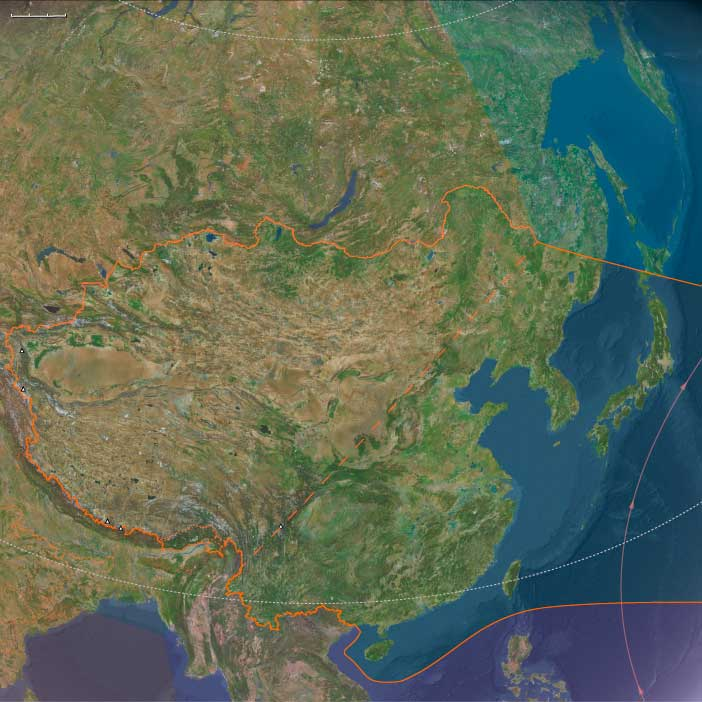
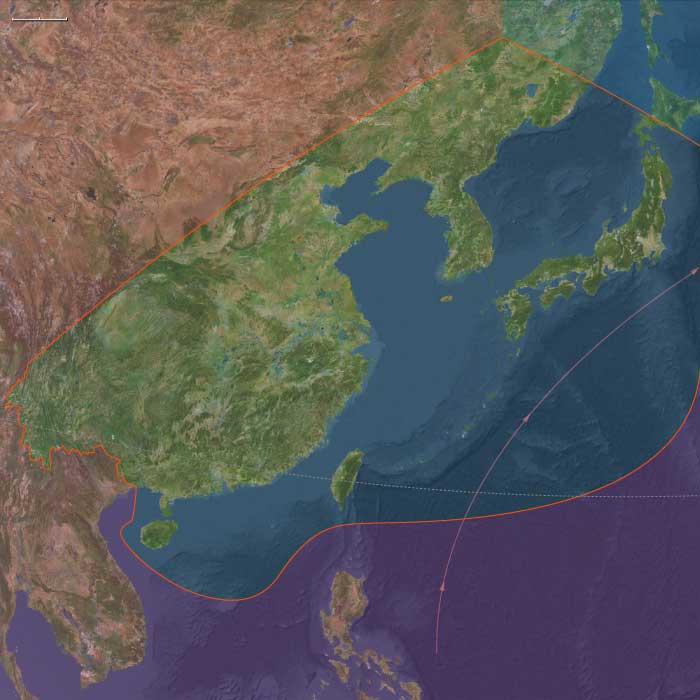
Between 1948 and 1959 CE, Maritime East Asia—encompassing lower Primorsky Krai, the Korean Peninsula, the Japanese Archipelago south of northern Hokkaido, Taiwan, and southern, central, and northeastern China—experiences profound transformations driven by Cold War divisions, revolutionary upheaval, ideological consolidation, and rapid economic rebuilding. The period decisively shapes regional identities, creating geopolitical alignments and lasting legacies.
China: Communist Victory and Maoist Reconstruction
In 1949, after years of civil war, Communist forces under Mao Zedong decisively defeat the Nationalist government, establishing the People’s Republic of China (PRC) on October 1. The defeated Nationalist government, led by Chiang Kai-shek, retreats to Taiwan, maintaining a rival government as the Republic of China (ROC).
The PRC initiates radical restructuring under Maoist ideology, including sweeping land reform, collectivization, and centralized economic planning. Campaigns like the Great Leap Forward (1958–1961) aim to rapidly industrialize and collectivize agriculture but result in severe famine and human suffering. Despite these setbacks, the period fundamentally reshapes China’s social, economic, and political landscape.
Korea: Division, Devastating War, and Entrenched Partition
The division of Korea at the 38th parallel solidifies in 1948, with rival states emerging: the Soviet-supported Democratic People’s Republic of Korea (North Korea) under Kim Il-sung, and the U.S.-backed Republic of Korea (South Korea) led by Syngman Rhee. Tensions erupt into open conflict with the outbreak of the Korean War (1950–1953), as North Korea invades the South aiming for reunification by force.
The war devastates the peninsula, involving Chinese intervention on behalf of North Korea and extensive United Nations support for South Korea. A ceasefire in 1953 establishes the heavily fortified Demilitarized Zone (DMZ), leaving the peninsula divided, scarred by immense human and economic costs, and firmly entrenched in Cold War geopolitics.
Japan: Postwar Reconstruction and Economic Miracle Foundations
Under continued American occupation until 1952, Japan undergoes extensive political, economic, and social reforms, including democratization, land redistribution, educational reform, and economic restructuring. The San Francisco Peace Treaty (1951) formally ends the occupation, restoring Japanese sovereignty but maintaining a robust U.S. security presence.
Japan’s recovery accelerates rapidly, driven by industrial innovation, technological advancement, and government-led economic policies focused on export-oriented growth. By the late 1950s, the foundations of Japan’s future economic miracle are firmly laid, positioning the country as a rising global economic power and essential U.S. ally in the region.
Taiwan: Nationalist Refuge and Economic Reorientation
Taiwan becomes the refuge for Chiang Kai-shek’s Nationalist government following its defeat on the mainland in 1949. Initially imposing authoritarian rule and martial law (1949–1987), the ROC government embarks on economic reforms, agricultural modernization, industrialization, and infrastructure expansion.
Taiwan’s economy experiences robust growth, aided by American economic and military support. Rapid industrialization, land reform, and improved education significantly raise living standards, transforming Taiwan into a thriving economic entity. Nevertheless, political tensions and identity debates persist, influenced by complex interactions between mainland refugees and indigenous Taiwanese populations.
Legacy of the Era: New Regional Realities and Lasting Impacts
The years 1948 to 1959 CE decisively reshape Maritime East Asia, embedding Cold War geopolitical realities into the region’s core identity. China embarks on revolutionary transformations with far-reaching consequences. The Korean Peninsula is entrenched in division, its ongoing tensions emblematic of broader ideological conflict. Japan rebuilds, laying the foundations for future economic prosperity and geopolitical significance. Taiwan consolidates economically under authoritarian rule, establishing a distinct identity amid regional complexities. Collectively, these dramatic developments profoundly influence subsequent regional dynamics, with lasting impacts on East Asian and global affairs.
People
Groups
- United States of America (US, USA) (Washington DC)
- Kuomintang (KMT)
- Communist Party of China
- Japan, Showa Period
- United States Army Military Government in Korea (USAMGIK)
- Soviet Civil Administration (SCA)
- Taiwan (Republic of China protectorate)
- Korea, (First) Republic of (South Korea)
- Korea, Democratic People's Republic of (North Korea)
- China, Republic of (Taiwan)
- Taiwan (Republic of China)
- China, People's Republic of
Topics
- Chinese Civil War
- Chinese Civil War of 1945-49
- Cold War
- Korean War
- Great Chinese Famine
- Great Leap Forward
Subjects
Regions
Subregions
Years: 1948 - 1959
People
Groups
- United States of America (US, USA) (Washington DC)
- Kuomintang (KMT)
- Communist Party of China
- Japan, Showa Period
- United States Army Military Government in Korea (USAMGIK)
- Soviet Civil Administration (SCA)
- Taiwan (Republic of China protectorate)
- Korea, (First) Republic of (South Korea)
- Korea, Democratic People's Republic of (North Korea)
- China, Republic of (Taiwan)
- Taiwan (Republic of China)
- China, People's Republic of
Topics
- Chinese Civil War
- Chinese Civil War of 1945-49
- Cold War
- Korean War
- Great Chinese Famine
- Great Leap Forward
Subjects
Regions
Subregions