
Maritime East Asia (1888–1899 CE): Imperial Expansion, …
Years: 1888 - 1899
Maritime East Asia (1888–1899 CE): Imperial Expansion, Reform Efforts, and Emerging National Identities
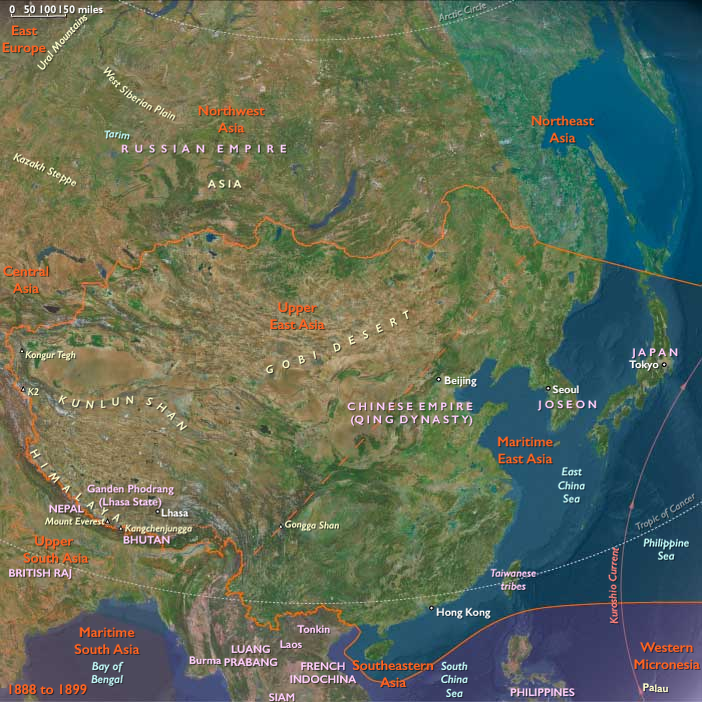
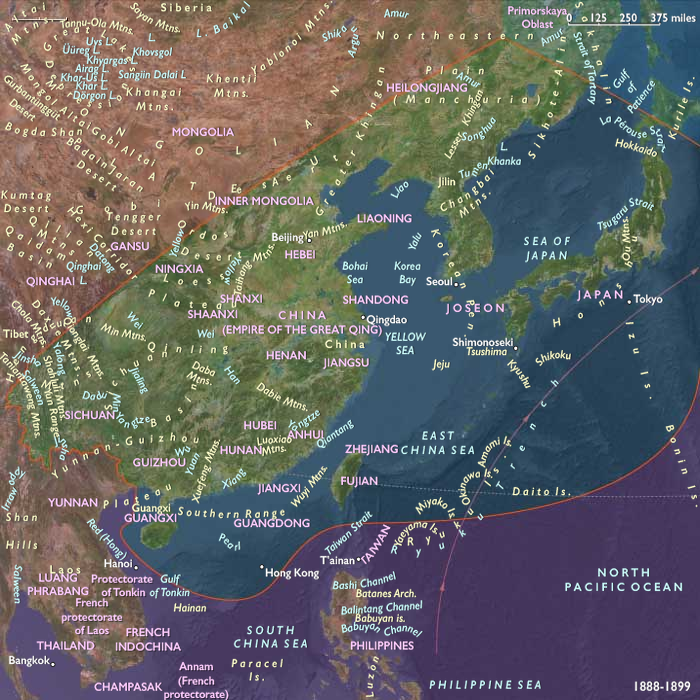
Between 1888 and 1899 CE, Maritime East Asia—including lower Primorsky Krai, the Korean Peninsula, the Japanese Archipelago south of northern Hokkaido, Taiwan, and southern, central, and northeastern China—experiences profound imperial expansion, dynamic reform movements, and the crystallization of national identities. The period sees intensified foreign incursions and heightened internal pressures, significantly shaping each region's political landscape.
Korea: Turmoil, Reform Movements, and Foreign Domination
Following Korea's forced opening in the previous decade, the peninsula faces increased international attention and interference. Japan solidifies its influence through the First Sino-Japanese War (1894–1895), triggered by the Donghak Rebellion—an uprising fueled by religious fervor and widespread dissatisfaction with governmental corruption. Korean attempts to suppress the rebellion lead to Chinese intervention, providing Japan a pretext to enter militarily and decisively defeat China. Through the Treaty of Shimonoseki (1895), Japan gains hegemony over Korea, imposing sweeping domestic reforms to quell further unrest, including abolishing class distinctions, emancipating slaves, and dismantling the rigid civil service examination system.
Meanwhile, nationalist sentiment and calls for reform flourish, notably through the efforts of So Chae-p'il. Returning from exile in the United States in 1896, So promotes modernization and independence from foreign control. He establishes the influential newspaper Tongnip simmun (The Independent) and organizes the Independence Club, advocating Western-style democratic reforms. Despite initial success and significant popular support, conservative opposition violently suppresses these movements, forcing So back into exile and imprisoning many activists, including future leader Syngman Rhee.
Japan: Constitutional Government and National Strength
Japan's Meiji leaders successfully consolidate their political system with the promulgation of the Meiji Constitution (1889), based largely on the Prussian model. This constitution maintains centralized imperial authority while allowing limited representative governance through an elected Diet. The first national election in 1890 signals the burgeoning strength of political parties, notably the Liberal Party (Jiyuto) and the Constitutional Progressive Party (Rikken Kaishinto), which increasingly challenge governmental policies.
Despite these democratic features, real political power remains concentrated among the influential oligarchy known as the genro (elder statesmen), who continue to govern behind the scenes. Prominent leaders such as Ito Hirobumi and Yamagata Aritomo shape Japan's domestic and foreign policies, emphasizing rapid industrialization, military modernization, and active diplomacy. Japan's defeat of China in the First Sino-Japanese War cements its emergence as a significant regional power, further expanding its empire by acquiring Taiwan and the Penghu Islands.
China: Intensifying Foreign Influence and Failed Reform
China under the declining Qing dynasty faces escalating foreign encroachment and internal instability. The First Sino-Japanese War exacerbates China's vulnerabilities, forcing substantial territorial concessions, including ceding Taiwan to Japan and granting increased foreign privileges. In response to these mounting crises, Emperor Guangxu initiates the ambitious Hundred Days' Reform (1898), aiming for sweeping institutional and ideological changes inspired by Japan’s successful modernization.
However, conservative opposition led by the powerful Empress Dowager Cixi swiftly reverses these efforts. With military backing, she suppresses reformist leaders and seizes control in a coup, rescinding the progressive edicts and severely punishing reform advocates. This reactionary turn deepens China's internal divisions, accelerating the dynasty’s decline and leaving the country increasingly vulnerable to external manipulation.
Taiwan: Resistance and Integration into Japan
Taiwan, newly acquired by Japan following the Treaty of Shimonoseki, becomes a focal point of resistance against foreign domination. A short-lived attempt to establish the independent Republic of Formosa in 1895 is quickly quelled by Japanese military forces. Persistent guerrilla resistance continues intermittently until around 1902, causing significant casualties and underscoring Taiwanese resentment against foreign rule. Nonetheless, Japan begins comprehensive modernization and infrastructure projects on the island, including the construction of railways, firmly integrating Taiwan into its growing empire.
Legacy of the Era: Emerging Nationalism and Imperial Ambitions
Between 1888 and 1899 CE, Maritime East Asia experiences dramatic imperial expansion, complex internal reforms, and heightened nationalist sentiments. Japan emerges as a dominant regional power, wielding considerable influence over neighboring Korea and Taiwan while shaping modern governmental structures domestically. China’s brief reform efforts highlight ongoing internal struggles and vulnerabilities that hasten the Qing dynasty's downfall. Korea’s independence movements, though suppressed, lay foundations for future resistance and national identity. Collectively, these transformations underscore deepening national consciousness and imperial ambitions, significantly influencing the geopolitical dynamics of East Asia into the twentieth century.
People
Groups
- Shinto
- Neo-Confucianism
- Christians, Roman Catholic
- Joseon (Yi) kingdom of
- Protestantism
- Chinese Empire, Qing (Manchu) Dynasty
- Taiwan, or Formosa (Qing protectorate)
- Russian Empire
- United States of America (US, USA) (Washington DC)
- Britain (United Kingdom of Great Britain and Ireland)
- Japan, Empire of (Meiji Period)
- Taiwan, or Formosa (Japanese colony)
Topics
Subjects
Regions
Subregions
Years: 1888 - 1899
People
Groups
- Shinto
- Neo-Confucianism
- Christians, Roman Catholic
- Joseon (Yi) kingdom of
- Protestantism
- Chinese Empire, Qing (Manchu) Dynasty
- Taiwan, or Formosa (Qing protectorate)
- Russian Empire
- United States of America (US, USA) (Washington DC)
- Britain (United Kingdom of Great Britain and Ireland)
- Japan, Empire of (Meiji Period)
- Taiwan, or Formosa (Japanese colony)
Topics
Subjects
Regions
Subregions