
Maritime East Asia (909–766 BCE): Fragmentation and …
Years: 909BCE - 766BCE
Maritime East Asia (909–766 BCE): Fragmentation and Eastern Zhou Transition
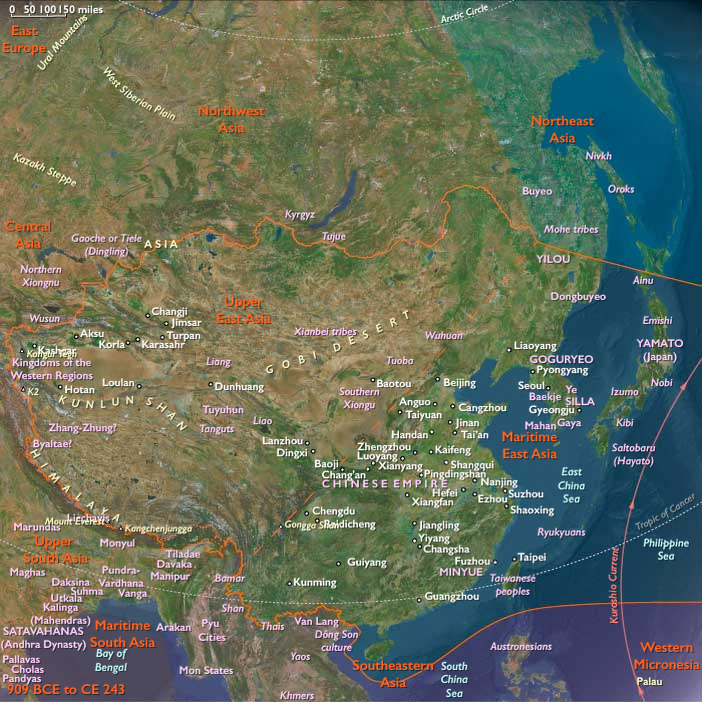
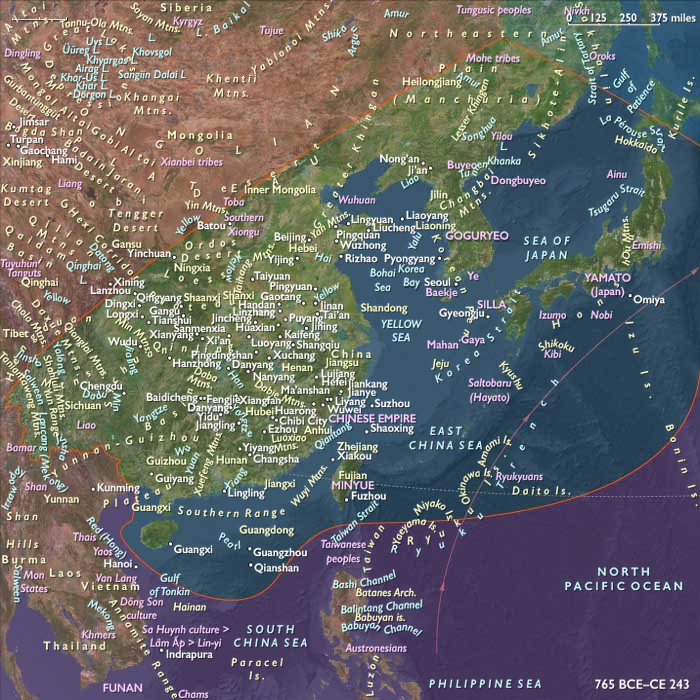
Between 909 BCE and 766 BCE, Maritime East Asia—comprising lower Primorsky Krai, the Korean Peninsula, the Japanese Archipelago below northern Hokkaido, Taiwan, and southern, central, and northeastern China—experiences critical transitions marked by the decline of centralized authority under the Zhou Dynasty and the emergence of increased regional autonomy.
Proto-Feudalism and Its Erosion
The early decentralized governance structure of the Zhou dynasty, often termed proto-feudal, begins to unravel significantly during this age. Initially reliant on familial and tribal affiliations, the Zhou's control weakens as local hereditary nobles, ruling extensive autonomous fiefdoms, gain increased independence from central oversight. Although the Zhou kings still maintain nominal authority from their capital (Luoyang), their practical influence diminishes substantially.
Regular assemblies, attended by prominent feudal princes—later identified as the twelve princes—convene to deliberate on collective military campaigns and resolve governance issues. Periodically, one prince is elevated as hegemon, temporarily leading the allied forces of these increasingly autonomous states. Despite these attempts at unified leadership, the feudal bonds continually erode, setting the stage for heightened fragmentation.
Collapse of Western Zhou and Establishment of Eastern Zhou
This period reaches a critical juncture in 770 BCE when internal court strife leads to catastrophic external invasion. The last Western Zhou king provokes conflict by replacing his queen with a concubine, prompting the queen's powerful father to align with the Quanrong barbarians. The subsequent sacking of the Zhou capital (Haojing) results in the death of the king and the dispersal of Zhou nobility eastward.
Surviving nobles relocate to the old eastern capital of Chengzhou, near modern-day Luoyang, marking the formal commencement of the Eastern Zhou period. This relocation symbolizes the definitive shift from centralized royal power to decentralized regional authority, profoundly reshaping China's political landscape.
Development of Institutional Structures
As central authority diminishes, regional governance structures evolve toward greater institutionalization. This era sees the establishment of increasingly bureaucratic mechanisms, particularly evident in taxation and agricultural management. These developments represent a marked transition from personalized tribal allegiances toward more formal and impersonal institutions, characteristic of the later Spring and Autumn Period.
Cultural Continuity and Ritual Stability
Despite political fragmentation, the cultural and social frameworks established by the early Zhou remain resilient. Ritual practices, ancestor worship, and divination persist, providing societal stability and continuity amid political upheaval. The complex social code (li) endures, regulating etiquette, hierarchical relations, and the chivalric conduct of elites. Artistic achievements, particularly sophisticated bronze metallurgy, continue to thrive, underscoring the enduring cultural vitality of the Zhou tradition.
Legacy of the Age: Setting the Stage for Widespread Fragmentation
Thus, the age from 909 to 766 BCE significantly shapes the historical trajectory of Maritime East Asia, marking a critical era of fragmentation and the establishment of new political realities. The decentralization of Zhou authority and the inception of the Eastern Zhou period lay critical foundations for the dynamic and competitive landscape of the subsequent Spring and Autumn and Warring States periods.
Groups
Topics
Commodoties
Subjects
Regions
Subregions
Years: 909BCE - 766BCE
Groups
Topics
Commodoties
Subjects
Regions
Subregions