
The Early Reign of Louis VII: Conflict, …
Years: 1144 - 1144
The Early Reign of Louis VII: Conflict, War, and the Burning of Vitry (1137–1144 CE)
Upon his accession to the French throne in 1137, Louis VII inherited a strong and stable kingdom, though his reign was quickly marked by conflict with the Papacy, territorial disputes, and internal unrest. His marriage to Eleanor of Aquitaine, one of the wealthiest and most powerful heiresses in Europe, expanded the Capetian domains, but it also brought political complications that would shape his reign.
Marriage to Eleanor of Aquitaine and Early Challenges
- On July 22, 1137, shortly before becoming king, Louis VII married Eleanor of Aquitaine, the heiress of William X of Aquitaine.
- This marriage vastly increased Capetian territorial holdings, theoretically placing the Duchy of Aquitaine under the French crown.
- However, Eleanor’s strong-willed personality and courtly culture clashed with Louis’ pious, reserved nature, leading to early tensions in their union.
In his early years as king, Louis faced local uprisings in:
- Orléans and Poitiers, where burgesses sought to organize communes, challenging royal authority.
- These revolts were quickly suppressed, reinforcing Louis’ determination to protect his royal prerogatives.
Conflict with Pope Innocent II Over Bourges (1141–1144)
- In 1141, the archbishopric of Bourges became vacant, and Louis VII supported his chancellor, Cadurc, as the new archbishop.
- Pope Innocent II rejected this appointment, instead naming Pierre de la Châtre as the rightful archbishop.
- Enraged, Louis VII swore upon relics that Pierre would never enter Bourges as long as he lived.
- In response, Innocent II placed an interdict on the king’s lands, undermining Louis’ authority and deepening the conflict.
War with Theobald II of Champagne (1142–1144)
While still at odds with the papacy, Louis became embroiled in a major war with Champagne over a marriage scandal involving his queen’s family:
- Ralph I of Vermandois, the seneschal of France, sought to divorce his wife, Eleanor of Blois (the niece of Theobald II of Champagne).
- He wished to marry Petronilla of Aquitaine, the sister of Queen Eleanor.
- The Pope opposed the divorce, but Louis VII sanctioned the marriage, further alienating him from the papacy and Theobald of Champagne.
- Champagne sided with the Pope, deepening the conflict.
The War and the Burning of Vitry (1144)
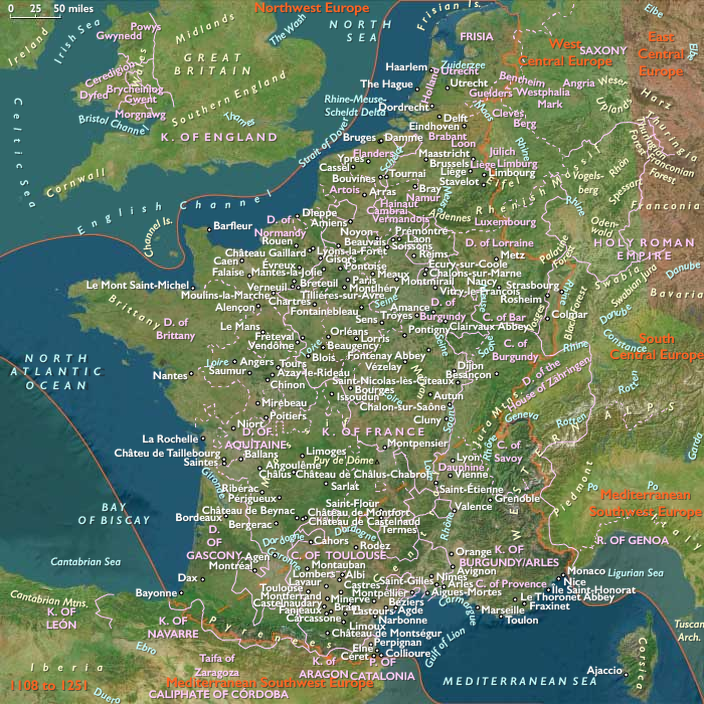
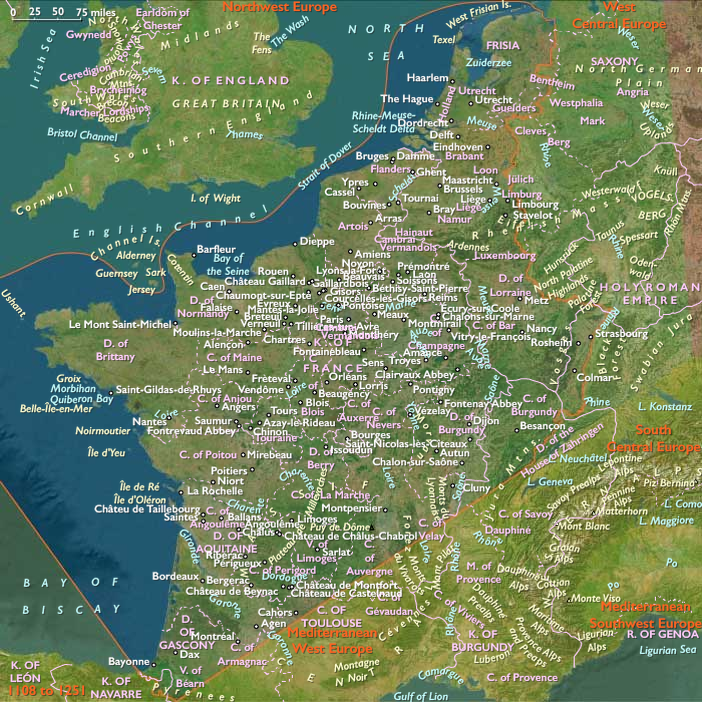
- Louis invaded Champagne and led a two-year war (1142–1144) against Theobald.
- His forces captured key territories, culminating in the royal occupation of Champagne.
- However, in 1144, at the siege of Vitry-le-François, the royal army burned the town.
- Over 1,000 people, who had sought refuge in the church, perished in the flames.
Guilt and Reconciliation with the Church (1144)
- The burning of Vitry left Louis VII overcome with guilt.
- Facing papal condemnation and pressure, Louis admitted defeat:
- He withdrew his armies from Champagne and returned its lands to Theobald.
- He accepted Pierre de la Châtre as archbishop, ending his dispute with the papacy.
- He shunned Ralph of Vermandois and Petronilla, severing ties with their controversial marriage.
Louis’ humiliation by the Church and his desire for penance led him to seek spiritual redemption, a sentiment that greatly influenced his later decision to lead the Second Crusade (1147–1149).
Consequences of the Champagne War
- Strengthened the Papacy’s Influence – The Pope’s victory in the dispute weakened Capetian authority in Church appointments.
- Increased Eleanor’s Frustration – Eleanor resented Louis’ submissive attitude, further straining their marriage.
- Paved the Way for the Second Crusade – Louis’ guilt over Vitry contributed to his decision to embark on a Crusade, a move that would shape the rest of his reign.
The war with Champagne exposed Louis VII’s weaknesses as a ruler, leading to greater Church influence over royal affairs, tensions in his marriage to Eleanor, and a growing sense of Capetian fragility in the face of noble resistance.
Locations
People
Groups
- Papal States (Republic of St. Peter)
- Champagne, County of
- France, (Capetian) Kingdom of
- Christians, Roman Catholic
Commodoties
Subjects
Regions
Subregions
Related Events
Showing 10 events out of 48896 total
Years: 1144 - 1144
Locations
People
Groups
- Papal States (Republic of St. Peter)
- Champagne, County of
- France, (Capetian) Kingdom of
- Christians, Roman Catholic
Commodoties
Subjects
Regions
Subregions