
Filters:
The Treaty Between Charles the Bald and …
Years: 873 - 873
The Treaty Between Charles the Bald and Rorik of Dorestad (870–873)
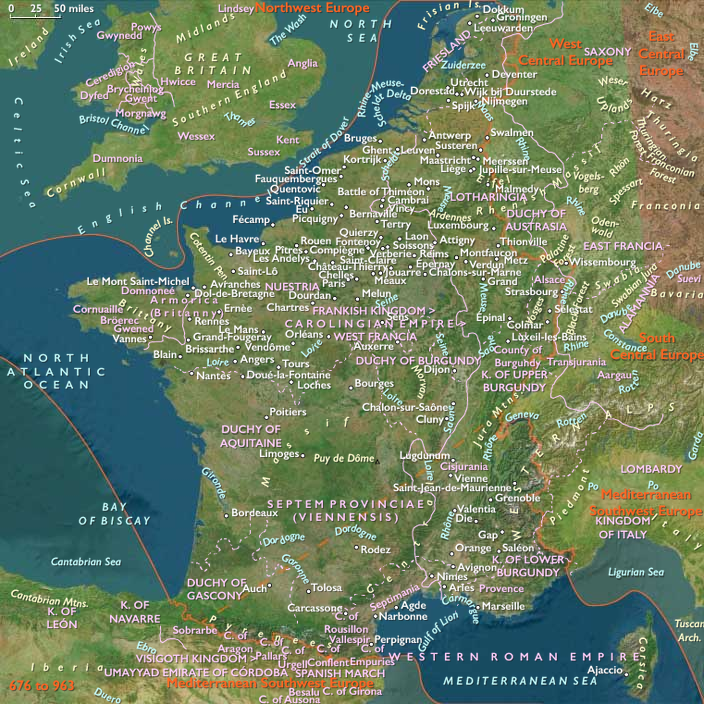
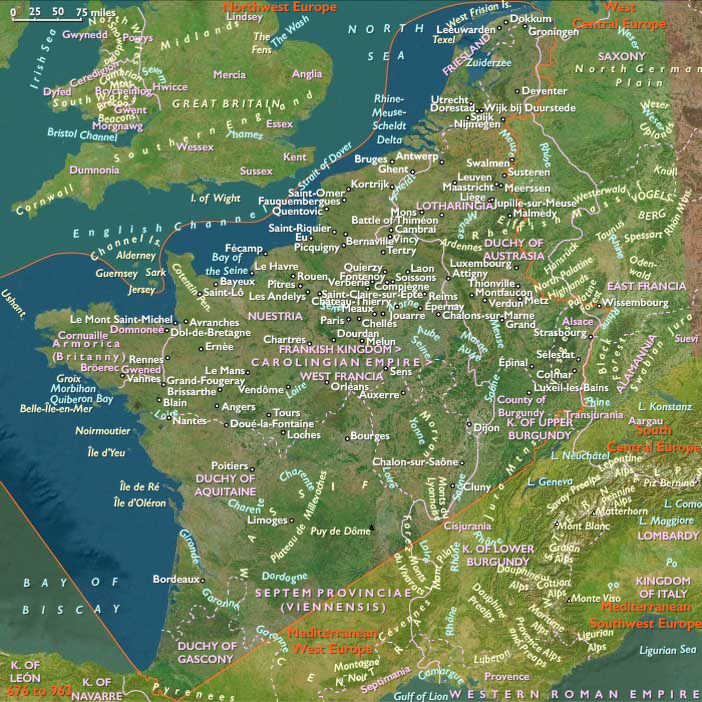
Following the Treaty of Meerssen (870), which divided Lotharingia between Louis the German and Charles the Bald, the two Carolingian rulers sought to consolidate their control over Viking-occupied territories, particularly in Frisia and the Low Countries. This led Charles to negotiate with Rorik of Dorestad, a Danish Viking ruler who had previously held Frisian lands under Lothair I and Lothair II.
Charles the Bald’s Treaty with Rorik (870)
- According to the Annales Bertiniani, Charles traveled to Nijmegen to meet with Hrørek (Rorik) and bind him to his rule through a treaty.
- This agreement mirrored earlier arrangements made by Lothair I and Lothair II, under which Rorik had ruled as a semi-independent vassal while acknowledging Carolingian sovereignty.
- Rorik retained control of his territories, holding land on both sides of the new border between Charles’ and Louis’ kingdoms.
Further Negotiations (872) and Rorik’s Final Allegiance to Louis (873)
- In 872, there were further diplomatic exchanges between Charles and Rorik, suggesting that the Viking leader was playing both Frankish rulers against each other to maintain his autonomy.
- However, in 873, Rorik swears allegiance to Louis the German, indicating that he had shifted his loyalty from Charles to East Francia.
- After this event, Rorik disappears from historical records, with no further mentions of his fate.
The Rorik-Rurik Debate: Was Rorik the Founder of Kievan Rus’?
- Since the 19th century, some historians have attempted to identify Rorik of Dorestad with Rurik, the legendary Norse founder of Kievan Rus’ as described in the Primary Chronicle.
- The argument is based on:
- The similarity of the names Rorik (Hrørek) and Rurik (Hrørikr).
- The disappearance of Rorik from Frankish sources after 873, which coincides with the traditional timeframe of Rurik’s rule in Novgorod (c. 862–879).
- However, most scholars remain skeptical, as no contemporary sources explicitly link the Frankish Rorik with the Eastern Slavic Rurik.
Significance of the Treaty and Rorik’s Role
- Rorik’s shifting allegiances demonstrate how Carolingian rulers struggled to control Viking warlords, often resorting to diplomatic agreements instead of military confrontation.
- His control over Frisia and the Low Countries meant that Viking influence remained strong in the region, despite Carolingian attempts to integrate Norse leaders into their feudal system.
- His final allegiance to Louis the German in 873 suggests that East Francia had gained the upper hand in the struggle for control over Frisia and the North Sea trade routes.
Although the Rorik-Rurik connection remains uncertain, what is clear is that Rorik of Dorestad played a significant role in Viking-Frankish diplomacy, navigating between rival Carolingian rulers while maintaining his own territorial autonomy.
Locations
People
Groups
- Franks
- Vikings
- Frankish, or Carolingian (Roman) Empire
- Francia Occidentalis (West Francia, or France), Kingdom of
- Francia Orientalis (East Francia), Kingdom of
- Lotharingia, Kingdom of
- Rurik dynasty
Topics
Commodoties
Subjects
Regions
Subregions
Years: 873 - 873
Locations
People
Groups
- Franks
- Vikings
- Frankish, or Carolingian (Roman) Empire
- Francia Occidentalis (West Francia, or France), Kingdom of
- Francia Orientalis (East Francia), Kingdom of
- Lotharingia, Kingdom of
- Rurik dynasty
Topics
Commodoties
Subjects
Regions
Subregions