
Louis IX’s Decision to Lead the Seventh …
Years: 1244 - 1244
December
Louis IX’s Decision to Lead the Seventh Crusade (1244): A Vow Amidst Illness
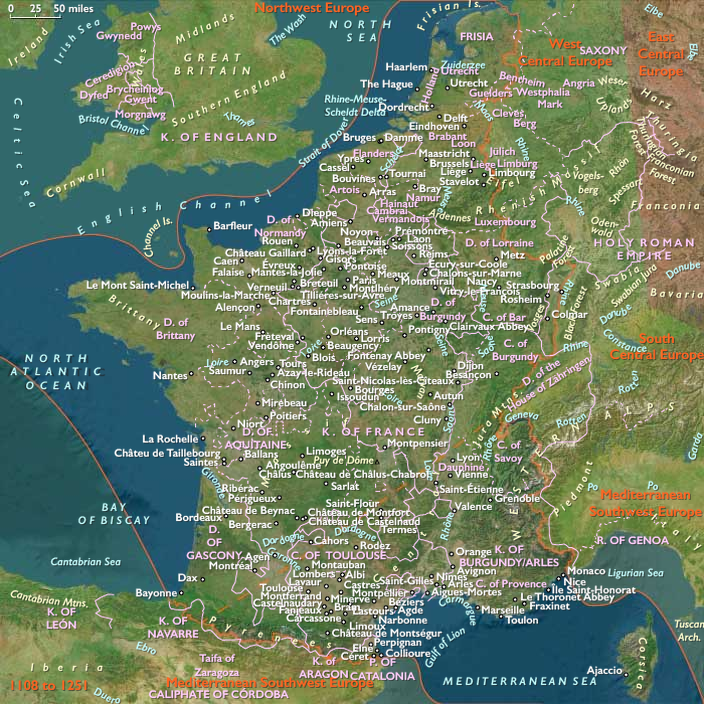
Following his victory over the English at Taillebourg in 1242, Louis IX of France (Saint Louis) fell gravely ill with malaria at Pontoise-lés-Noyon. His condition was so severe that many feared he would not survive. However, upon recovering, he took an extraordinary vow—in December 1244, upon learning of Jerusalem’s capture by Muslim forces, he pledged to lead a crusade to reclaim the Holy Land, launching what became the Seventh Crusade (1248–1254).
The Fall of Jerusalem (1244) and Louis IX’s Response
- In October 1244, Turkic Khwarazmian mercenaries, allied with the Ayyubid Sultanate of Egypt, recaptured Jerusalem, massacring its Christian population.
- This event deeply shocked the Christian world, though enthusiasm for another crusade was waning due to the repeated failures of previous campaigns.
- Despite little support from his barons and advisers, Louis IX took up the cross in December 1244, personally committing himself to a new expedition to reclaim the Holy Land.
Motivations for the Seventh Crusade
-
Religious Devotion
- Louis IX was deeply pious, and his vow reflected his genuine belief in the Crusading ideal.
- He saw the loss of Jerusalem as a moral and spiritual duty that he, as a Christian king, must rectify.
-
Personal Crisis and Divine Inspiration
- His severe illness in 1242 left him near death, and some chroniclers suggest that his vow was made as an act of gratitude for his survival.
- He may have viewed his recovery as a divine sign, compelling him to lead a new crusade.
-
Lack of Enthusiasm Among His Barons
- Unlike earlier crusades, Louis faced considerable reluctance from his nobility.
- Many of his advisers and barons opposed the idea, preferring to focus on securing France rather than engaging in another distant and costly war.
- However, Louis’ strong will prevailed, and his barons were gradually forced to accept his decision.
The Path to the Seventh Crusade (1248–1254)
- Louis IX spent four years preparing his campaign, meticulously organizing supplies, troops, and finances.
- He set his sights on Egypt, viewing it as the key to recapturing the Holy Land.
- His crusade departed in 1248, marking the beginning of one of the most well-organized yet ultimately unsuccessful crusading campaigns.
Legacy of Louis IX’s Decision
- His personal devotion to the Crusades reinforced his reputation as a saintly king, later leading to his canonization as Saint Louis in 1297.
- The Seventh Crusade, despite its failures, demonstrated the last great medieval attempt by France to reclaim the Holy Land.
- His commitment to crusading ideals influenced later crusading movements, though enthusiasm for the cause diminished in Western Europe after repeated defeats.
Louis IX’s decision in December 1244 to lead the Seventh Crusade was a turning point in his reign, reflecting his deep religious convictions and sense of divine duty, even in the face of strong opposition from his own court.
Locations
People
Groups
- Muslims, Sunni
- French people (Latins)
- France, (Capetian) Kingdom of
- Christians, Roman Catholic
- Jerusalem, Latin Kingdom of
- Palestine, Frankish (Outremer)
- English people
- Egypt, Ayyubid Sultanate of
Topics
Commodoties
Subjects
Regions
Subregions

Related Events
Showing 10 events out of 46745 total
Years: 1244 - 1244
December
Locations
People
Groups
- Muslims, Sunni
- French people (Latins)
- France, (Capetian) Kingdom of
- Christians, Roman Catholic
- Jerusalem, Latin Kingdom of
- Palestine, Frankish (Outremer)
- English people
- Egypt, Ayyubid Sultanate of
Topics
Commodoties
Subjects
Regions
Subregions