
Filters:
Lothair II’s Divorce Crisis and Political Struggles …
Years: 858 - 858
Lothair II’s Divorce Crisis and Political Struggles (858)
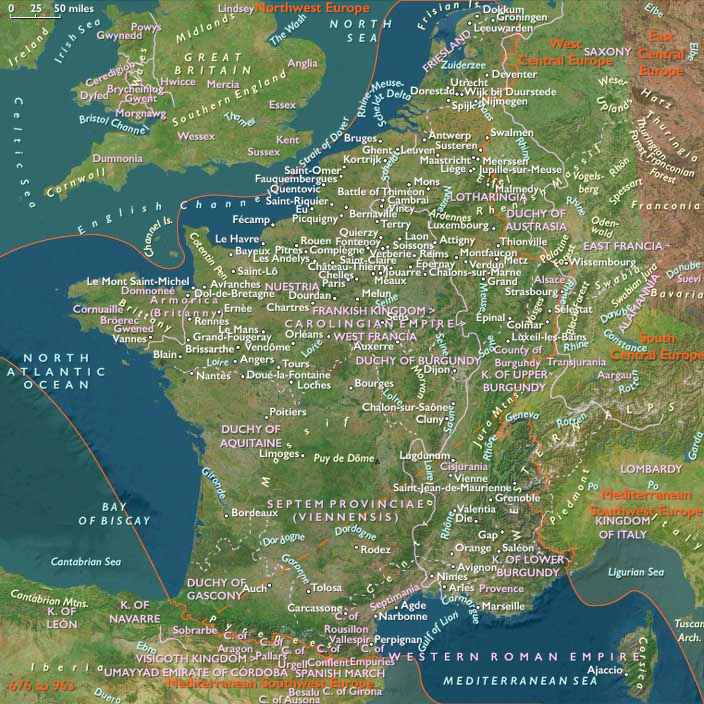
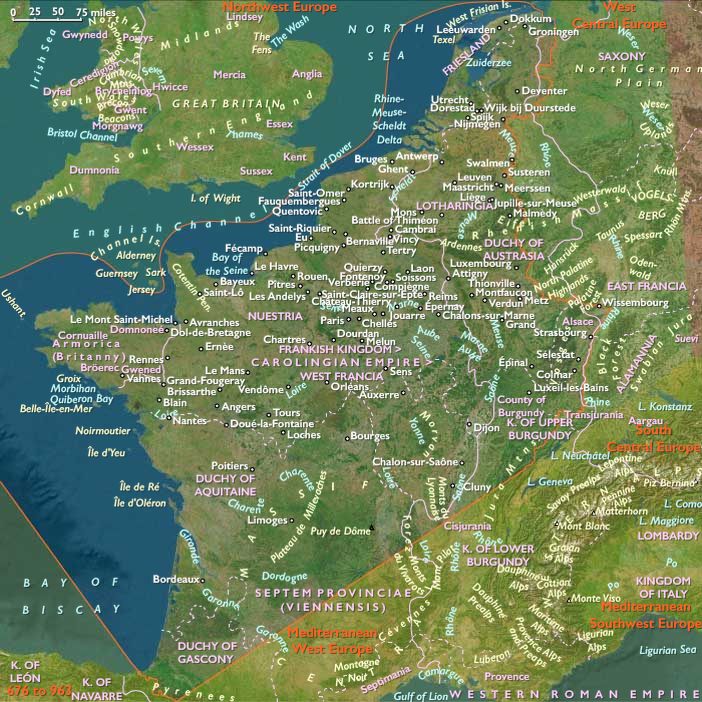
By 858, Lothair II, ruler of Lotharingia, is deeply entangled in a controversial attempt to divorce his wife, Teutberga, in favor of his mistress, Waldrada, with whom he already has a son. His efforts to legitimize this relationship and secure an heir shape his political alliances and conflicts within the Carolingian world.
The Divorce Attempt and Its Political Implications
- Teutberga, Lothair's lawful wife, is the sister of Hucbert, Abbot of St. Maurice, a powerful noble with strong ecclesiastical and military influence.
- Lothair, lacking a legitimate male heir, seeks to marry Waldrada, ensuring that his son with her is recognized as his rightful successor.
- His relations with his uncles, Charles the Bald and Louis the German, become highly influenced by their stance on the divorce.
- Louis the German supports the divorce, seeing it as an opportunity to gain influence in Lotharingia.
- Charles the Bald opposes it, recognizing that if Lothair dies without an heir, his territory could be up for grabs.
The Role of Pope Nicholas I and Lothair’s Reconciliation with Louis the German
- In 858, Lothair’s younger brother, Louis II (King of Italy and Holy Roman Emperor), secures the election of Pope Nicholas I.
- With the new pope in place, Louis the German reconciles with Lothair, offering military assistance in return for lands south of the Jura Mountains.
- Feeling emboldened, Lothair puts away Teutberga, dismissing her from the royal court in favor of Waldrada.
Teutberga’s Ordeal and Her Restoration (858)
- Hucbert, her brother, takes up arms in her defense, rallying secular and ecclesiastical support against Lothair.
- Teutberga is forced to undergo the ordeal of water to prove her innocence:
- This was likely the ordeal of hot water, which involved plunging one’s arm into boiling water and later assessing whether the wounds healed miraculously.
- The more dangerous ordeal of cold water, in which the accused was thrown into water to see if they sank (proof of innocence), had been abolished by Louis the Pious in 829.
- Teutberga successfully endures the ordeal, proving her innocence according to medieval custom.
- Lothair is compelled to restore her, as the Church and political rivals refuse to accept his marriage to Waldrada.
Impact of the 858 Crisis
- Lothair's failure to secure his divorce leaves his succession uncertain, fueling further tensions between Charles the Bald and Louis the German, both of whom anticipate his kingdom’s eventual partition.
- His conflict with the Papacy will escalate in the coming years, leading to direct intervention from Pope Nicholas I, reinforcing the Church’s growing role in dynastic disputes.
- The dynastic struggle over Lotharingia continues, setting the stage for future Franco-German conflicts over the region.
Though Lothair temporarily reconciles with Louis the German, his battle to legitimize Waldrada and her children is far from over, shaping the politics of the Carolingian world for the next decade.
Locations
People
- Charles of Provence
- Charles the Bald
- Lothair II, King of Lotharingia
- Louis II of Italy
- Louis the German
- Pope Nicholas I
Groups
- Papal States (Republic of St. Peter)
- Italy, Carolingian Kingdom of
- Aquitaine, (Carolingian) Kingdom of
- Frankish, or Carolingian (Roman) Empire
- Francia Orientalis (East Francia), Kingdom of
- Lotharingia, Kingdom of
Subjects
Regions
Subregions
Years: 858 - 858
Locations
People
- Charles of Provence
- Charles the Bald
- Lothair II, King of Lotharingia
- Louis II of Italy
- Louis the German
- Pope Nicholas I
Groups
- Papal States (Republic of St. Peter)
- Italy, Carolingian Kingdom of
- Aquitaine, (Carolingian) Kingdom of
- Frankish, or Carolingian (Roman) Empire
- Francia Orientalis (East Francia), Kingdom of
- Lotharingia, Kingdom of
Subjects
Regions
Subregions