
Little is known about the short reign …
Years: 473 - 473
December
Little is known about the short reign of Glycerius.
In his biography of St. Epiphanius, bishop of Pavia, Ennodius states that Glycerius made "many measures for the public good" but mentions only that he pardoned "the injury done to his mother by certain of his subjects at the petition of bishop Epiphanius."
A single law issued by Glycerius survives, concerning simony, dated March 11, 473 and addressed to Himilco, the Praetorian Prefect of Italy.
Ralph Mathisen speculates that Glycerius tried to stay on good terms with the Eastern Roman Empire For most of his rule, Glycerius lives in Northern Italy, evidenced by the fact that the only mints issued in his name are from Milan and Ravenna.
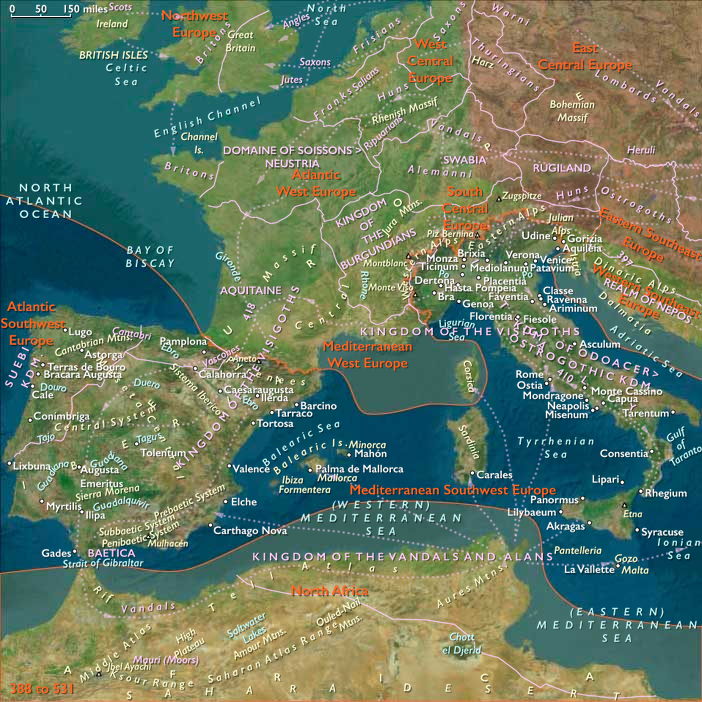
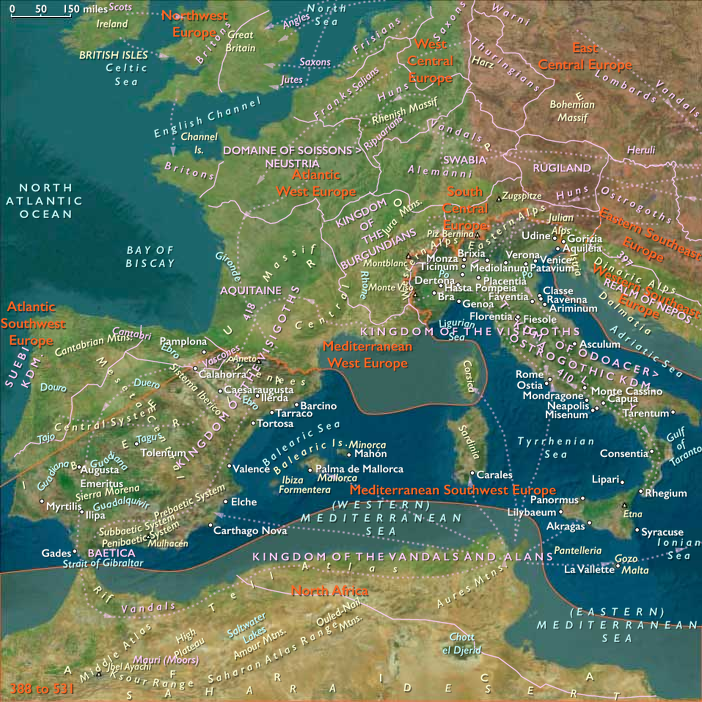
Euric, King of the Visigoths in 473, orders the invasion of Italy, but his commander Vincentius is defeated and killed by Glycerius' comites Alla and Sindila.
Despite the victorious defense of Italy, Glycerius can do nothing to prevent the Visigoths from conquering Arelate and Marseille, in Gaul.
At the same time, the Ostrogoths led by King Widimir began marching to Italy.
The possibility that the two Gothic armies will merge is disastrous to contemplate.
Glycerius sends an envoy to Widimir and, through a combination of diplomacy and a bribe of two thousand solidi, persuades Widimir that the territories he wants are already occupied by the Visigoths and that he should move to Gaul.
While this strategy prevents Vincentius from receiving reinforcements, it also leads to the convergence of both Gothic armies against Gaul.
The Eastern Roman Emperor Leo I had not recognized Olybrius and does not recognize Glycerius, as his election had not been ratified by the Eastern court, and it is suspected that he is a puppet of Gundobad.
Therefore Leo has chosen a candidate on his own, Julius Nepos, magister militum in Dalmatia and related to the Eastern Empress Verina.
The election is delayed, however, so Julius Nepos cannot leave immediately, as the ports are closed for the winter.
Locations
People
Groups
- Goths (East Germanic tribe)
- Septem Provinciae (Roman Diocese)
- East, or Oriens, Praetorian prefecture of
- Italy, Praetorian prefecture of
- Illyricum, Praetorian prefecture of
- Ostrogoths, Realms of the
- Gaul, Praetorian prefecture of
- Roman Empire, Western (Ravenna)
- Italy, Diocese of
- Visigothic Kingdom of Toulouse
- Septimania
Topics
- Late Antiquity
- Migration Period
- Fall of the Western Roman Empire
- Visigothic Raids on the Roman Empire, Later
- Migration Period Pessimum
Commodoties
Subjects
- Commerce
- Environment
- Labor and Service
- Conflict
- Faith
- Government
- Custom and Law
- Technology
- Movements
Regions
Subregions
Related Events
Showing 10 events out of 58532 total
Years: 473 - 473
December
Locations
People
Groups
- Goths (East Germanic tribe)
- Septem Provinciae (Roman Diocese)
- East, or Oriens, Praetorian prefecture of
- Italy, Praetorian prefecture of
- Illyricum, Praetorian prefecture of
- Ostrogoths, Realms of the
- Gaul, Praetorian prefecture of
- Roman Empire, Western (Ravenna)
- Italy, Diocese of
- Visigothic Kingdom of Toulouse
- Septimania
Topics
- Late Antiquity
- Migration Period
- Fall of the Western Roman Empire
- Visigothic Raids on the Roman Empire, Later
- Migration Period Pessimum
Commodoties
Subjects
- Commerce
- Environment
- Labor and Service
- Conflict
- Faith
- Government
- Custom and Law
- Technology
- Movements
Regions
Subregions