
Literature, especially Persian literature, has flourished under …
Years: 1054 - 1054
Literature, especially Persian literature, has flourished under the patronage of the Buyids during this and the previous caliphs' period.
Luminaries include the Persian (Soghdian) philosopher al-Farabi, who had died in 950; al-Mutanabbi, acknowledged in the East as the greatest of Arabic poets, and himself an Arab, in 965; and the greatest of all, the Iranian Abu Ali Husayn ibn Abdallah ibn Sina (Avicenna) in 1037.
In Iraq, a slackening economy, dissension in the army, and general Buyid disunity has hastened the dynasty's decline since the death of 'Adud ad-Dawlah in 983.
During the first half of the long reign of Caliph al-Qa'im, hardly a day has passed in the capital without turmoil.
Frequently the city has been left without a ruler; the Shi'a Buyid ruler has often been forced to flee the capital.
Upon the death of Abu Kalijar in 1048, his son had taken the throne in Baghdad with the title "al-Malik al-Rahim".
His succession to the entire Buyid Empire had been prevented by his brother Abu Mansur Fulad Sutun, who had taken control of Fars.
The two had then entered into a struggle for supremacy.
Al-Malik al-Rahim took Shiraz, but was then forced back to Iraq due to increased hostility between the Turks and the Daylamite troops there.
At about the same time, the Buyid lands in Oman were permanently lost.
In 1051 or 1052, however, he had defeated Abu Mansur and captured Fars.
Al-Malik al-Rahim then appointed another brother, Abu Sa'd Khusrau Shah, as governor of the province.
Shiraz, however is lost in 1053 or 1054, when Abu Mansur returns as a vassal to the Seljuq ruler Toghril, who, having overrun Syria and Armenia, now casts an eye upon Baghdad at a moment when the city is in the last agony of violence and fanaticism.
Locations
People
Groups
- Arab people
- Persian people
- Berber people (also called Amazigh people or Imazighen, "free men", singular Amazigh)
- Armenian people
- Oghuz Turks
- Armeniac Theme
- Muslims, Sunni
- Muslims, Shi'a
- Abbasid Caliphate (Baghdad)
- Buyid dynasty
- Mazyadid (Al-Mazeedi) state of Iraq
- Turkmen people
- Fatimid Caliphate
- 'Uqaylid Dynasty of Mosul
- Uqaylid Dynasty of Tikrit
- Armenia, Principalities of
- Seljuq Empire (Isfahan)
- Christians, Eastern Orthodox
- Roman Empire, Eastern: Non-dynastic and Comnenid dynasty
Topics
Commodoties
Subjects
Regions
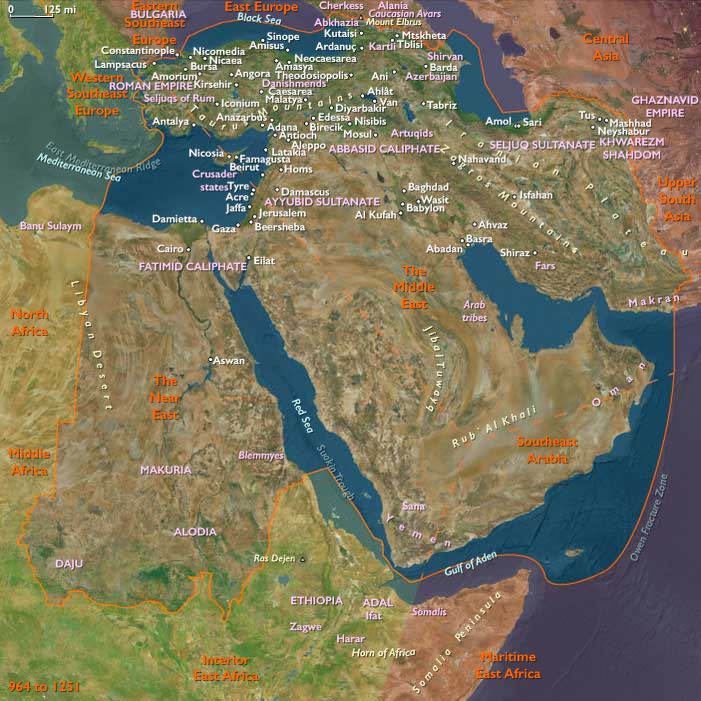
Subregions
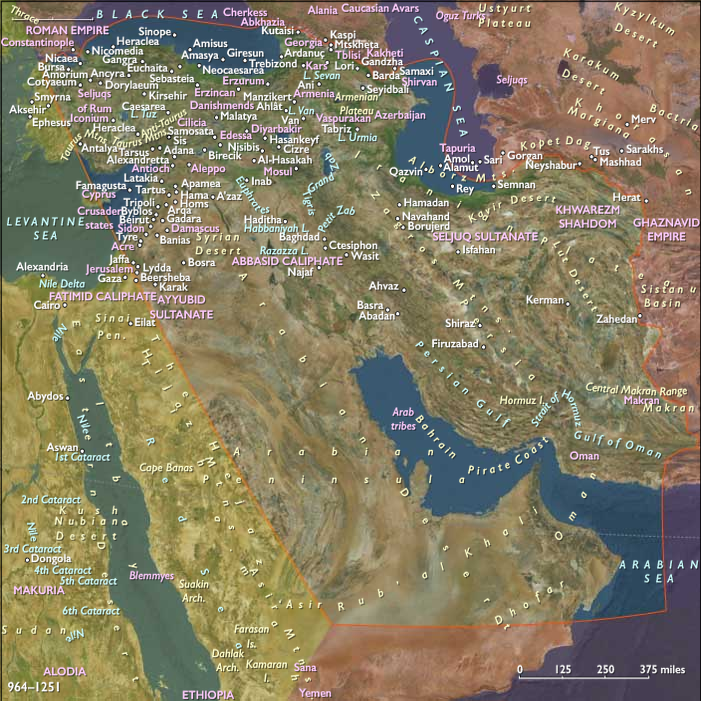
Years: 1054 - 1054
Locations
People
Groups
- Arab people
- Persian people
- Berber people (also called Amazigh people or Imazighen, "free men", singular Amazigh)
- Armenian people
- Oghuz Turks
- Armeniac Theme
- Muslims, Sunni
- Muslims, Shi'a
- Abbasid Caliphate (Baghdad)
- Buyid dynasty
- Mazyadid (Al-Mazeedi) state of Iraq
- Turkmen people
- Fatimid Caliphate
- 'Uqaylid Dynasty of Mosul
- Uqaylid Dynasty of Tikrit
- Armenia, Principalities of
- Seljuq Empire (Isfahan)
- Christians, Eastern Orthodox
- Roman Empire, Eastern: Non-dynastic and Comnenid dynasty
Topics
Commodoties
Subjects
Regions
Subregions