…Lipova, and …
Years: 1514 - 1514
…Lipova, and …
Locations
People
Groups
Topics
Commodoties
Subjects
Regions
Subregions
Related Events
Filter results
Showing 10 events out of 39167 total
Dürer’s technical mastery as an engraver is evident in the fourth of his famous Master Prints, St. Jerome in His Study, often considered as part of a group of three Dürer engravings, the other two being the well-known Melencolia I (1514) and Knight, Death and the Devil (1513).
Together they have been viewed as representing the three spheres of activity recognized in medieval times: Knight, Death, and the Devil belongs to the moral sphere and the "active life"; Melencolia I represents the intellectual; and St. Jerome the theological and contemplative life.
Saint Jerome is shown sitting behind his desk, engrossed in work.
The table, on the corner of which is a cross, is typical of the Renaissance.
An imaginary line from Jerome's head passing through the cross would arrive at the skull on the window ledge, as if contrasting death and the Resurrection.
The lion in the foreground is part of the traditional iconography of St. Jerome, and near it is a sleeping dog, an animal found frequently in Dürer's works, symbolizing loyalty.
Both creatures are part of Jerome's story in the Golden Legend of around 1260, which contained fanciful hagiographies of saints.
Copernicus, shortly after receiving his doctorate from Ferrara, returns from to Poland and eventually settles at the cathedral in Frauenberg, not a hundred miles (one hundred and sixty kilometers) from his birthplace in Thorn.
By May 1514, the forty-one-year-old Copernicus has written and discreetly circulated in manuscript his Commentariolus, the first outline of his challenge to the geocentric cosmology that has been accepted dogmatically since the time of Aristotle.
Royal power has declined during the reign of King Vladislas II, king of Bohemia and Hungary (Ulászló II in Hungarian history), in favor of the magnates, who use their power to curtail the peasants' freedom.
In Transylvania, the nobles have gradually imposed even tougher terms on their serfs.
In 1437, for example, each serf had had to work for his lord one day per year at harvest time without compensation; by 1514, serfs must work for their lord one day per week using their own animals and tools.
The papal legate of eastern Europe, Archbishop Tamás Bakócz, calls on April 16, 1514, for volunteers to go on a crusade against the Turks, and about one hundred thousand discontented peasants join the army.
The Szekler soldier György Dózsa, after having won a reputation for valor in the Turkish wars, is appointed leader, and the ill-planned crusade moves on the southern border.
The rebellious, antilandlord sentiment of these “crusaders” becomes apparent during their march across the Great Alfold, and Bakócz abruptly cancels the campaign.
The peasant leaders, without food or clothing, begin to voice grievances against landlords, and refuse to disperse or reap the fields at harvest time.
The peasant army announces its intention to overthrow the nobility and end oppression of the lower classes.
The rebellious peasants, now well armed, attack their landlords, ravage Hungary, burning hundreds of manor houses and castles and murdering thousands of nobles and their families.
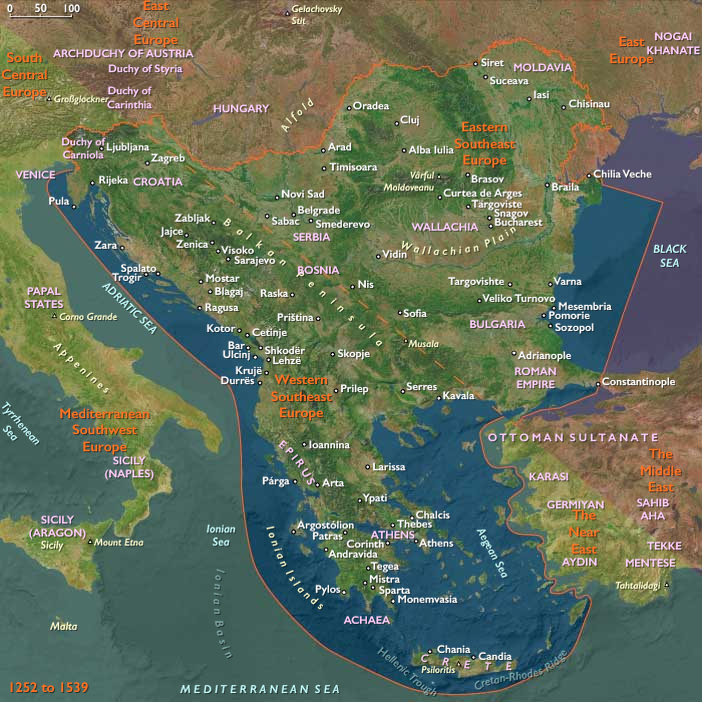
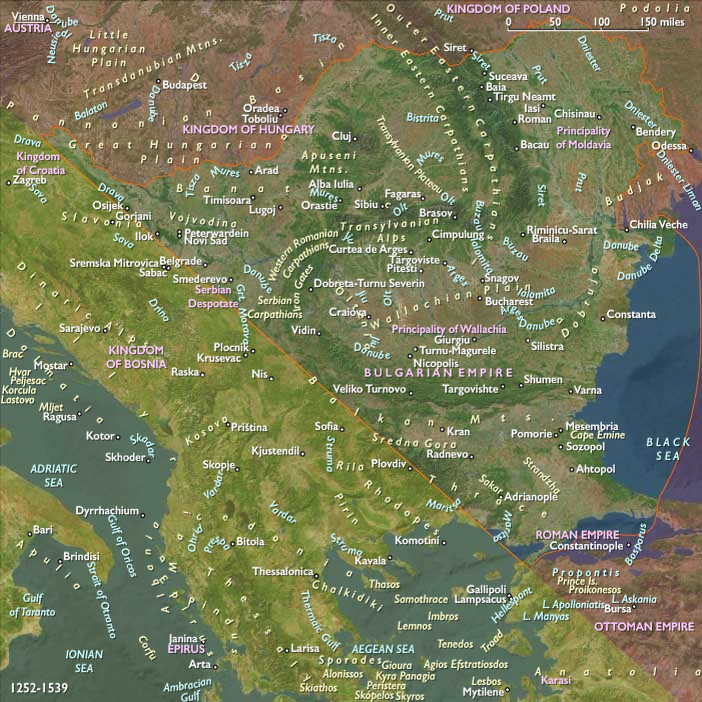
They capture the fortresses of ‘Arad, …
...Világos, ...
…threaten Buda, and lay siege to Temesvár.
Here, however, despite strength of numbers, the disorganized peasants suffer a decisive defeat by János Zápolya, or Szápolyai, voivode (governor) of Transylvania from 1511, who had become the leader of the so-called national party of the Hungarian nobility in the chaos after the death of King Matthias Corvinus in 1490.
Dózsa and his chief lieutenants are captured and tortured, and on July 20 Dózsa is roasted alive.
János Zápolyai, who had become the leader of the so-called national party of the Hungarian nobility in the chaos after the death of Matthias Corvinus in 1490, has been the governor of Transylvania from 1511.
Zápolya brutally suppresses the uprising of 1514, crushing the remnants of the rebel army by October and hereby increases his popularity with the gentry.
Consequently, the second Diet of Rákos appoints him governor of the infant king Louis II.
After the revolt, the Hungarian nobles enact laws that condemn the serfs to eternal bondage and increase their work obligations.
The Diet of 1514 condemns the entire peasant class to “real and perpetual servitude” and binds it permanently to the soil.
It also increases the number of days the peasants have to work for their lords, imposes heavy taxes on them, and orders them to pay for the damage caused by the rebellion.
With the serfs and nobles deeply alienated from each other and jealous magnates challenging the king's power, Hungary is vulnerable to outside aggression.
Selim I, after struggling successfully against his brothers for the throne of the Ottoman Empire, is free to turn his attention to the internal unrest he believed was stirred up by the Shia Qizilbash, who have sided with other members of the dynasty against him and had been semi-officially supported by Bayezid II.
Selim now fears that they will incite the population against his rule in favor of Shah Ismail, leader of the Shia Safavids, and by some of his supporters believed to be family of the Prophet.
Selim secures a jurist opinion that describes Ismail and the Qizilbash as "unbelievers and heretics" enabling him to undertake extreme measures on his way eastward to pacify the country.
In response, Shah Ismail accuses Sultan Selim of aggression against fellow Muslims, violating religious sexual rules and shedding innocent blood.
When Selim starts his march east in summer 1514, the Safavid realms are invaded in the east by the Uzbek state recently brought to prominence by Abu 'I-Fath Muhammad, who had fallen in battle against Ismail only a few years before.
To avoid the prospect of fighting a war on two fronts, Isma'il employs a scorched earth policy against Selim in the west.
The terrain of eastern Anatolia and the Caucuses is extremely rough and combined with the difficulty in supplying the army in light of Isma'il's scorched earth campaign while marching against Muslims, Selim's army is discontent.
The Janissaries even fire their muskets at the Sultan's tent in protest at one point.
When Selim learns of the Safavid army forming at Chaldiran, on the eastern side of the Euphrates River, northeast of Lake Van, hee quickly moves to engage Isma'il in part to stifle the discontent of his army.
While the Safavid forces are at Chaldiran and planning on how to confront the Ottomans, Muhammad Khan Ustajlu, who serves as the governor of Diyabakir, and Nur-Ali Khalifa, a commander who knows how the Ottomans fight, proposes that they should attack as quickly as possible.
However, this proposal is rejected by the powerful Qizilbash officer Durmish Khan Shamlu, who rudely says that Muhammad Khan Ustajlu is only interested in the province that he governs.
The proposal is also rejected by Ismail himself, who says, "I am not a caravan-thief, whatever is decreed by God, will occur."
Selim, taking precautions against followers of the Shah among his own troops, orders an immediate attack on August 23 and with superior weapons and tactics, wins an overwhelming Ottoman victory.
Ismail's army is more mobile and their soldier are better prepared, but the Ottomans prevail, due in large part to their efficient modern army, and possession of artillery, black powder and muskets.
Ismail is wounded and almost captured in battle.

On first reaching Tabriz with his army in July, Selim had left the Azerbaijani capital unharmed, moving on to defeat the Persians at Chaldiran.
He now returns to Tabriz and reduces the partially populated city within two weeks, sacking it and massacring all its inhabitants save one thousand artisans, who he sends to Istanbul.
The Ottoman victory at Chaldiran and the occupation of Tabriz on September 7 does not lead to the conquest of Iran or the collapse of Isma'il's Safavid empire.
The Ottoman army becomes increasingly discontented under the impact of Safavid propaganda among the already heterodox Janissaries.
A relative lack of booty and supplies compared with campaigns in Europe also weakens morale.
A mutiny among his troops fearing a counterattack and entrapment by the fresh Safavid forces called in from the interior forces the triumphant Ottomans to withdraw prematurely.
Among the booty from Tabriz is Ismail's favorite wife, for whose release the Sultan demands huge concessions, which are refused.
Despite his defeat at the Battle of Chaldiran, Ismail quickly recovers most of his kingdom, from east of Lake Van to the Persian Gulf.
The Ottomans, however, manage to annex for the first time Eastern Anatolia and parts of Mesopotamia, as well as, briefly, northwestern Iran.
The Turkish army withdraws to Amasya and Ankara to disperse.
The major result of the Chaldiran battle is to persuade Ismail and his successors to avoid open conflict with the Ottomans at all costs, a policy that will continue for a century.
This preserves the Safavid army, but it enables Selim to turn toward the last independent Anatolian Kurdish and Turkmen principalities.