
Lewenhaupt is to bring a fresh supply …
Years: 1708 - 1708
September
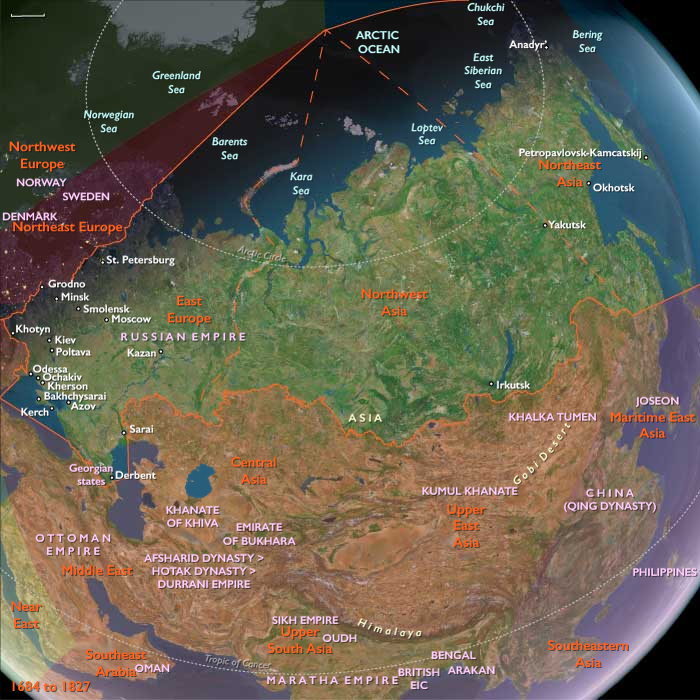
Lewenhaupt is to bring a fresh supply of ammunition and food to support the Swedish army in its proposed march on the Russian capital of Moscow.
He had found, however, that gathering the needed supplies and preparing the army for an overland march took longer than expected.
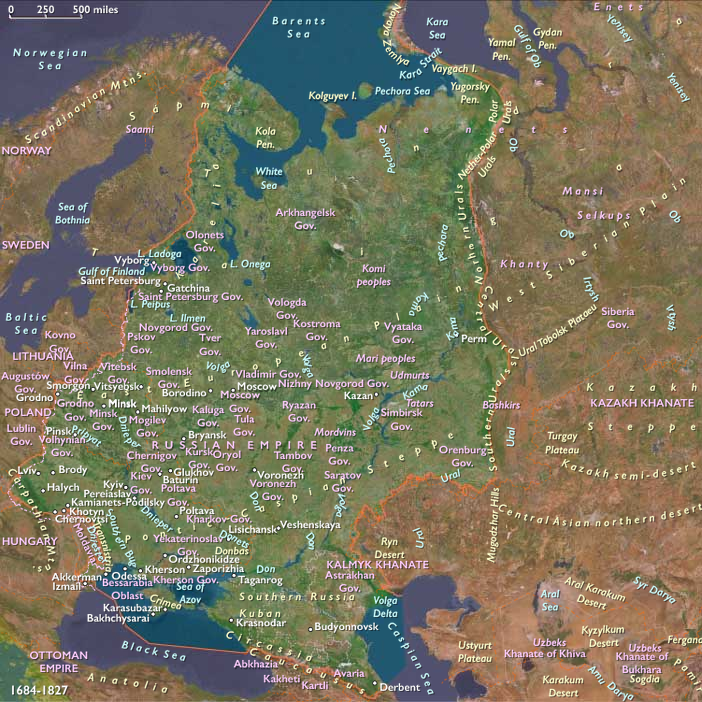
Charles XII, after waiting for Lewenhaupt for weeks, abandons his camps on September 26 and decides to invade Ukraine, hoping to reach this rich granary before winter.
Lewenhaupt is at this time only about eighty miles from Charles' position.
According to the Russian history, the Ukrainian forces, under the command of Cossack hetman Ivan Mazepa, had been in discussions with Charles for some time, and at this point he, Mazepa, officially allied himself to the Swedes in order to gain independence from Russia.
However, there is no direct evidence or documentary proof of any preliminary negotiations between Mazepa and Charles.
Mazepa, however, had sent most of his Cossacks to Belarus and Right-bank Ukraine to contain Polish forces, and Charles's decision to turn to Ukraine, according to Hrushevsky, was unexpected for Mazepa.
His plans were that Charles's forces would move forward to Moscow and then he could create his own uprising in Ukraine.
Only three thousand Cossacks have followed their Hetman, however, with the rest remaining loyal to the Tsar.
Mazepa's call to arms is further weakened by the Orthodox clergy's allegiance to the Tsar.
Peter, having observed these movements, decides to attack Lewenhaupt's smaller force before Charles can support it.
As Charles forces are moving towards Ukraine, Peter sent his Moscow reserves to intercept them at Starodub and asked Mazepa to supply some reinforcements.
Prince Aleksandr Menshikov moves quickly to intercept Lewenhaupt's force, attacking it while crossing the River Sozh near a small village that gives name to the Battle of Lesnaya.
His forces meet the Russian attack, but they are amazed to find that the new Russian army gives them a serious fight.
The Swedes lose one thousand men dead and wounded and four thousand missing in the battle.
Russian casualties total one thousand one hundred and eleven killed and two thousand eight hundred and fifty-six wounded (Cossacks and Kalmyks not included), about one third of those engaged (Lewenhaupt, probably basing his account on that of a Russian prisoner-of-war, in his diary claims sixteen thousand rather than twelve thousand Russian combatants).
Lewenhaupt, seeing that he is about to lose, decides to rejoin Charles with all speed, so he abandons the cannon, the cattle and most of the food, driving some of the soldiers to mutiny.
Locations
People
- Adam Ludwig Lewenhaupt
- Aleksandr Danilovich Menshikov
- Augustus II the Strong
- Charles XII of Sweden
- Ivan Mazepa
Groups
- Cossacks
- Sweden, (second) Kingdom of
- Russia, Tsardom of
- Polish-Lithuanian Commonwealth (Commonwealth of the Two Nations)
- Kalmyk people
- Cossack Hetmanate
Topics
Commodoties
Subjects
Regions
Subregions
Related Events
Showing 10 events out of 28695 total
Years: 1708 - 1708
September
Locations
People
- Adam Ludwig Lewenhaupt
- Aleksandr Danilovich Menshikov
- Augustus II the Strong
- Charles XII of Sweden
- Ivan Mazepa
Groups
- Cossacks
- Sweden, (second) Kingdom of
- Russia, Tsardom of
- Polish-Lithuanian Commonwealth (Commonwealth of the Two Nations)
- Kalmyk people
- Cossack Hetmanate
Topics
Commodoties
Subjects
Regions
Subregions