
Leo joins the Mongols in their invasion …
Years: 1281 - 1281
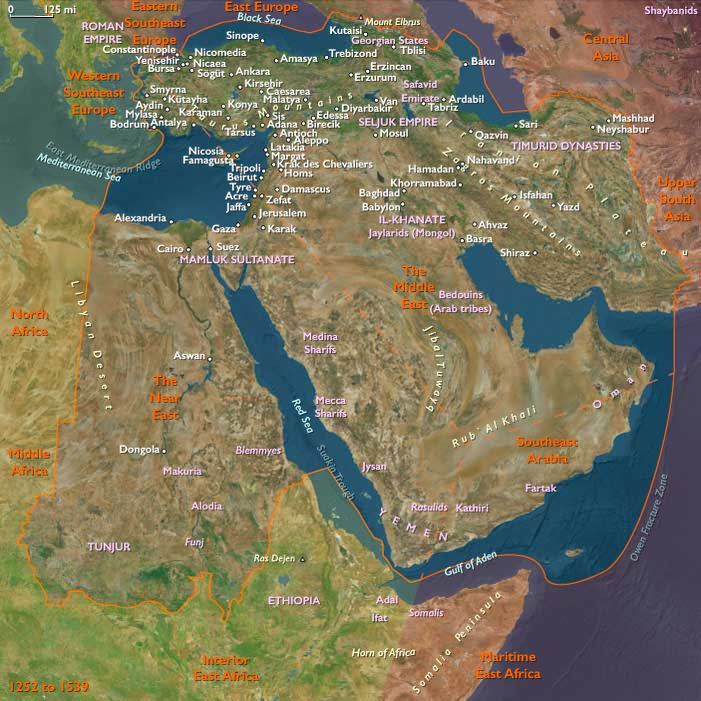
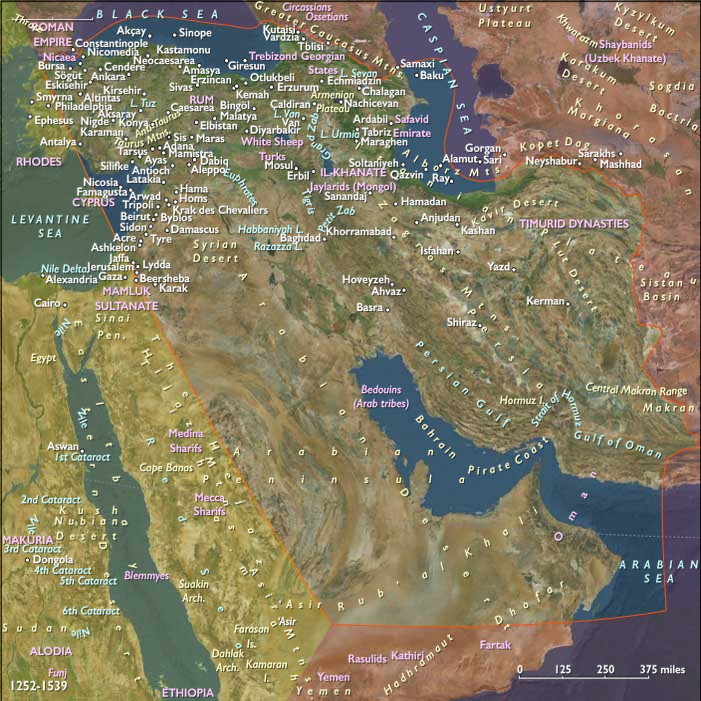
Leo joins the Mongols in their invasion of Syria in 1281, but after they are vanquished at the Second Battle of Homs, the king has to sue for peace; in 1285, he will obtain a ten-year truce in exchange for important territorial concessions in favor of the Mamluks.
Locations
People
Groups
- Armenian people
- Christians, Eastern (Diophysite, or “Nestorian”) (Church of the East)
- Turkmen people
- Christians, Roman Catholic
- Jerusalem, Latin Kingdom of
- Tripoli, County of
- Templar, Knights (Poor Knights of Christ and of the Temple of Solomon)
- Mongols
- Jaffa and Ascalon, County of
- Cyprus, Kingdom of
- Armenian Kingdom of Cilicia, or Little Armenia
- Mongol Empire
- Egypt and Syria, Mamluk Bahri Sultanate of
- Palestine, Mamluk
- Il-khanate
Topics
- Crusades, The
- Mongol Conquests
- Mongol Invasions of Syria
- Late Crusades Period: Crusader-Turkish Wars of 1272-1303
Commodoties
Subjects
Regions
Subregions
Related Events
Showing 10 events out of 45529 total
Years: 1281 - 1281
Locations
People
Groups
- Armenian people
- Christians, Eastern (Diophysite, or “Nestorian”) (Church of the East)
- Turkmen people
- Christians, Roman Catholic
- Jerusalem, Latin Kingdom of
- Tripoli, County of
- Templar, Knights (Poor Knights of Christ and of the Temple of Solomon)
- Mongols
- Jaffa and Ascalon, County of
- Cyprus, Kingdom of
- Armenian Kingdom of Cilicia, or Little Armenia
- Mongol Empire
- Egypt and Syria, Mamluk Bahri Sultanate of
- Palestine, Mamluk
- Il-khanate
Topics
- Crusades, The
- Mongol Conquests
- Mongol Invasions of Syria
- Late Crusades Period: Crusader-Turkish Wars of 1272-1303
Commodoties
Subjects
Regions
Subregions