L'arte del violino is a noteworthy and …
Years: 1733 - 1733
L'arte del violino is a noteworthy and influential musical composition from Italian Baroque violinist and composer Pietro Locatelli.
The twelve concerti are written for solo violin, strings, and basso continuo and are published in 1733 as the composer's third opus.
The virtuosic style and artistry present in the work will strongly influence violin playing in the eighteenth century and cement Locatelli's reputation as a pioneer of modern violin technique.
L'arte del violino is first published by the publishing house of Roger-Le Cene in the city of Amsterdam, where Locatelli has resided from the year 1729.
It is dedicated to the Venetian patriarch Girolamo Michiel Lini, for whom he had performed while staying in Venice and of whose orchestra Locatelli remarked upon the skill and "unparalleled size." (Johnston, Blair. "The Art of the Violin: 12 Concertos & 24 Caprices, Op. 3 (before 1733)." All Music Guide to Classical Music. San Francisco: Backbeat Books, 2005. (Page 760))
As opposed to his previous music, which models itself on the Roman style of baroque composition best exemplified by Arcangelo Corelli, the concerti of L'arte del violino were created in the newer Venetian style of Antonio Vivaldi.
The music makes ample use of the violin's very high register, giving it a bel canto quality lacking in Locatelli's early work.
Locations
People
Groups
Topics
Subjects
Regions
Subregions
Related Events
Filter results
Showing 10 events out of 27562 total
Tobacco use is spreading throughout the world by 1733.
Tobacco will continue throughout the eighteenth century to be the cash crop of the Virginia Colony, as well as the Carolinas.
Augustus II the Strong, Imperial Prince-Elector of Saxony and monarch of the Polish–Lithuanian Commonwealth, dies on February 1, 1733.
The Marquis de Monti, France's ambassador in Warsaw, persuades the rival Potocki and Czartoryski families to unite behind Stanisław Leszczyński.
Teodor Potocki, Primate of Poland and interrex following the death of Augustus, calls a convocation sejm in March 1733.
Delegates to this sejm pass a resolution forbidding the candidacy of foreigners; this will explicitly exclude both Emmanuel of Portugal and Augustus II's son, Frederick August II, the Elector of Saxony.
Frederick August, the only legitimate son of Augustus II by his wife, Christiane Eberhardine of Brandenburg-Bayreuth, had been groomed to succeed his father as King of Poland and Grand Duke of Lithuania, and thus, in 1712, had converted to Catholicism.
This had been publicly announced in 1717, to the anger among the nobility in his native Saxony.
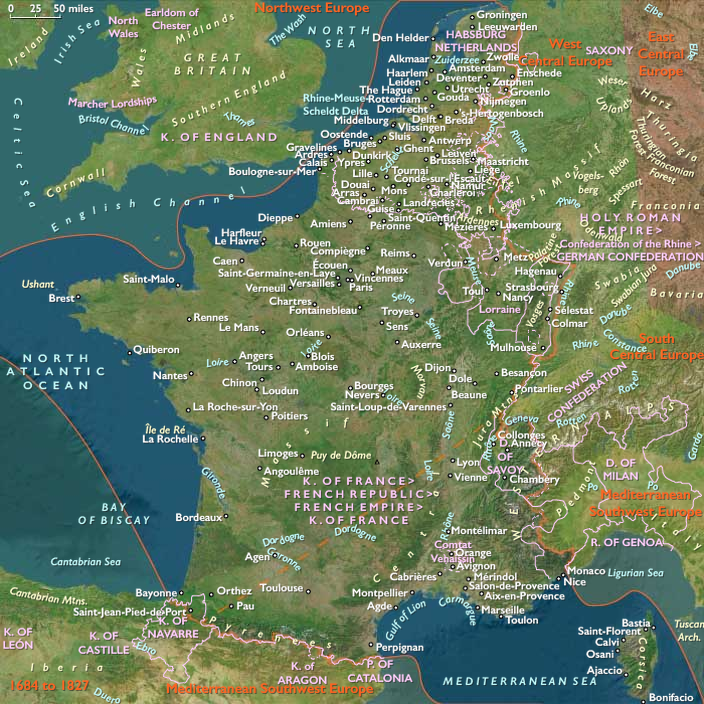
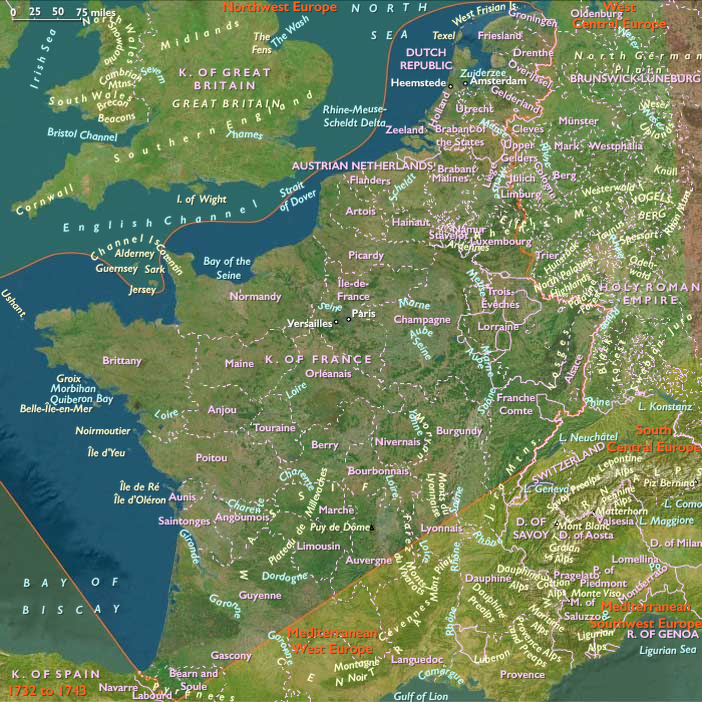
France throughout the spring and summer of 1733 begins building up forces along its northern and eastern frontiers, while the emperor masses troops on Polish borders, reducing garrisons in the Duchy of Milan for the purpose.
While the aging Prince Eugene of Savoy had recommended to the emperor a more warlike posture against potential actions by France in the Rhine valley and northern Italy, only minimal steps are taken to improve imperial defenses on the Rhine.
Frederick August negotiates agreements with Austria and Russia in July 1733.
In exchange for Russian support, he agrees to give up any remaining Polish claims to Livonia, and promises to Anna of Russia her choice of successor to the Duchy of Courland, a Polish fief (of which she had been duchess prior to her ascension to the Russian throne) which will otherwise come under direct Polish rule on the death of the current duke, Ferdinand Kettler, who has no heirs.
To the Austrian emperor, he promises recognition of the Pragmatic Sanction of 1713, a document designed to guarantee inheritance of the Austrian throne to Maria Theresa, Charles' oldest child.
Polish nobles gather in August for the election sejm.
Thirty thousand Russian troops under Field Marshal Peter Lascy enter Poland on August 11 in a bid to influence the sejm's decision.
France on September 4, openly declares its support for Leszczyński, who on September 12 is elected king by a sejm of twelve thousand delegates.
A group of nobles, led by Lithuanian magnates including Duke Michael Wiśniowiecki (the former Lithuanian grand chancellor nominated by Augustus II), crosses the Vistula River to Praga and the protection of Russian troops.
This group, numbering about three thousand, on October 5 elects Frederick August II King of Poland as Augustus III.
Despite the fact that this group is a minority, Russia and Austria, intent on maintaining their influence within Poland, recognize Augustus as king.
France on October 10 declares war on Austria and Saxony.
Louis XV is later joined by his uncle, King Philip V of Spain, who hopes to secure territories in Italy for his sons by his second marriage to Elizabeth Farnese.
Specifically, he hopes to secure Mantua for the elder son, Don Carlos, who is already Duke of Parma and has the expectation of the Grand Duchy of Tuscany, and the Kingdoms of Naples and Sicily for the younger son, Don Felipe.
The two Bourbon monarchs are also joined by Charles Emmanuel of Savoy, who hopes to secure gains from the Austrian Duchies of Milan and Mantua.

The Polish throne, vacant upon the death of Augustus II of Saxony on February 1, 1733, is claimed by both his son, Augustus III, and by Stanisław Leszczyński, father in law of King Louis XV of France.While a body double ostensibly leaves Brest by sea, Stanisław crosses Germany incognito to arrives at Warsaw on September 8.
Stanislas is elected king of Poland by the diet on September 12.
Russia and Austria, both of whom back Augustus III, immediately invade Poland.
Stanisław, who does not have a proper army, has to take refuge by September 22 in Danzig (now known as Gdansk), there to await the French help he has been promised.
Augustus III, protected by Russian forces at Warsaw, is proclaimed king on October 5.
Great Britain, the Dutch Republic, Sweden, Denmark and the Republic of Venice, recognizing that Austro-Russian aggression against Poland is the casus belli, pledge to remain neutral.
Spain, coveting the Kingdom of Naples and Sardinia, which the Duke of Milan wants, sides with France.
Nadr’s sole failure is a siege of Baghdad in 1733 (the city is recovered later, however).
Jean-Baptiste-Siméon Chardin had ceded his position in the Académie de Saint-Luc a year after his admission to the Académie Royale de Peinture et de Sculpture, and is now making a modest living by "produc[ing] paintings in the various genres at whatever price his customers chose to pay him", and by such work as the restoration of the frescoes at the Galerie François I at Fontainebleau in 1731. (Rosenberg, Pierre, and Florence Bruyant (2000), Chardin. p. 20. London: Royal Academy of Arts).
His son Jean-Pierre was baptized in November 1731, and a daughter, Marguerite-Agnès, is baptized in 1733.
Largely self-taught, Chardin is greatly influenced by the realism and subject matter of the seventeenth-century Low Country masters.
Despite his unconventional portrayal of the ascendant bourgeoisie, early support comes from patrons in the French aristocracy, including Louis XV.
Though his popularity rests initially on paintings of animals and fruit, by the 1730s he has introduced kitchen utensils into his work.
Soon figures populate his scenes as well, supposedly in response to a portrait painter who had challenged him to take up the genre.
Woman Sealing a Letter (about 1733) may have been his first attempt.
A large trade has grown between the New England and Middle colonies and the French, Dutch, and Spanish West Indian possessions.
Molasses from the British West Indies, used in New England for making rum, which is experiencing rapidly increasing consumption in the West, is priced much higher than its competitors.
The West Indian planters also have no need for the large quantities of lumber, fish, and other items offered by the colonies in exchange.
The British West Indies in the first part of the eighteenth century are the most important trading partner for Great Britain, so Parliament is attentive to their requests.
However, rather than acceding to the demands to prohibit the colonies from trading with the non-British islands, Parliament passes the prohibitively high tax on the colonies for the import of molasses from these islands.
The Molasses Act of 1733, created largely at the insistence of large plantation owners, levies a heavy tax—six pence per gallon—on molasses coming from anywhere except Britain’s Caribbean sugar islands.
The Act is not passed for the purpose of raising revenue, but rather to regulate trade by making British products cheaper than those from the French West Indies.
Largely opposed by colonists, who profit from a lucrative trade with the French sugar islands, the tax will be rarely paid, and smuggling to avoid it will become prominent.
If actually collected, the tax would have effectively closed that source to New England and destroyed much of the rum industry, yet smuggling, bribery or intimidation of customs officials will effectively nullify the law.
The growing corruption of local officials and disrespect for British Law caused by this act and others like it, such as the Stamp Act or Townshend Acts, will eventually lead in 1776 to the American Revolution.
The flying shuttle loom, one of the key developments in the industrialization of weaving, is patented in by its inventor John Kay in 1733.
It allows a single weaver to weave much wider fabrics, and it can be mechanized, allowing for automatic machine looms.
James Oglethorpe, after purchasing Ayuba Suleiman Diallo, sends him to the London office of the Royal African Company in London; Bluett and Ayuba travel in 1733 to England.
Ayuba learns during the journey to communicate in English.
However emotionally swayed his letters claimed him to be, Oglethorpe had not been so conscientious to leave instructions with the London office of the RAC concerning what to do with Ayuba in late April 1733 upon his arrival.
Captain Henry Hunt (or perhaps his brother, William Hunt), one of the original factors in charge of Ayuba's enslavement, arranges for lodging in a country province, yet Ayuba hears rumors that Hunt is planning to sell him to traders who claim they will deliver him home.
Ayuba, fearing yet more trickery, contacts Bluett and other men whom he had met en route to London.
Bluett arranges for Ayuba’s stay in Cheshunt in Hertfordshire.
The RAC, following Oglethorpe’s orders, made in part through persistent requests from interested men in London, subsequently pay all the expenses and purchase price of the bond for Ayuba.
Ayuba beseeches Bluett once again, explaining that none of this secured he would not be enslaved once again.
According to Bluett, all the honorable men involved had promised they would not sell Ayuba into slavery, so, though supposedly Ayuba is not under any threat, Bluett and other sympathizers pay “fifty-nine pounds, six shillings, and eleven pence half-penny” simply to ease Ayubya’s anxiety.
Englishmen in London and surrounding provinces who have met Ayuba collect money for his “freedom in form,” an official document seal made and sealed by the RAC.
Bluett later explained, “Job’s Mind being now perfectly easy,” he could fraternize with London’s elite, obtaining many gifts and new friendships, while also being of service to Hans Sloane through his newly acquired ability to translate Arabic into English.
Ayuba is in the company of many other prominent people, including the royal family and the Duke and Duchess of Montague.
The portrait of Diallo by William Hoare of Bath is painted in 1733.
Previously known only from a print, the original was believed lost.
It was not seen in public until 2010, it was offered to the National Portrait Gallery in London, which launched an appeal to raise its cost of £554,937 (with a deadline of August 25, 2010) to prevent its export.
Most of this money was provided by the Heritage Lottery Fund and the Art Fund; the Gallery launched a public appeal for the remaining one hundred thousand pounds.
The Molasses Act of 1733 in particular is egregious to the colonists, as a significant part of colonial trade relies on the product.
The taxes will severely damage the New England economy, and the taxes will rarely be paid as a result, resulting in a surge of smuggling, bribery, and intimidation of customs officials.
The original charter for Georgia specifies the new colony as being between the Savannah and Altamaha Rivers, up to their headwaters (the headwaters of the Altamaha are on the Ocmulgee River), and then extending westward "sea to sea."
The area within the charter had previously been part of the original grant of the Province of Carolina, which is closely linked to Georgia.
South Carolina had never been able to gain control of the area, but after the Yamasee War the Georgia coast had been effectively cleared of natives, excepting a few villages of defeated Yamasee, who have become known as the Yamacraw to distinguish them from the still-hostile Yamasee in Florida and among the Creek.
The Yamacraw had formed by 1728, under the leadership of Tomochichi, out of some of the Yamasee and Creek who had disagreed with the breaking of friendship with the British during the Yamasee War of 1715.
The Yamacraw had by 1728 settled at the site of the present day city of Savannah.
The Creeks cannot account for anyone by the name of Yamacraw, and the R, which appears in the name, is not recognized in either the Maskoki or Yuchi dialect Oglethorpe, accompanied by the first settlers, arrives on February 12, 1733, at Yamacraw Bluff, in what is now Savannah, and establishes a camp with the help of the elderly Tomochichi.
A Yamacraw Native American village had occupied the site, but Oglethorpe negotiates with Tomochichi and the Yamacraw agree to move their village upriver.
The day is still celebrated as Georgia Day.
One plan had called for Georgia to be created to be a safe home for debtors.
However, this purpose was never fulfilled and one hundred and sixteen men, women, and children had been selected to become the original colonists.
Oglethorpe's plan for settlement (now known as the Oglethorpe Plan) is founded on eighteenth-century country party philosophy and draws from principles of Roman colonial town design.
The Trustees succeed in obtaining ten thousand pounds from the government in 1733 and will obtain lesser amounts in subsequent years.
Georgia is the only American colony that depends on Parliament's annual subsidies.
The charter contains contradictions.
The colonists are entitled to all the rights of Englishmen, yet there is no provision for the essential right of local government.
Religious liberty is guaranteed, except for Roman Catholicism and Judaism.
A group of Jews lands in Georgia without explicit permission in 1733 but are allowed to remain.