
The Intensification of Viking Raids and the …
Years: 845 - 845
February
The Intensification of Viking Raids and the Establishment of Winter Bases (845)
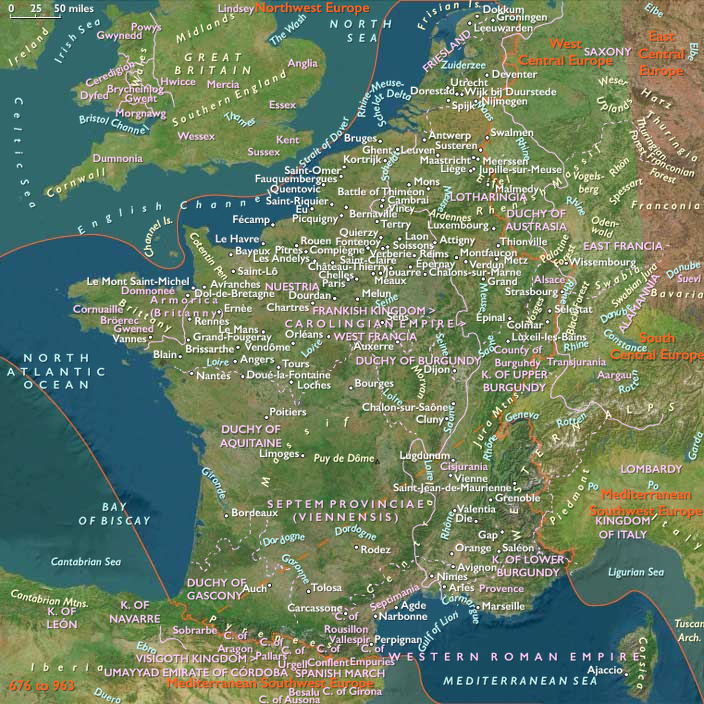
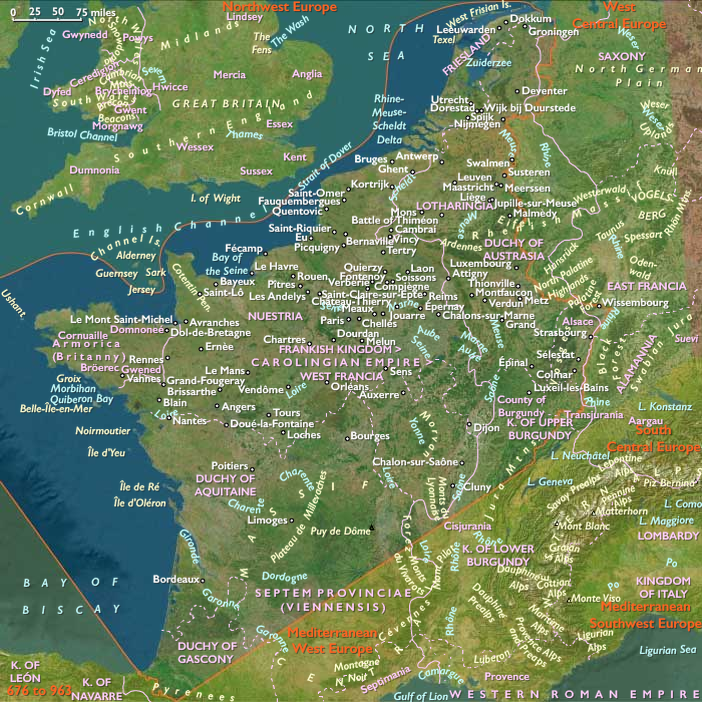
By 845, Viking raids against the Frankish Empire escalate as larger bands of Norse warriors begin to winter on small islands at the mouths of the Loire and Thames Rivers. These permanent encampments provide them with year-round operational bases, allowing them to conduct more sustained and organized raids deeper into Frankish and Anglo-Saxon territories.
The Evolution of Viking Raiding Tactics
- Early Raids (799–834):
- The first Viking raid on the Frankish Empire occurs in 799, six years after the attack on Lindisfarne (793) in England.
- Charlemagne responds in 810 by implementing a coastal defense system along the northern Frankish coast.
- After Charlemagne’s death, this system successfully repulses a Viking attack at the mouth of the Seine in 820, but by 834, defenses fail against Danish raids in Frisia and Dorestad.
- Systematic Raiding Begins (830s–840s):
- Unlike the 820 and 834 raids, which were unrelated and isolated, the mid-830s mark the beginning of more systematic and coordinated Viking incursions, alternating between both sides of the English Channel.
- Viking raids are often linked to Scandinavian power struggles, as ambitious Danish nobles use plunder to gain prestige and political dominance.
- The Vikings also exploit the Frankish civil wars (830–843), taking advantage of weakened defenses and political instability.
Major Viking Raids on the Frankish Empire (836–842)
- Antwerp and Noirmoutier (836) → Coastal monasteries and trading centers are targeted.
- Rouen (841) → The first Viking attack on the Seine River.
- Quentovic and Nantes (842) → The Vikings sack these major trading towns, killing Bishop Gohard of Nantesand further destabilizing West Francia.
The Establishment of Viking Winter Bases (845)
- By 845, Viking bands establish winter settlements on islands at the mouths of the Loire and Thames Rivers.
- These bases allow them to:
- Stockpile resources and repair their ships, making raiding more efficient.
- Launch longer, coordinated campaigns rather than returning to Scandinavia after the summer season.
- Dominate maritime trade routes, controlling the movement of goods and people in and out of Francia.
Impact on the Frankish Empire
- The Carolignian civil wars (840s) have weakened regional defenses, making it easier for the Vikings to plunder deep into Frankish territory.
- Viking incursions disrupt trade and tax revenues, especially in Frisia, the Seine Valley, and the Loire region.
- The Frankish response remains fragmented, as Charles the Bald and his nobles struggle to contain the growing Norse threat while still contesting their own internal power struggles.
Foreshadowing the Great Raids
- The Viking winter bases of 845 set the stage for even larger-scale invasions, including:
- The siege and sack of Paris in 845 by the Viking leader Ragnar Lothbrok.
- The eventual Norman settlement of Normandy (911) under Rollo.
- The Viking integration into Frankish politics, as some Norse leaders begin receiving land in exchange for military service.
By the mid-9th century, Viking raids have evolved from seasonal plundering to strategic territorial control, reshaping the political and economic landscape of Western Europe.
Groups
- Franks
- Frisians
- Wessex, English Kingdom of
- Denmark, Kingdom of
- Vikings
- Frankish, or Carolingian (Roman) Empire
- Danes (Scandinavians)
- Dublin, Kingdom of
- Francia Occidentalis (West Francia, or France), Kingdom of
Topics
- Heptarchy, The
- Viking Raids in England, Early
- Viking Raids in Ireland
- Viking Raids
- Viking Raids in France, Early
- Viking Raids in the North Sea
- Paris, Siege of
Commodoties
Subjects
Regions
Subregions
Related Events
Showing 10 events out of 54184 total
Years: 845 - 845
February
Groups
- Franks
- Frisians
- Wessex, English Kingdom of
- Denmark, Kingdom of
- Vikings
- Frankish, or Carolingian (Roman) Empire
- Danes (Scandinavians)
- Dublin, Kingdom of
- Francia Occidentalis (West Francia, or France), Kingdom of
Topics
- Heptarchy, The
- Viking Raids in England, Early
- Viking Raids in Ireland
- Viking Raids
- Viking Raids in France, Early
- Viking Raids in the North Sea
- Paris, Siege of
Commodoties
Subjects
Regions
Subregions