
The Siege of Orléans (1428–1429) and Joan …
Years: 1429 - 1429
The Siege of Orléans (1428–1429) and Joan of Arc’s Triumph
In 1428, John, Duke of Bedford, the English regent of France, ordered an unrelenting siege of Orléans, a key stronghold of the Dauphin Charles (the future Charles VII of France). At the time, Charles, Duke of Orléans, the city's rightful ruler, was a prisoner in England, leaving his territory vulnerable.
The French garrison held out for eight months, enduring continuous assaults and severe deprivation. However, in May 1429, the arrival of Joan of Arc, a deeply religious peasant girl claiming divine guidance, transformed the battle.
In just eight days, her forces lifted the siege, securing one of the most decisive victories in the Hundred Years’ War. This triumph earned her the legendary title “The Maid of Orléans.”
I. The English Siege and French Resistance (1428–1429)
- The English, led by Thomas Montacute, Earl of Salisbury, laid siege to Orléans in October 1428, aiming to cut off the Dauphin’s last major stronghold on the Loire River.
- The city's rightful ruler, Charles, Duke of Orléans, was a prisoner, weakening French morale.
- The French defenders, outnumbered and undersupplied, held out for eight months, hoping for reinforcements.
II. The Arrival of Joan of Arc (April–May 1429)
- In early 1429, Joan of Arc convinced Charles VII** that she was divinely chosen to save France.
- Granted command of an army, she marched to Orléans in April 1429, bringing fresh troops and renewed morale.
- On May 4, 1429, Joan led an attack on the English fortifications, and by May 8, the siege was broken.
- Her unexpected success shattered English confidence and turned the tide of the war in favor of Charles VII.
III. Jean de Dunois, “The Bastard of Orléans”
- Among Joan’s key commanders was Jean, Comte de Dunois, an illegitimate son of the murdered Louis, Duke of Orléans.
- A loyal supporter of the Dauphin, Dunois helped organize and execute the counteroffensive that drove out the English.
- His bravery at Orléans earned him the title “The Bastard of Orléans,” and he would go on to become one of Charles VII’s most important generals.
IV. Consequences: A Turning Point in the Hundred Years’ War
- The lifting of the siege marked the beginning of the French resurgence, shifting momentum away from English domination.
- Joan of Arc’s victory at Orléans revitalized French morale, paving the way for Charles VII’s coronation in Reims (1429).
- Dunois continued to play a key role in France’s military successes, ultimately helping to drive the English out of France.
The Siege of Orléans (1428–1429) was one of the most defining moments of the Hundred Years’ War, as Joan of Arc’s leadership and Dunois’ military prowess turned the tide in favor of the Dauphin Charles VII, ensuring the survival of the French monarchy.
Locations
People
- Charles VII of France
- Henry VI of England
- Humphrey of Lancaster, 1st Duke of Gloucester
- Jean de Dunois
- Joan of Arc
Groups
- Normandy, Duchy of
- Burgundy, Duchy of
- Christians, Roman Catholic
- Scotland, Kingdom of
- France, (Valois) Kingdom of
- England, (Plantagenet, Lancastrian) Kingdom of
Topics
- Hundred Years' War
- Armagnac-Burgundian Civil War
- Hundred Years' War: French Victory
- Orléans, Siege of
Commodoties
Subjects
Regions
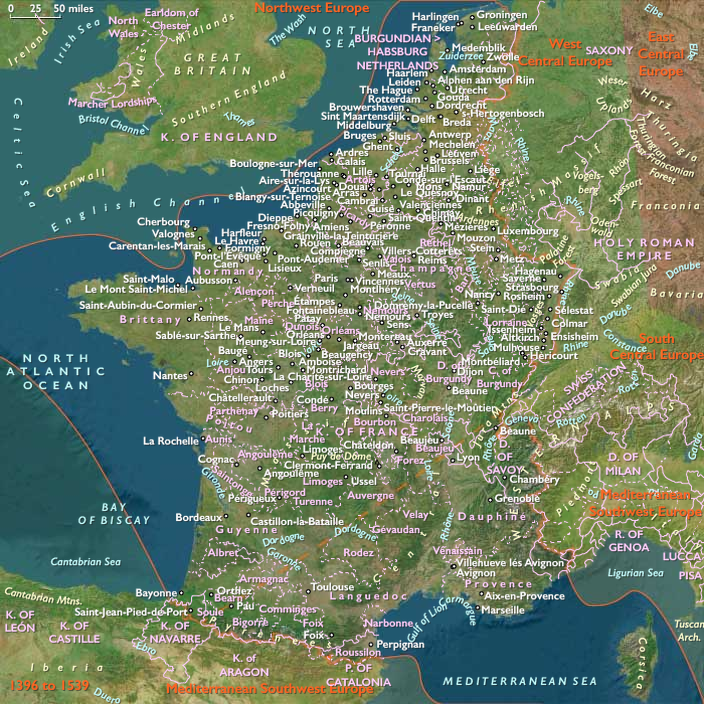
Subregions
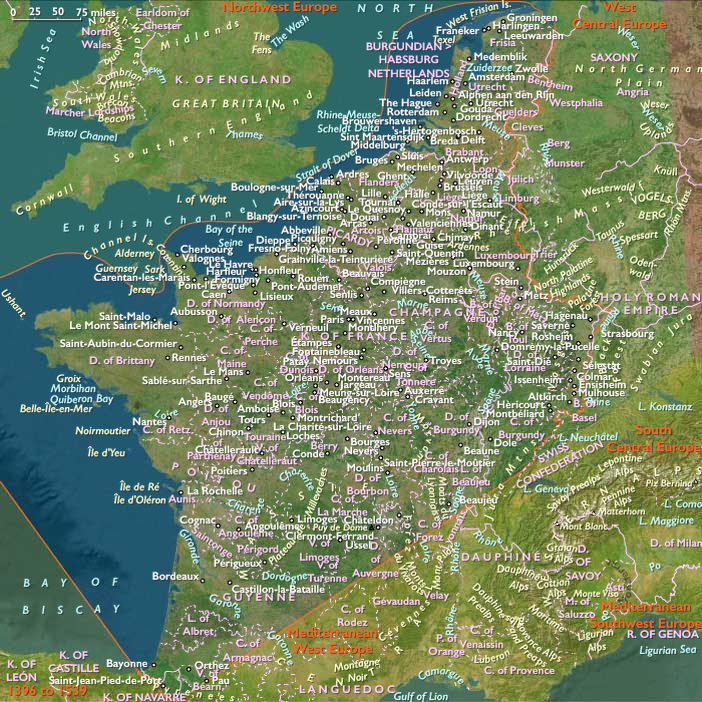
Years: 1429 - 1429
Locations
People
- Charles VII of France
- Henry VI of England
- Humphrey of Lancaster, 1st Duke of Gloucester
- Jean de Dunois
- Joan of Arc
Groups
- Normandy, Duchy of
- Burgundy, Duchy of
- Christians, Roman Catholic
- Scotland, Kingdom of
- France, (Valois) Kingdom of
- England, (Plantagenet, Lancastrian) Kingdom of
Topics
- Hundred Years' War
- Armagnac-Burgundian Civil War
- Hundred Years' War: French Victory
- Orléans, Siege of
Commodoties
Subjects
Regions
Subregions