
Lambert hereafter governs with the church and …
Years: 898 - 898
October
Lambert hereafter governs with the church and continues the policy of his father of renovatio regni Francorum: renewal of the Frankish kingdom.
He is able to issue capitularies in the Frankish fashion as his father had done.
In fact, he is the last ruler to do so.
In 898, he legislates against the exploitation of the services owed by arimanni (a warrior class of freemen in Lombard and later Frankish Italy, typically small or medium landowners with a few tenants, or none, beneath them) to create benefices for vassals.
The Lex Romana Utinensis is composed at his court.
However, Lambert still has Berengar of Friuli and the rebellious Adalbert of Tuscany to face.
In 898, the latter marches on Pavia.
The emperor, who had been hunting near Marengo, south of Milan, is given word and surprises and defeats his rival at Borgo San Donnino, taking him prisoner to Pavia.
On his return to Marengo however, he is killed, either by assassination (by Hugh, son of Maginulf), a theory about which Liutprand, our primary source, is reserved, or by falling from his horse.
He is buried in Piacenza.
Liutprand remembers him as an elegans iuvenis and vir severus: "an elegant youth and a stern man".
He is succeeded in Spoleto by Guy IV while the regnum Italicum and the imperium Romanum are thrown into chaos, contested by multiple candidates.
Within days, Berengar has taken Pavia.
Locations
People
- Adalbert II
- Arnulf of Carinthia
- Berengar I of Italy
- Guy IV of Spoleto
- Lambert II of Spoleto
- Pope John IX
Groups
- Franks
- Lombards (West Germanic tribe)
- Christianity, Chalcedonian
- Papal States (Republic of St. Peter)
- Italy, Carolingian Kingdom of
- Spoleto, Duchy of
- Francia Occidentalis (West Francia, or France), Kingdom of
- Francia Orientalis (East Francia), Kingdom of
- Tuscany, Margravate of
Commodoties
Subjects
Regions
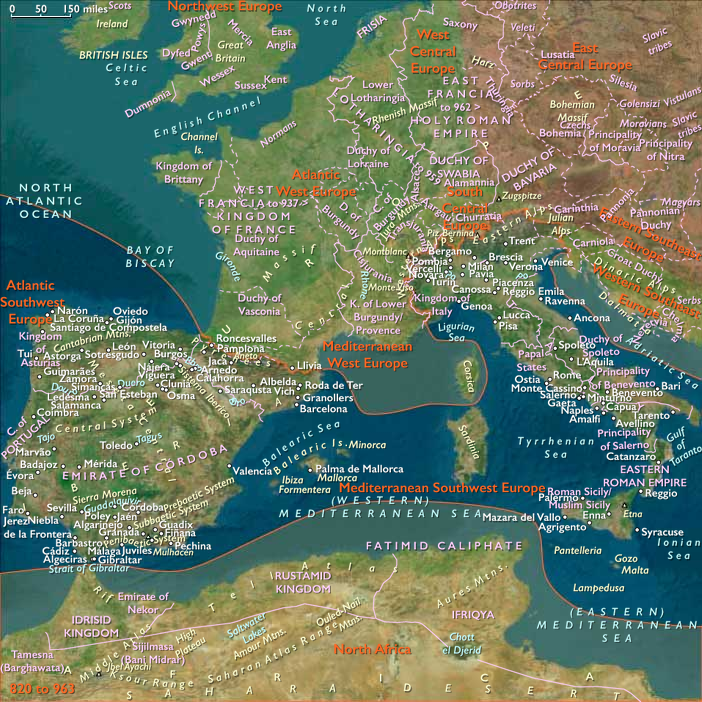
Subregions
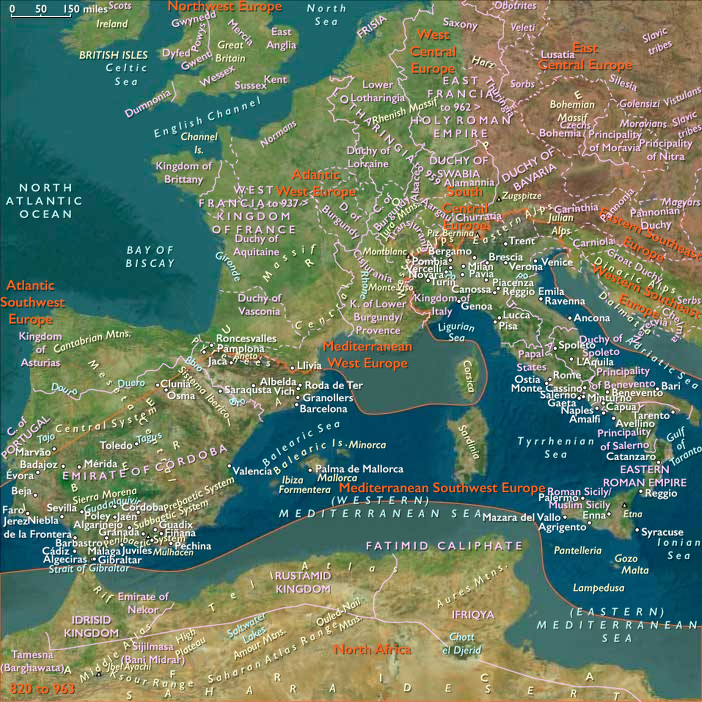
Years: 898 - 898
October
Locations
People
- Adalbert II
- Arnulf of Carinthia
- Berengar I of Italy
- Guy IV of Spoleto
- Lambert II of Spoleto
- Pope John IX
Groups
- Franks
- Lombards (West Germanic tribe)
- Christianity, Chalcedonian
- Papal States (Republic of St. Peter)
- Italy, Carolingian Kingdom of
- Spoleto, Duchy of
- Francia Occidentalis (West Francia, or France), Kingdom of
- Francia Orientalis (East Francia), Kingdom of
- Tuscany, Margravate of
Commodoties
Subjects
Regions
Subregions