
Ladislaus dies, possibly of poisoning, on January …
Years: 1163 - 1163
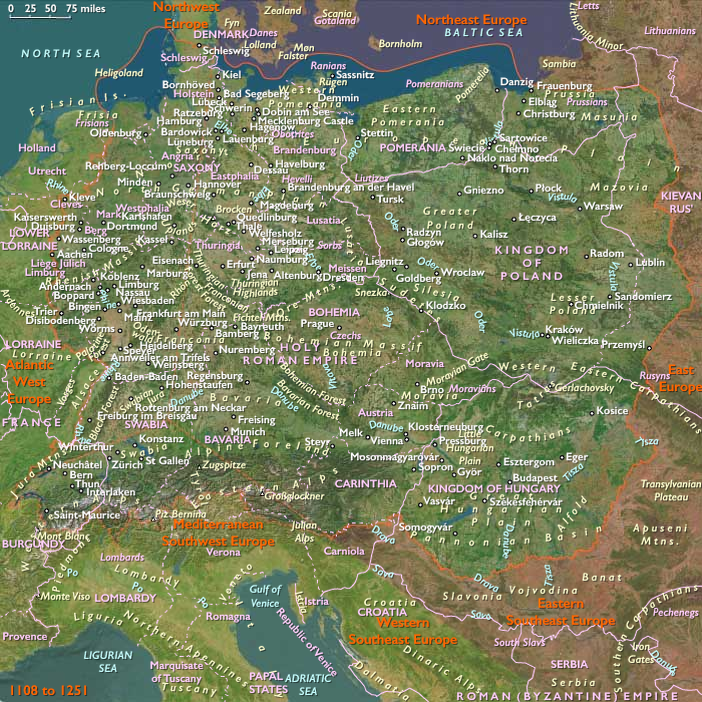
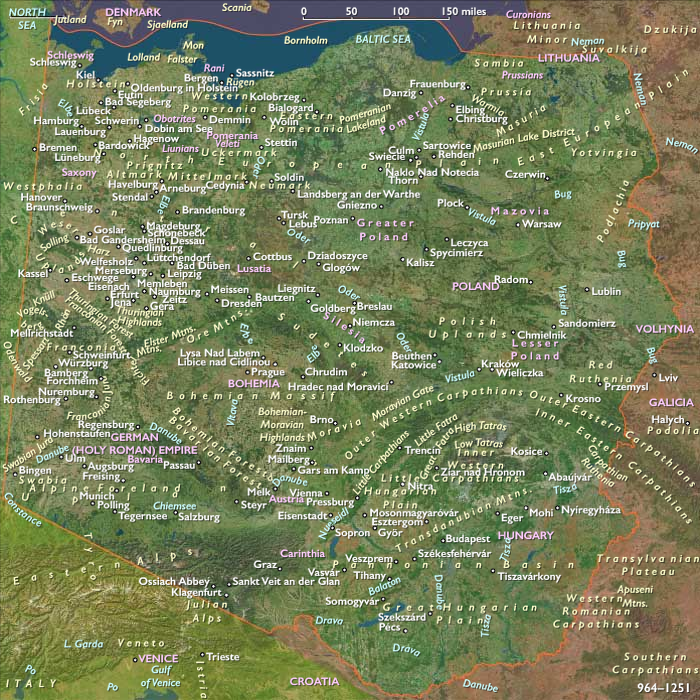
Ladislaus dies, possibly of poisoning, on January 14, 1163, and is buried in Székesfehérvár; his brother Stephen is proclaimed king.
In medieval times, Ladislaus is not counted as a king (being only an anti-king), so Ladislaus III will also be counted as Ladislaus II in the thirteenth century.
However, Lukas, Archbishop of Esztergom, who had been remaining loyal to Stephen III and had been arrested by Ladislaus II, denies Stephen’s coronation; therefore Stephen is crowned by Mikó, Archbishop of Kalocsa.
Archbishop Lukas does not want to accept Stephen's reign and excommunicates him; therefore Stephen prohibits any correspondence between the Hungarian bishops and the Holy See and he is accused of aspiring the Hungarian Church to be separated from Rome.
Stephen supports the claims of Constantinople without compromise, which results in growing indignation among the Hungarian barons.
In the beginning of 1163, the members of the Csák clan rebel against him, but they are defeated.
In the meantime, the young Stephen III seeks assistance of the Holy Roman Emperor, Frederick I, and, leading the troops sent to him by the emperor, he defeats his uncle on June 19, 1163 at Székesfehérvár.
During the battle, the elder Stephen is taken captive but the young king, following Archbishop Lukas' advice, sets him free.
After his release, Stephen flees again to Constantinople.
Locations
People
- Frederick I, Holy Roman Emperor
- Ladislaus II of Hungary
- Manuel I Komnenos
- Pope Alexander III
- Stephen III of Hungary
- Stephen IV of Hungary
Groups
- Germans
- Hungarian people
- Greeks, Medieval (Byzantines)
- Holy Roman Empire
- Hungary, Kingdom of
- Christians, Roman Catholic
- Christians, Eastern Orthodox
- Roman Empire, Eastern: Komnenos dynasty, restored
Topics
Commodoties
Subjects
Regions
Subregions
Related Events
Showing 10 events out of 48492 total
Years: 1163 - 1163
Locations
People
- Frederick I, Holy Roman Emperor
- Ladislaus II of Hungary
- Manuel I Komnenos
- Pope Alexander III
- Stephen III of Hungary
- Stephen IV of Hungary
Groups
- Germans
- Hungarian people
- Greeks, Medieval (Byzantines)
- Holy Roman Empire
- Hungary, Kingdom of
- Christians, Roman Catholic
- Christians, Eastern Orthodox
- Roman Empire, Eastern: Komnenos dynasty, restored
Topics
Commodoties
Subjects
Regions
Subregions