
Ottoman armies had overrun all of Croatia …
Years: 1540 - 1683
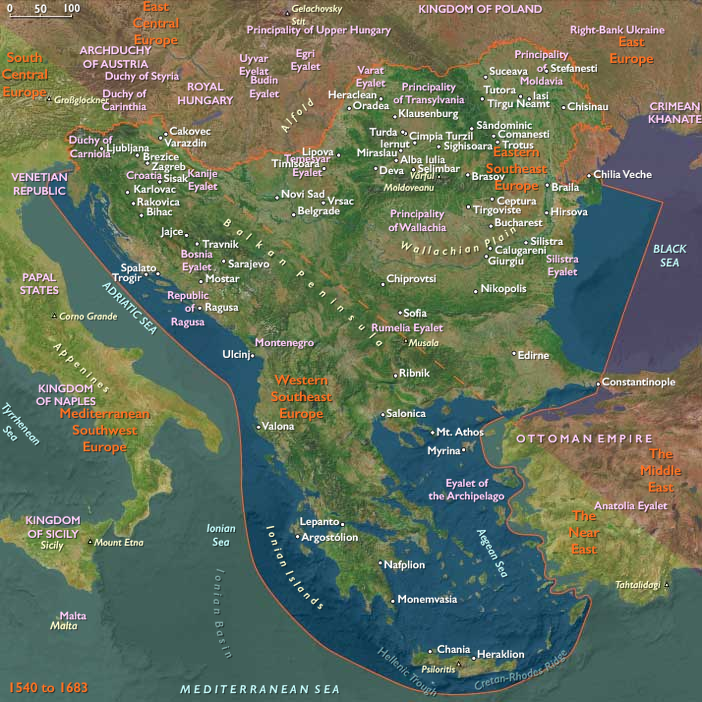
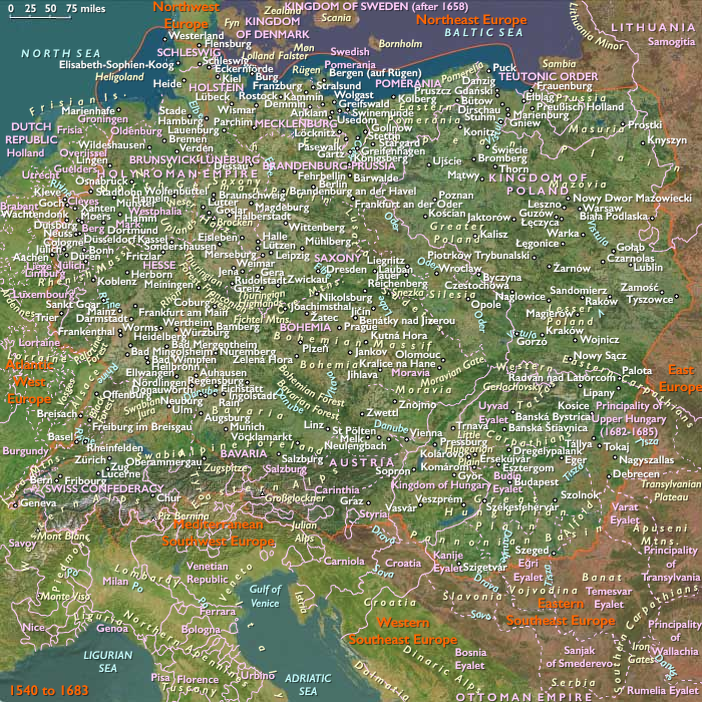
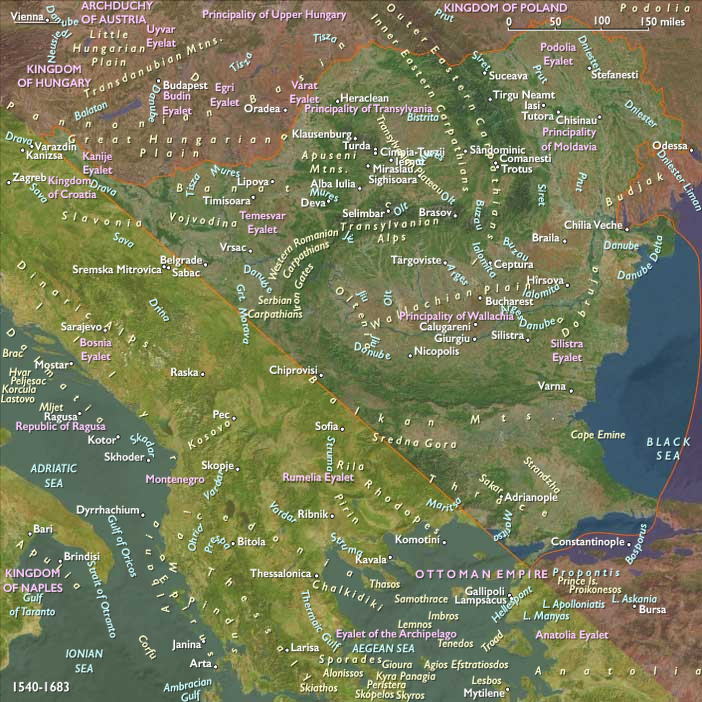
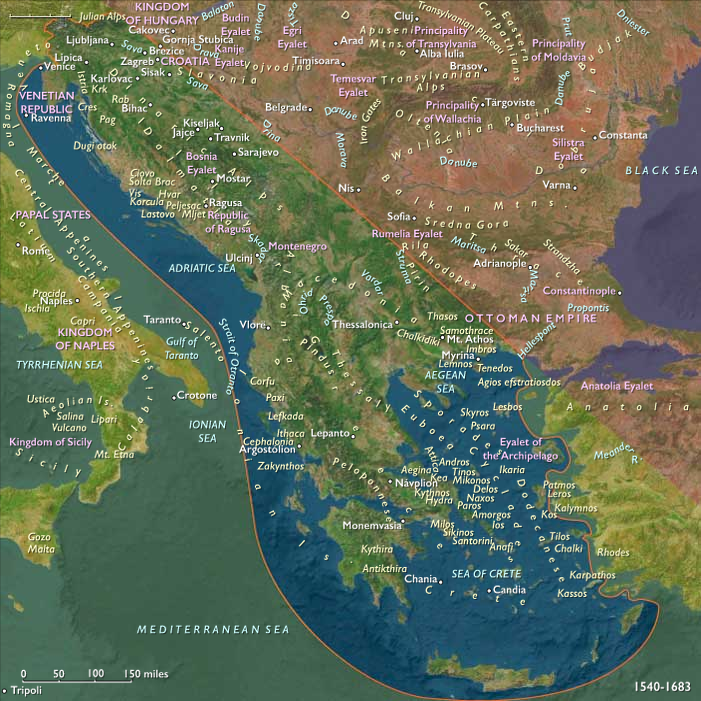
Ottoman armies had overrun all of Croatia south of the Sava River in the early sixteenth century and slaughtered a weak Hungarian force at the Battle of Mohács in 1526.
Buda is captured in 1541; Turkish marauders then advance toward Austria.
After Mohács, Hungarian and Croatian nobles had elected the Habsburg Ferdinand I of Austria king of Hungary and Croatia.
To tighten its grip on Croatia and solidify its defenses, Austria restricts the powers of the Sabor, establishes a military border across Croatia, and recruits Germans, Hungarians, and Serbs and other Slavs to serve as peasant border guards.
This practice is the basis for the ethnic patchwork that survives today in Croatia, Slavonia, and Vojvodina.
Austria assumes direct control of the border lands and gives local independence and land to families who agree to settle and guard those lands.
The area that they settle becomes known as the Military Frontier Province.
Orthodox border families also win freedom of worship, which draws stiff opposition from the Roman Catholic Church.
People
Groups
- Germans
- Hungarian people
- Slavs, South
- Christianity, Chalcedonian
- Greeks, Medieval (Byzantines)
- Venice, Duchy of
- Croats (South Slavs)
- Serbs (South Slavs)
- Dalmatia, Theme of
- Hungary, Principality of
- Hungary, Kingdom of
- Christians, Eastern Orthodox
- Christians, Roman Catholic
- Dalmatia region
- Croatia, Kingdom of
- Italians (Latins)
- Austria, Archduchy of
- Serbia, Kingdom of
- Ottoman Emirate
- Ottoman Emirate
- Serbian Empire
- Ottoman Empire
- Serbia, Moravian
- Slavonian Krajina (Military Frontier)
- Croatian Krajina (Military Frontier)
Topics
Subjects
Regions
Subregions
Related Events
Showing 10 events out of 18 total
Years: 1540 - 1683
People
Groups
- Germans
- Hungarian people
- Slavs, South
- Christianity, Chalcedonian
- Greeks, Medieval (Byzantines)
- Venice, Duchy of
- Croats (South Slavs)
- Serbs (South Slavs)
- Dalmatia, Theme of
- Hungary, Principality of
- Hungary, Kingdom of
- Christians, Eastern Orthodox
- Christians, Roman Catholic
- Dalmatia region
- Croatia, Kingdom of
- Italians (Latins)
- Austria, Archduchy of
- Serbia, Kingdom of
- Ottoman Emirate
- Ottoman Emirate
- Serbian Empire
- Ottoman Empire
- Serbia, Moravian
- Slavonian Krajina (Military Frontier)
- Croatian Krajina (Military Frontier)
Topics
Subjects
Regions
Subregions