
The Rise of La Rochelle as a …
Years: 1196 - 1196
The Rise of La Rochelle as a Major Port and the Legacy of Alexandre Auffredi (10th–12th Century CE)
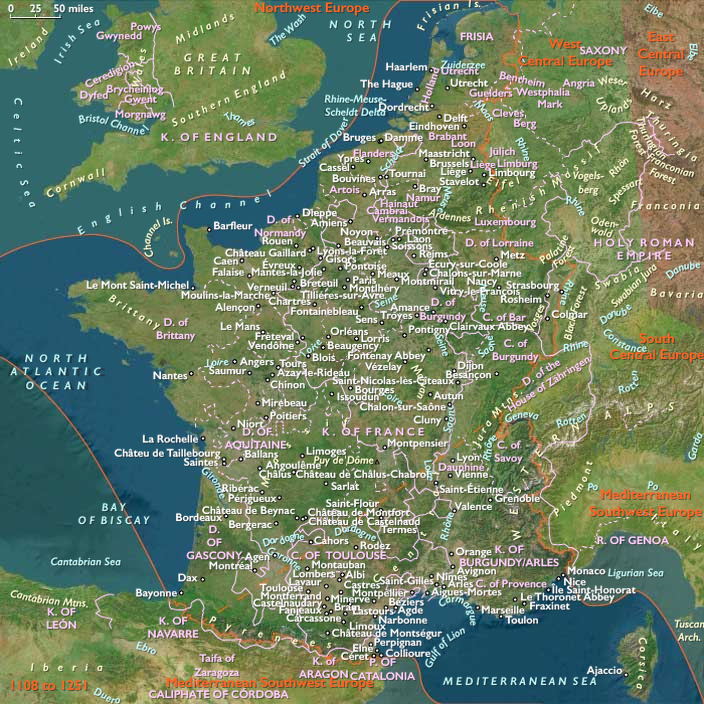
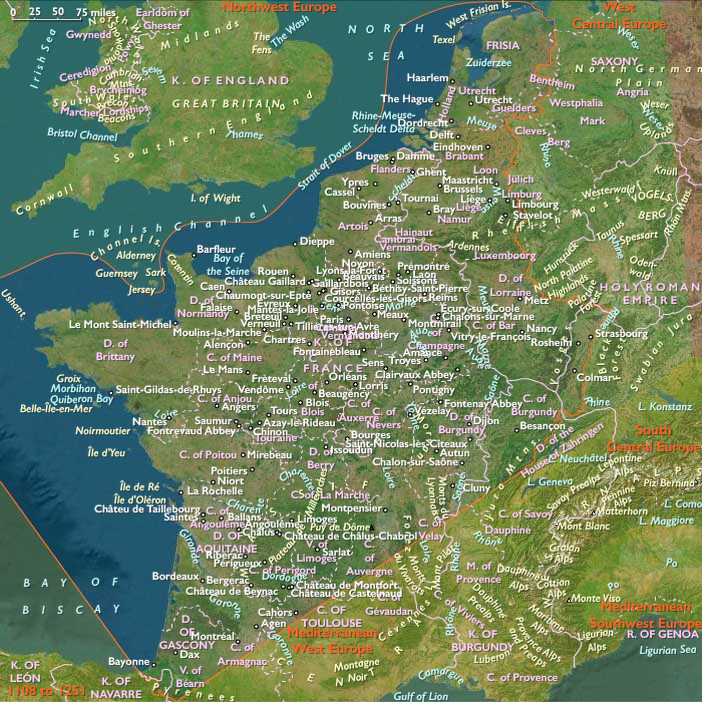
Located on the Bay of Biscay, La Rochelle emerged as a significant port city in the 12th century, shaped by the political ambitions of the Dukes of Aquitaine and later the Plantagenet rulers of England. Its strategic maritime position fostered its economic and commercial expansion, attracting merchants and adventurers seeking to capitalize on the riches of the sea trade.
The Establishment of La Rochelle as a Free Port
- Founded in the 10th century, La Rochelle gained importance after William X, Duke of Aquitaine, defeated Isambert de Châtelaillon in 1130 and destroyed Châtelaillon’s harbor, shifting regional trade to La Rochelle.
- In 1137, William X granted La Rochelle a communal charter, making it a free port, allowing the city to govern itself and regulate its commerce.
- Eleanor of Aquitaine, William X’s daughter, upheld the charter after inheriting Aquitaine and, in 1187, established the first appointed mayor in France, Guillaume de Montmirail.
La Rochelle Under Plantagenet Rule (1152–1204)
- After Eleanor’s marriage to Henry Plantagenet in 1152, La Rochelle fell under Plantagenet control when Henry became King of England in 1154.
- Henry II built Vauclair Castle in 1185 to strengthen the city’s defenses; its remains still exist in Place de Verdun.
- Under Plantagenet rule, La Rochelle became a center of maritime commerce, trading with England, the Netherlands, and Spain.
- The city gained privileges under its communal charter, including:
- The right to mint its own coins.
- Exemption from certain royal taxes, encouraging entrepreneurial growth.
This favorable economic environment helped develop the bourgeoisie (merchant middle class), a social group that would shape La Rochelle’s prosperity for centuries.
The Expedition of Alexandre Auffredi (1196–1203)
- In 1196, Alexandre Auffredi, a wealthy merchant from La Rochelle, financed a fleet of seven ships bound for Africa, hoping to tap into the riches of the continent.
- However, as years passed without word from his fleet, Auffredi fell into financial ruin, becoming bankrupt and destitute.
- Finally, in 1203, after seven years, the fleet returned, laden with riches, vindicating his risky commercial venture.
- Having regained wealth, Auffredi dedicated his remaining years to philanthropy, founding the Saint-Barthélemy Hospital and helping the poor.
- A central district in La Rochelle would later be named in his honor.
Legacy of La Rochelle in the 12th Century
- A key maritime hub under Plantagenet rule, La Rochelle laid the foundation for its long-standing commercial significance.
- The establishment of self-governance and economic privileges helped develop one of the first bourgeois-dominated urban economies in medieval France.
- Auffredi’s voyage exemplified the risks and rewards of medieval commerce, reflecting La Rochelle’s ambition to expand beyond Europe.
By the end of the 12th century, La Rochelle stood as one of the most dynamic trading centers in Western Europe, a status it would maintain for centuries to come.
Locations
People
Groups
Topics
Commodoties
Subjects
Regions
Subregions
Related Events
Showing 10 events out of 47746 total
Years: 1196 - 1196
Locations
People
Groups
Topics
Commodoties
Subjects
Regions
Subregions