Filters:
Profound social and economic forces operate on …
Years: 1888 - 1899
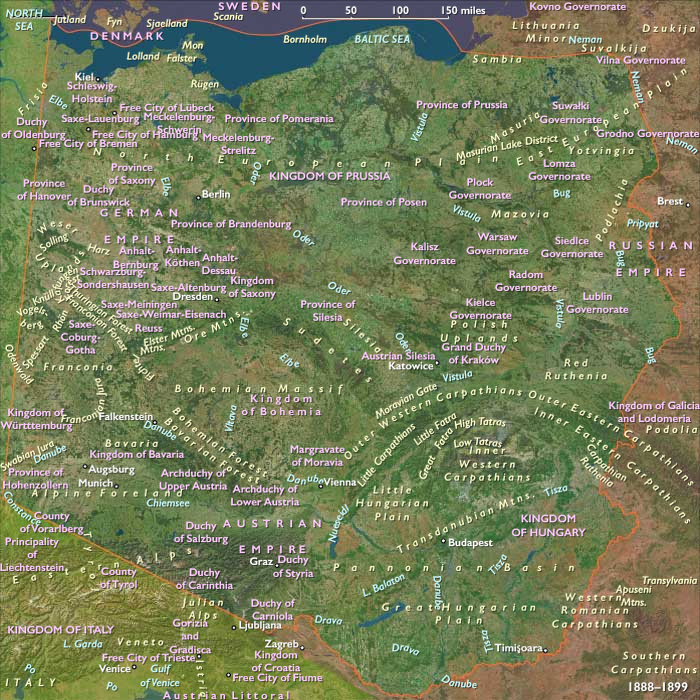
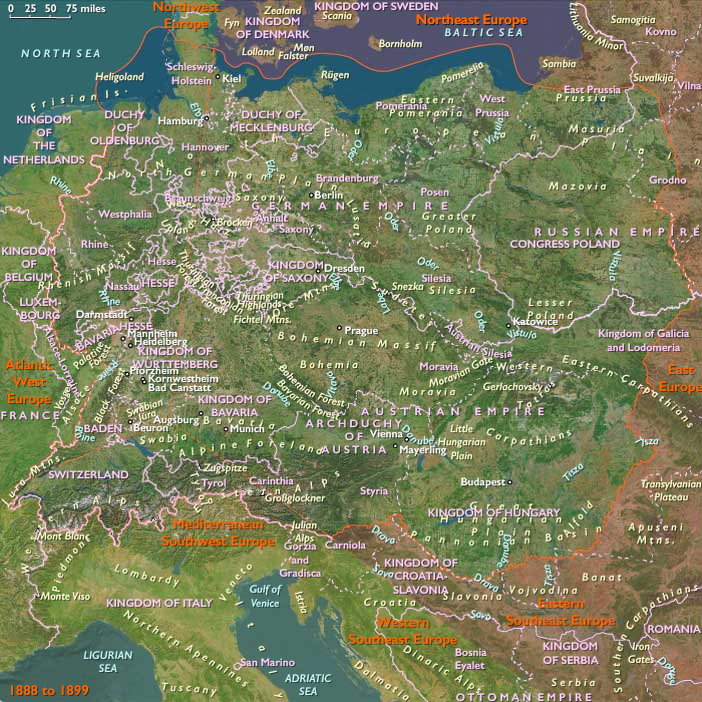
Profound social and economic forces operate on the Polish lands throughout the later nineteenth century, giving them a more modern aspect and altering traditional patterns of life.
Especially in Russian Poland and the Silesian regions under German control, mining and manufacturing commence on a large scale.
This development speeds the process of urbanization, and the emergence of capitalism begins to reduce the relative importance of the landed aristocracy in Polish society.
A considerable segment of the peasantry abandons the overburdened land.
Millions of Poles emigrate to North America and other destinations, and millions more migrate to cities to form the new industrial labor force.
These shifts stimulate fresh social tensions.
Urban workers bears the full range of hardships associated with early capitalism, and the intensely
nationalistic atmosphere of the day breeds frictions between Poles and the other peoples remaining from the old heterogeneous Commonwealth of Two Nations.
The movement of the former noble class into cities creates a new urban professional class.
Mirroring a trend visible throughout Central Europe, antisemitic sentiment mounts visibly, fed by Poles competing for the urban livelihoods long regarded as Jewish specialties.
Especially in Russian Poland and the Silesian regions under German control, mining and manufacturing commence on a large scale.
This development speeds the process of urbanization, and the emergence of capitalism begins to reduce the relative importance of the landed aristocracy in Polish society.
A considerable segment of the peasantry abandons the overburdened land.
Millions of Poles emigrate to North America and other destinations, and millions more migrate to cities to form the new industrial labor force.
These shifts stimulate fresh social tensions.
Urban workers bears the full range of hardships associated with early capitalism, and the intensely
nationalistic atmosphere of the day breeds frictions between Poles and the other peoples remaining from the old heterogeneous Commonwealth of Two Nations.
The movement of the former noble class into cities creates a new urban professional class.
Mirroring a trend visible throughout Central Europe, antisemitic sentiment mounts visibly, fed by Poles competing for the urban livelihoods long regarded as Jewish specialties.
Years: 1888 - 1899
Groups
- Jews
- Poles (West Slavs)
- Christians, Roman Catholic
- Prussia, Kingdom of
- Russian Empire
- Galicia and Lodomeria, Kingdom of
- Austrian Empire
- Silesia, Province of
- Vistula, Land of (Congress Kingdom of Poland)
- German Empire (“Second Reich”)
Subjects
Regions
Subregions