
Korean General Yi Seong-gye had gained power …
Years: 1388 - 1388
Korean General Yi Seong-gye had gained power and respect during the late 1370s and early 1380s by pushing Mongol remnants off the peninsula and also by repelling well-organized Japanese pirates in a series of successful engagements.
He is also credited with routing the Red Turbans when they made their move into the Korean Peninsula as part of their rebellion against the Yuan Dynasty.
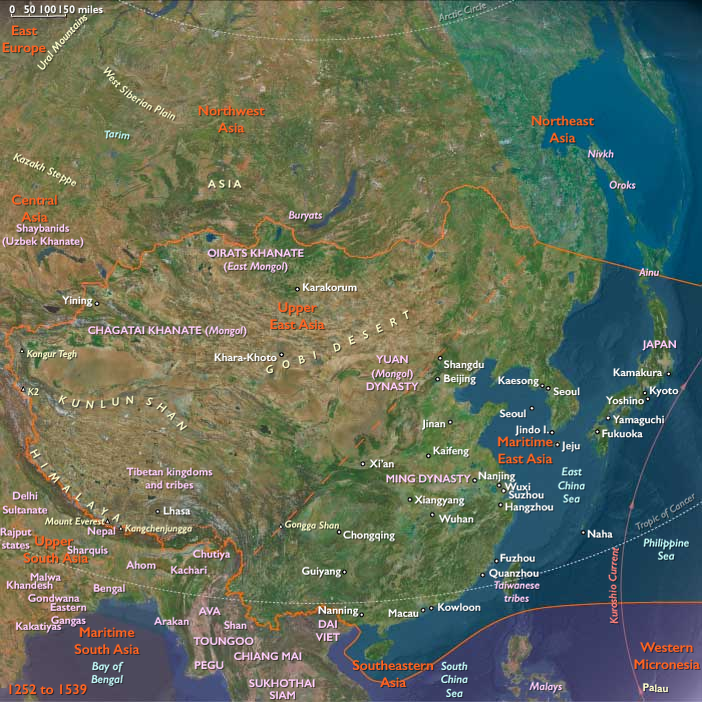
Following in the wake of the rise of the Ming Dynasty under the Zhu Yuanzhang, the royal court in Goryeo has split into two competing factions: the group led by General Yi (supporting the native Chinese Ming Dynasty) and the camp led by his rival General Choe (supporting the Mongol Yuan Dynasty).
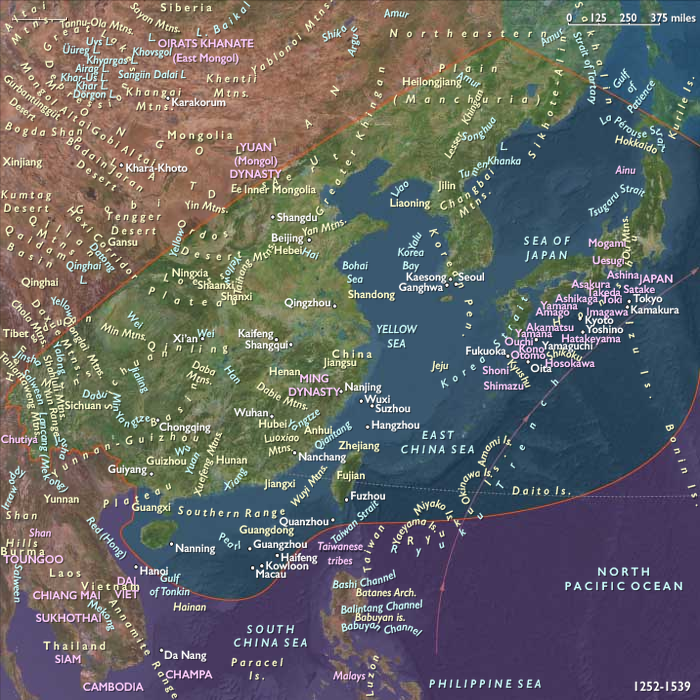
When a Ming messenger comes to Goryeo in 1388 (the fourteenth year of King U) to demand the return of a significant portion of Goryeo’s northern territory, General Choe seizes the opportunity and plays upon the prevailing anti-Ming atmosphere to argue for the invasion of the Liaodong Peninsula (Goryeo claims to be the successor of the ancient kingdom of Goguryeo; as such, restoring Manchuria as part of Korean territory will be a tenet of its foreign policy throughout its history).
A staunchly opposed Yi is chosen to lead the invasion; however, at Wihwa Island on the Amrok River, he makes a momentous decision, commonly called "Turning back the army from Wihwa Island", that will alter the course of Korean history.
Knowing of the support he enjoys both from high-ranking government official and the general populace, and the great deterrent of the Ming Empire under the Hongwu Emperor, he decides to revolt and sweeps back to the capital, Gaesong, to secure control of the government.
Locations
People
Groups
Commodoties
Subjects
Regions
Subregions
Related Events
Showing 10 events out of 43525 total
Years: 1388 - 1388
Locations
People
Groups
Commodoties
Subjects
Regions
Subregions