
King Æthelbald of Mercia enlarges his kingdom …
Years: 733 - 733
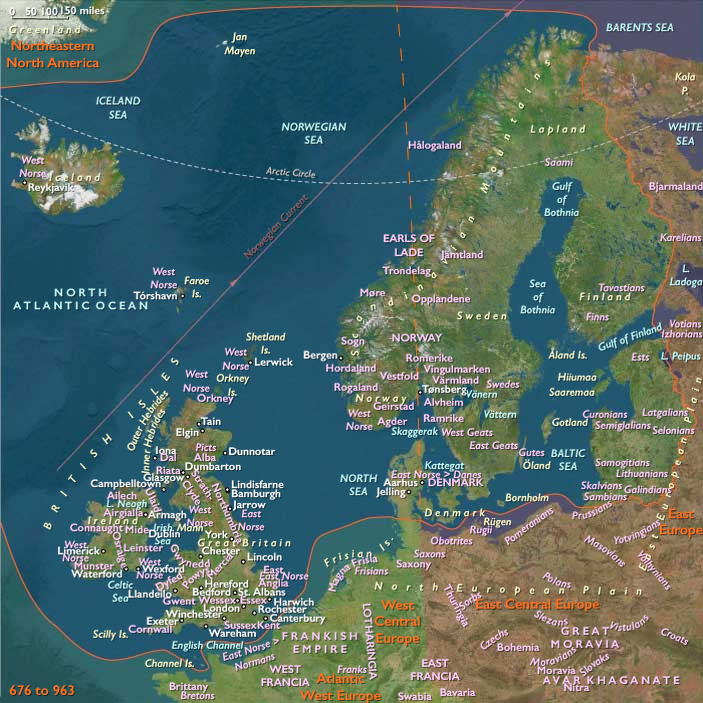
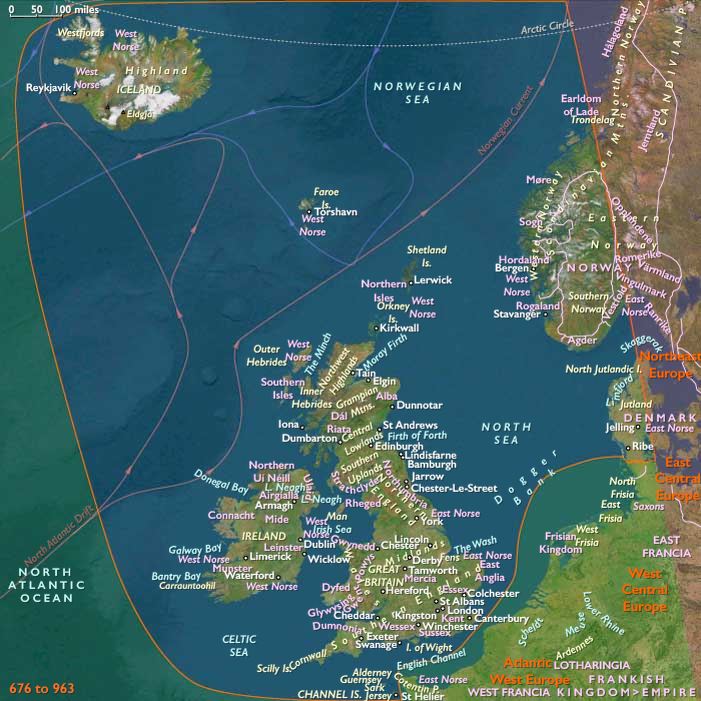
King Æthelbald of Mercia enlarges his kingdom in 733 by conquering and occupying the Somerset district of British Dumnonia, thereby confining the southern Britons to Devon and Cornwall.
Locations
People
Groups
- Britons (historical)
- Anglo-Saxons
- Dumnonia, Brythonic kingdom of
- Welsh people
- Mercia, Kingdom of
- Britain, Medieval
- Cornwall, Brythonic kingdom of
Topics
Commodoties
Subjects
Regions
Subregions
Related Events
Filter results
Showing 10 events out of 40 total
Southwest Europe (1252 – 1395 CE): Mediterranean Thalassocracies and the Atlantic Turn
From the lagoons of Venice to the harbors of Lisbon, the southwest rim of Europe entered the Late Middle Ages as one of the world’s most dynamic maritime zones. The period between 1252 and 1395 witnessed the zenith of the Crown of Aragon’s thalassocracy, the consolidation of Castile and Portugal, and the financial and naval dominance of the Italian city-republics. Across the Mediterranean and Atlantic, fleets, fairs, and fortresses bound Europe’s southern peninsulas into an interlinked economy whose rhythms were set by wind, grain, and gold.
Geography and Climate
The subregion encompassed the Iberian Peninsula, the Italian peninsula and islands, and the surrounding seas—from the Guadalquivir and Tagus basins to the Venetian Adriatic and the Tyrrhenian and Balearic waters.
The onset of the Little Ice Age after 1300 brought cooler, wetter variability: Andalusian and Sicilian irrigation maintained productivity, while drier cycles in La Mancha and Alentejo encouraged sheep and transhumant herding. Maritime provisioning stabilized populations through famine years, even as the Black Death (1348–1352) devastated the great ports—Barcelona, Valencia, Genoa, Venice, and Naples—with partial demographic recovery by the century’s end.
Mediterranean Crowns and City-Republics
The Crown of Aragon, forged by the thirteenth-century conquests of James I, reached its maritime zenith. Catalan and Valencian fleets dominated the western Mediterranean; Sardinia was taken in the 1320s, and Sicily, freed from Angevin control after the Sicilian Vespers (1282), entered Aragon’s orbit. Barcelona’s merchants financed convoys to Tunis, Alexandria, and Constantinople, while Majorcan cartographers drew the most precise sea charts of the age.
To the west, Castile completed the reconquest of Andalusia, leaving Granada as the last Muslim emirate. The Guadalquivir valley’s cereals and Seville’s shipyards enriched the Castilian crown, while Madrid and La Mancha evolved into the agrarian-sheep core of the realm. Portugal, meanwhile, under Afonso III and Dinis I, stabilized its southern frontier in the Algarve and built the maritime forests of Leiria for ship timber. After dynastic crisis (1383–1385), João I’s victory at Aljubarrota and the Treaty of Windsor (1386) with England secured independence and inaugurated the Anglo-Portuguese alliance that would anchor the next century’s explorations.
Across the sea, Italy’s mercantile powers contested every horizon. Venice, from its lagoon capital, extended a maritime empire through the Adriatic and Aegean; its Arsenal mass-produced galleys and its patriciate ruled an empire of grain and spice. Genoa, facing west, financed expeditions and monopolized Tyrrhenian trade from Corsica to Tunis. In Florence, textile wealth and banking consolidated under the merchant guilds, while the Angevin kingdom of Naples and the Aragonese Sicily contended for southern Italy. Malta, Sardinia, and the Balearics served as naval stepping-stones, their harbors echoing with the languages of sailors from every sea.
Economy and Trade
Southwest Europe functioned as a dual maritime engine—Aragonese–Italian in the Mediterranean and Castilian–Portuguese in the Atlantic.
-
Mediterranean circuits: Venetian and Genoese fleets carried Levantine spices, silks, and sugar; in return, they exported grain from Sicily and Apulia, wine and oil from Iberia, and salt from Ibiza and Trapani.
-
Western basins: Barcelona, Valencia, and Majorca knit the western Mediterranean to Atlantic routes through Gibraltar.
-
Atlantic façade: Castilian and Portuguese merchants exported wool, iron, wine, and salted fish; Castile’s Mesta(chartered 1273) organized transhumant flocks whose wool fed Flemish and Italian looms. Basque forgessupplied anchors, nails, and artillery; shipyards at Bilbao, Lisbon, and Porto produced cogs and caravels.
-
Banking and cartography: Genoese and Venetian financiers underwrote commerce, while Catalan and Majorcan mapmakers synthesized Mediterranean and Atlantic knowledge into the new portolan charts.
Mixed agriculture—grains, vines, olives—and irrigation in the Valencia and Murcia huertas sustained populations; the Algarve, Sicily, and Crete pioneered sugar cultivation, a foretaste of the colonial plantations to come.
Movement and Interaction Corridors
Sea routes defined the region’s geography.
The Strait of Gibraltar linked Lisbon, Seville, and Barcelona to Tunis and Alexandria; the Messina and Otranto Straits funneled Sicilian and Adriatic convoys; the Venetian–Aegean corridor joined Constantinople to the Po valley.
Overland arteries—Ebro–Pyrenees, Tagus–Guadiana, Po–Alps—fed the ports, while the Douro road connected the Castilian plateau to Porto’s wine markets. The pilgrim routes to Santiago de Compostela continued to channel people and goods across northern Iberia, even amid war and plague.
Belief and Symbolism
Faith framed identity in a region of plural crowns.
The mendicant orders—Franciscans and Dominicans—flourished in Barcelona, Valencia, Venice, and Naples, preaching reform and mercy during plague years.
Cathedrals such as Seville’s, Valencia’s, and Florence’s Duomo, and civic loggias in Italian and Catalan cities expressed both religious devotion and urban pride.
The lingering influence of the Avignon Papacy tied Provençal, Aragonese, and Italian politics to papal diplomacy, while the Reconquista and frontier crusades gave Iberian warfare a sanctified rhetoric that foreshadowed later overseas expansion.
Adaptation and Resilience
Despite climatic uncertainty and epidemic loss, Southwest Europe remained remarkably adaptive.
-
Irrigation, terrace agriculture, and maritime provisioning cushioned drought.
-
Polycentric power—Venice, Genoa, Aragon, Castile, Portugal—allowed commerce to shift ports and flags as crises arose.
-
Guild statutes and municipal charters stabilized labor and credit after the Black Death.
-
The recovery of the 1380s–1390s re-energized trade, strengthened dynasties, and renewed shipbuilding, positioning the region for its fifteenth-century ascent.
Long-Term Significance
By 1395 CE, Southwest Europe stood as the beating heart of the late-medieval maritime world.
In the Mediterranean, Venice ruled the Adriatic lanes, Genoa and Florence financed the wider economy, and Aragon’s Catalan fleets mastered the western sea.
Across the Iberian Peninsula, Castile and Portugal unified their realms and turned outward to the Atlantic, where Lisbon’s and Bilbao’s shipwrights were already experimenting with ocean-going hulls.
From the Rialto to Lisbon, from Barcelona to Seville, merchants, mapmakers, and mariners laid the logistical and intellectual foundations of Europe’s global age.
The dual maritime systems of the Mediterranean thalassocracies and the Atlantic wool-iron networks formed a single economic engine—one that would propel Iberia and Italy beyond their seas and into the wider world of the fifteenth century.
Mediterranean Southwest Europe (1252 – 1395 CE): Aragonese Thalassocracy, Venetian Hegemony, and Castilian–Portuguese Consolidation
Geographic and Environmental Context
Mediterranean Southwest Europe includes Portugal’s Algarve and Alentejo, Spain’s Extremadura, Andalusia, Murcia, Valencia, Castile/La Mancha, southeastern Castile and León, Madrid, southeastern Rioja, southeastern Navarra, Aragon, Catalonia, the Balearic Islands, Andorra, and all of Italy (peninsula, Sicily, Sardinia, Venice), plus Malta.
-
Anchors: the Guadalquivir Valley (Seville–Granada frontier), the Tagus–Alentejo/Algarve under Portugal, Madrid–La Mancha–Extremadura consolidated in Castile, the Valencia/Murcia huertas, the Ebro–Barcelona–Aragon–Andorra corridor, the Balearics under Aragon, Venice as Adriatic hegemon, Genoa and Florence as rivals in Liguria and Tuscany, the Kingdom of Naples/Angevin South, Sicily in Aragonese orbit, Sardinia, and Malta as naval outposts.
Climate and Environmental Shifts
-
Little Ice Age onset (~1300) brought cooler, wetter variability; irrigation kept Valencia, Murcia, Andalusia, Sicily productive.
-
Black Death (1348–1352) devastated Barcelona, Valencia, Genoa, Venice, Naples, with partial demographic recovery by the 1390s.
Societies and Political Developments
-
Crown of Aragon: James I’s conquests of Valencia (1238) and Balearics (1229–35) were integrated; Sardinia conquered (from 1320s); Sicily entered Aragonese orbit after the Sicilian Vespers (1282); Catalonia projected power across the western Med.
-
Castile consolidated Andalusia; Granada survived as the last Nasrid emirate; Madrid matured under Castilian administration; La Mancha became a grain–sheep heartland.
-
Portugal stabilized Alentejo/Algarve and built Atlantic–Med linkages.
-
Italy: Venice dominated Adriatic–Aegean routes; Genoa contested Tyrrhenian and western lanes; the Angevin Kingdom of Naples and Aragonese Sicily rivaled in the south; Sardinia held by Aragon; Malta under Sicilian–Aragonese control.
-
Andorra remained a Pyrenean co-principality (Counts of Foix/Bishop of Urgell).
Economy and Trade
-
Venetian hegemony in the Adriatic–Aegean; Genoese finance and Ligurian shipping; Barcelona–Valencia–Majorca fleets knit the western basin.
-
Exports: grain (Sicily/Apulia), olive oil/wine (Iberia/Italy), sugar/citrus (Sicily/Valencia), salt (Ibiza, Trapani);
-
Imports: spices/silks via Levant; wool from La Mancha and Aragon fed Italian and Catalan looms.
-
Banking: Venetian and Genoese firms, Catalan–Majorcan cartography and credit.
Subsistence and Technology
-
Canal estates and huertas in Valencia/Murcia/Andalusia; Venetian Arsenal mass-produced galleys; Rialto and Piazza San Marco symbolized mercantile power.
Movement and Interaction Corridors
-
Strait of Gibraltar linked Atlantic–Med flows; Messina straits managed Sicily transit; Po–Venetian lagoon fed Adriatic convoys; Ebro–Pyrenees, Tajo–Guadiana corridors fed Iberian ports.
Belief and Symbolism
-
Avignon Papacy (outside region yet influential) shaped Provençal–Italian–Aragonese politics;
-
Mendicant orders (Franciscans, Dominicans) in Barcelona, Valencia, Venice, Naples;
-
Cathedrals and civic loggias embodied urban identities.
Adaptation and Resilience
-
Irrigation + maritime redundancy cushioned climatic stress;
-
Plural city-republics and crowns allowed merchants to shift flags, ports, and credit;
-
Guilds and statutes stabilized labor and prices post-plague.
Long-Term Significance
By 1395, Mediterranean Southwest Europe was a dual maritime engine—Venice in the east, Crown of Aragon in the west—nested with Castile–Portugal consolidation on land. The subregion underwrote the late-medieval Mediterranean economy, setting the stage for 15th-century imperial and commercial expansion.
Atlantic Southwest Europe (1252 – 1395 CE): Wool, Iron, Wine, and the Atlantic Turn
Geographic and Environmental Context
Atlantic Southwest Europe includes Portugal’s Lisbon, Beira, Minho, Trás-os-Montes, and Spain’s Galicia, Asturias, Cantabria, Basque Country, Castile and León, northern Rioja, and northern Navarra.
-
Anchors: the Cantabrian coast (A Coruña–Gijón–Santander–Bilbao–San Sebastián), the Douro/Minho estuaries, and the Meseta–Cantabrian passes binding the plateau to Atlantic ports.
Climate and Environmental Shifts
-
Little Ice Age onset (~1300) brought cooler, wetter weather; stormier Bay of Biscay; good fisheries persisted.
-
Black Death (1348–1352) hit towns hard; ports recovered quickest via maritime trade.
Societies and Political Developments
-
Castile and León unified under Alfonso X (r. 1252–1284), then fractured and reconsolidated amid the Trastámara coup (Pedro I vs Enrique II, 1366–1369).
-
Portugal strengthened under Afonso III and Dinis (reforestation of Leiria for ship timber; University of Coimbra 1290), then defended independence in the Crisis of 1383–1385; João I and Aljubarrota (1385) sealed the Anglo-Portuguese alliance (Treaty of Windsor, 1386).
-
Navarre navigated between France and Castile; Basque towns (Bilbao, charter 1300; San Sebastián) grew as maritime communes.
Economy and Trade
-
Wool complex: Castilian wool—organized by the Mesta (founded 1273)—flowed through Burgos, León, and Cantabrian ports to Flanders and England.
-
Basque iron & shipbuilding: forges supplied anchors, nails, artillery shot; yards built cogs and naos for Atlantic service and whaling.
-
Wine & salt fish: Douro/Minho wines, Galician/Portuguese salt fish (cod, sardine) and tuna moved north; Lisbon/Porto emerged as major entrepôts.
-
Finance & law: municipal fueros, urban consulates, and English–Portuguese treaties stabilized credit, convoys, and tariffs.
Subsistence and Technology
-
Mixed Atlantic polyculture (rye/wheat, vines, chestnuts, cattle); stern-rudder hulls, improved rigging, magnetic compass and portolan practice diffused into Iberian waters.
Movement and Interaction Corridors
-
Sea: Lisbon ⇄ London/Bristol; Cantabria ⇄ Flanders; Galicia ⇄ Brittany; pilgrim sailings to Santiago.
-
Land: Meseta passes fed Burgos, León, Salamanca; Douro road/river linked Castile to Porto.
Belief and Symbolism
-
Cathedrals and monasteries in Santiago, León, Burgos, Salamanca; confraternities of sailors and merchants venerating St. James and St. Nicholas kept social cohesion in plague decades.
Adaptation and Resilience
-
Route redundancy (many ports, multiple passes), portfolio exports (wool–iron–wine–fish–salt), and crown–town compacts hedged risk from war, weather, and plague.
Long-Term Significance
By 1395, the Atlantic façade from Lisbon to San Sebastián had become a maritime-industrial platform: wool, iron, wine, and shipbuilding—backed by Portugal’s English alliance—set the stage for the 15th-century Atlantic turn and overseas exploration.
Northwest Europe (1252 – 1395 CE): Hundred Years’ War, Scottish Independence, and North Sea Commerce
Geographic and Environmental Context
Northwest Europe includes Iceland, Ireland, the United Kingdom, the Faroe, Shetland, and Orkney Islands, the Channel Islands, and the western coastal zones of Norway and Denmark (west of 10°E).
-
Anchors: London–Westminster, Dublin–Cork–Waterford, Edinburgh–Stirling, Bergen, Reykjavík–Thingvellir, Channel ports (Dover, Southampton, Bristol), and North Sea ports (Hull, King’s Lynn).
Climate and Environmental Shifts
-
Little Ice Age onset (~1300): cooler, wetter conditions reduced yields; Great Famine (1315–1317) struck Britain and Ireland.
-
Black Death (1348–1350): decimated urban populations (London, Dublin, York, Edinburgh, Bergen).
-
Fisheries (herring, cod) thrived in colder seas.
Societies and Political Developments
-
England: Edward I’s conquest of Wales (1282); Wars of Scottish Independence (1296–1328, 1332–1357); Hundred Years’ War against France (from 1337).
-
Scotland: William Wallace, Robert the Bruce, and victory at Bannockburn (1314) secured independence, recognized in the Treaty of Edinburgh–Northampton (1328).
-
Ireland: Anglo-Norman lordship declined; Gaelic resurgence after 14th-century crises.
-
Norway: waning influence; Orkney, Shetland, Hebrides slipped toward Scottish control.
-
Iceland: under Norwegian crown (1262–64); Althing continued local governance.
Economy and Trade
-
English wool: critical for Flemish cloth industry; Calais staple (post-1347 English conquest) reorganized trade.
-
North Sea ports: Hull, King’s Lynn, Bristol handled wine, cloth, fish.
-
Hanseatic merchants entered London (Steelyard).
-
Norwegian stockfish trade (Bergen to Lübeck, London) flourished; Iceland supplied wool and fish.
Belief and Symbolism
-
Gothic architecture: Westminster Abbey, York Minster; Scottish abbeys; Norwegian stave churches persisted.
-
Saint cults: St. Thomas Becket in Canterbury, St. Magnus in Orkney.
-
Mysticism: English and Irish vernacular devotion expanded (Julian of Norwich).
Adaptation and Resilience
-
Maritime redundancy: trade shifted among ports during war or plague.
-
England’s parliamentary institutions matured (Model Parliament, 1295).
-
Scotland consolidated monarchy; Ireland fragmented between Gaelic and Anglo-Norman spheres.
Long-Term Significance
By 1395, Northwest Europe was a fractured but dynamic region: England locked in war with France, Scotland independent, Ireland divided, and the North Sea–North Atlantic fisheries increasingly central. It was a crucible for the late-medieval state and maritime economy.
The Consolidation of Portugal: Territorial Expansion and Sovereign Independence
By the mid-13th century, the monarchs of Portugal had successfully expanded their kingdom southward from its original stronghold north of the Douro River, completing the Reconquista within Portuguese borders. This territorial expansion was marked by key victories over the Moors and diplomatic achievements that solidified Portugal’s political independence.
Territorial Expansion and the Final Stages of the Reconquista
- The Portuguese kings gradually extended their domain southward, driving the Moors from Lisbon, Alentejo, and the Algarve.
- Afonso III (r. 1248–1279), the fifth king of Portugal, was the first to officially assume the title "King of Portugal and the Algarve" in 1249, marking the completion of the territorial consolidation.
Lisbon Becomes the Permanent Capital (1256)
- In 1256, Afonso III transferred the seat of government from Coimbra to ...
- ...Lisbon, making it the permanent capital.
- Lisbon’s strategic location on the Tagus River, its growing population, and its flourishing trade made it the ideal political and economic center of the kingdom.
Church-Crown Conflict Resolved (1262)
- The prolonged struggle between the Portuguese Crown and the Papacy ended in 1262, when Pope Urban IV:
- Legalized Afonso III’s disputed marriage to Beatriz de Guzmán.
- Legitimized Dinis, securing his succession to the throne.
- Recognized the monarchy’s authority, ensuring a lasting balance between Church and Crown.
Full Independence Secured (1263)
- In 1263, Alfonso X of Castile formally renounced his claim to suzerainty over the Algarve, marking:
- The finalization of Portugal’s European borders, which remain unchanged to this day.
- The kingdom’s full sovereignty, ending Castilian feudal claims over Portuguese lands.
- The official recognition of Lisbon as the capital, a status it continues to hold today.
The Triumph of the Portuguese Monarchy
The Portuguese monarchy emerged victorious in this era due to:
- Defense of National Interests – The kings championed Portuguese independence, ensuring widespread support.
- Municipal and Military Order Support – Urban centers and knightly orders aligned with the Crown, weakening aristocratic opposition.
- Prestige of the Royal Armies – Victories in the Moorish and Castilian wars enhanced the king’s legitimacy and influence.
Lisbon Today: Portugal’s Economic and Political Hub
- Now Portugal’s largest city, Lisbon remains the nation’s political, economic, and cultural capital.
- It serves as the seat of the Lisbon District and the capital of the Lisbon region, the wealthiest region in Portugal.
- With a GDP per capita well above the European Union average, Lisbon continues to be the economic powerhouse of Portugal, reflecting its centuries-old importance as the center of Portuguese governance and commerce.
Thus, by the mid-13th century, Portugal had secured its borders, centralized its monarchy, and established Lisbon as its capital, laying the foundation for its future prosperity and global expansion.
King Afonso III of Portugal and King Alfonso X of Castile sign the Badajoz Convention on February 16, 1267, determining the border between the Kingdom of Portugal and the Kingdom of Leon, and ensuring Portuguese sovereignty over Algarve.
King Afonso III of Portugal, now secure on the throne, proceed to make war with the Muslim communities that still thrive in the south.
The Algarve becomes part of the kingdom in his reign, following the capture of Faro, the last Moorish community in Portugal.
The Accession of King Denis (1279) and the Legacy of Afonso III
On February 16, 1279, Afonso III of Portugal—a monarch known for his administrative reforms, economic policies, and cultural advancements—passed away, leaving the throne to his son, Denis (Dinis I).
Afonso III’s Legacy: Foundations of a Strong Monarchy
During his reign, Afonso III:
- Completed Portugal’s territorial expansion, becoming the first king to use the title "King of Portugal and the Algarve."
- Strengthened royal authority by limiting the power of the nobility and increasing the influence of municipalities and the cortes.
- Encouraged commerce through trade agreements, including one with England in 1303, which expanded Portuguese access to international markets.
- Promoted Portuguese as an administrative language, helping to unify the kingdom culturally.
The Accession of Denis (r. 1279–1325): The Farmer King
Denis, the son of Afonso III and Beatriz de Guzmán, inherited a stable and centralized kingdom. As king, he would become known as "O Lavrador" (The Farmer King) for his agricultural, economic, and maritime policies.
With Denis’s accession, Portugal entered a new phase of economic prosperity, administrative consolidation, and cultural flourishing, building on the reforms of his father to strengthen the monarchy and national identity.
Years: 733 - 733
Locations
People
Groups
- Britons (historical)
- Anglo-Saxons
- Dumnonia, Brythonic kingdom of
- Welsh people
- Mercia, Kingdom of
- Britain, Medieval
- Cornwall, Brythonic kingdom of
Topics
Commodoties
Subjects
Regions
Subregions