
King Solomon, a figure described in Middle …
Years: 933BCE - 922BCE
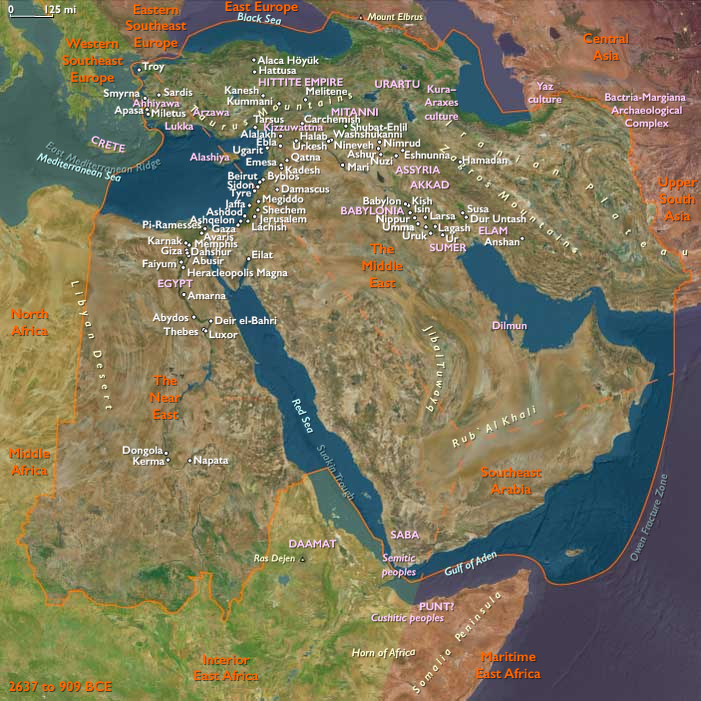
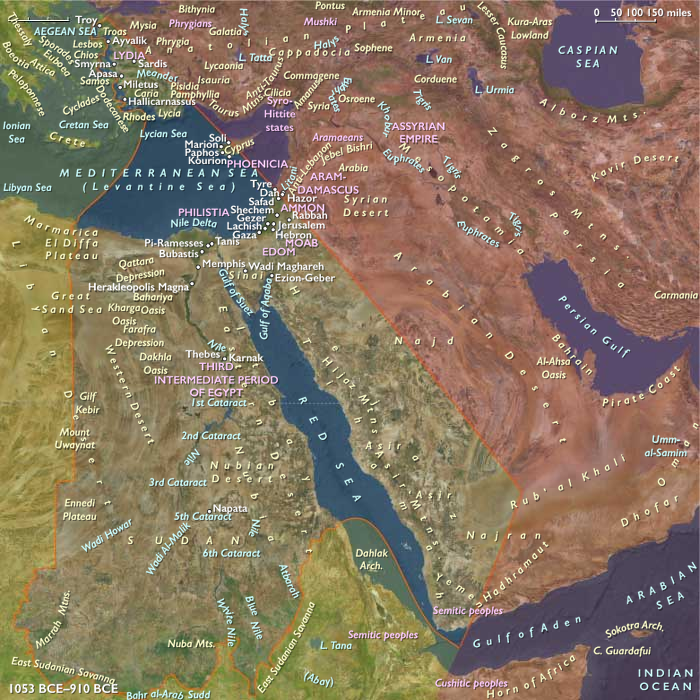
King Solomon, a figure described in Middle Eastern scriptures as a wise ruler of an empire centered on the united Kingdom of Israel, was supposedly born in Jerusalem about 1000 BEC and reigned over Israel from 971 BCE 931 BCE.
The scriptural accounts identify Solomon as the son of David.
He is also called Jedidiah in the Tanakh (Old Testament), and is described as the third king of the United Monarchy, and the final king before the northern Kingdom of Israel and the southern Kingdom of Judah split; following the split his patrilineal descendants ruled over Judah alone.
The Bible accredits Solomon as the builder of the First Temple in Jerusalem and portrays him as great in wisdom, wealth, and power.
Solomon is the subject of many other later references and legends.
The association of Solomon with the city of Jerusalem may have preceded this period.
The name Jerusalem, attested since the time of Ebla, 2350 BCE, by some etymologies means "The City of Solomon" (=Uru Sholom/Shalim).
The Ugaritic texts refer to "Shalim and Shachar", as two beneficent Gods, sons of El and Asherah, divine figures of the sunset and sunrise respectively.
They were associated with two mountains that were located on the Eastern and Western rim of the world, respectively.
According to the Bible, Solomon entered into an alliance with Hiram I, king of Tyre, who in many ways greatly assisted him in his numerous undertakings.
For some years before his death David was engaged in the active work of collecting materials for building a temple in Jerusalem as a permanent abode for the Ark of the Covenant; Solomon is described as completing its construction, with the help of an architect, also named Hiram, and other materials, sent from Hiram king of Tyre.
The description of the temple is remarkably similar to that of surviving remains of Phoenician temples of the time, and it is certainly plausible, from the point of view of archaeology, that the temple was constructed to the design of Phoenicians.
After the completion of the temple, Solomon is described as erecting many other buildings of importance in Jerusalem; for the long space of thirteen years he was engaged in the erection of a royal palace on Ophel (a hilly promontory in central Jerusalem); Solomon also constructed great works for the purpose of securing a plentiful supply of water for the city, and the Millo (Septuagint, Acra) for the defense of the city.
However, excavations of Jerusalem have shown a distinct lack of monumental architecture from the era, and remains of neither the Temple nor Solomon's palace have been found (although it should be noted that a number of significant but politically sensitive areas have not been extensively excavated, including the site that the Temple is traditionally said to have been located).
Although the Old Testament describes Solomon as surrounding himself with all the luxuries and the external grandeur of an Eastern monarch, some archaeologists consider the kingdom of Israel at the time of Solomon to have been little more than a small city state.
According to the Hebrew scriptures, Solomon is also an author and a patron of literature (although many of the writings attributed to him—for example, the “Book of Proverbs,” “Ecclesiastes,” and the “Song of Solomon”—are not his work).
Locations
Groups
Topics
Commodoties
Subjects
Regions
Subregions
Related Events
Showing 3 events out of 3 total
Years: 933BCE - 922BCE
Locations
Groups
Topics
Commodoties
Subjects
Regions
Subregions