
King Seongdeok had ordered the construction of …
Years: 722 - 722
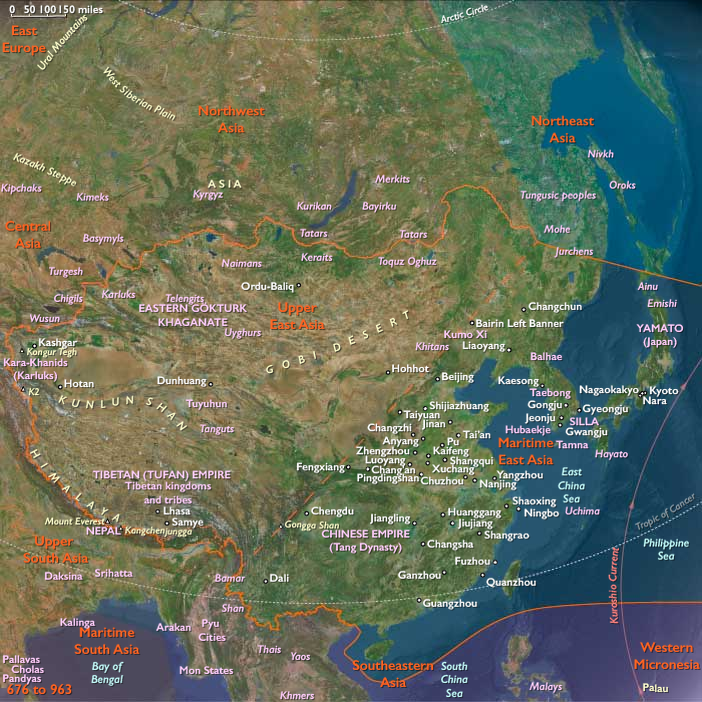
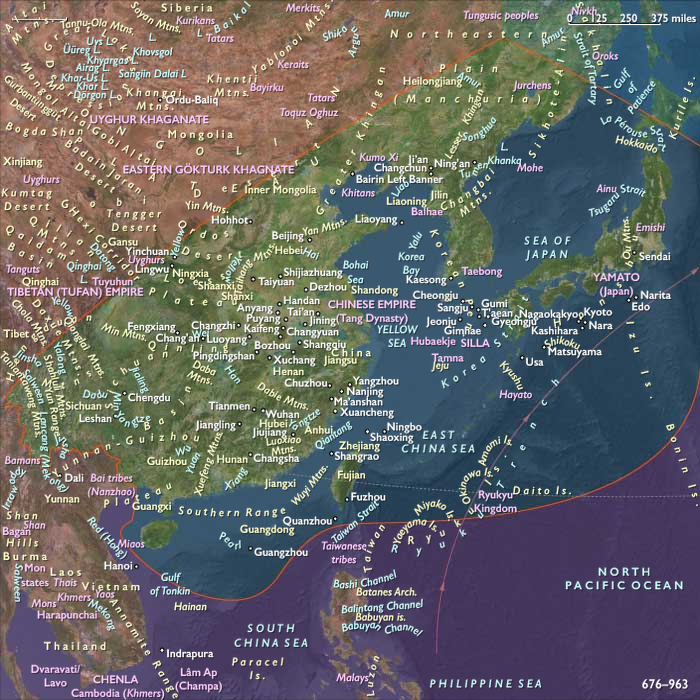
King Seongdeok had ordered the construction of a great wall across Silla‘s northern border in 721, remnants of which can still be seen in what is today South Hamgyǒng province, North Korea.
Plagued as well by the raids of Japanese pirates along the southern coast, the following year (and quite likely with the same laborers) Seongdeok also has a large fortress erected near the capital of Gyeongju that extends ten kilometers in circumference.
According to the Samguk Yusa, a thirteenth century Korean record of history and fable that deals with the period in question, the fortress (known as Mobeol prefectural fortress) required the labor of nearly 40,000 men, a massive mustering of manpower that is testimony of the increasing power of the centralized monarchy.
The reign of Seongdeok also bears evidence of continued attempts at reforming the land system of Silla.
The dispersal of “able–bodied land” is first mentioned as taking place in the twenty–first year of King Seongdeok (722).
The exact nature of able–bodied land is disputed since almost no corroborating evidence remains.
However, based on the title, it would seem to be land distributed to able bodied commoners, though whether to work or own outright is unclear.
In any case, whatever its precise nature, it would appear to be an attempt to buttress royal authority by nurturing relations with the peasantry at the expense of the landholding aristocracy.
Locations
People
Groups
Topics
Subjects
Regions
Subregions
Related Events
Showing 1 events out of 1 total
Years: 722 - 722
Locations
People
Groups
Topics
Subjects
Regions
Subregions