
The Death of Philip II and the …
Years: 1223 - 1223
July
The Death of Philip II and the Accession of Louis VIII (July 14, 1223)
On July 14, 1223, King Philip II of France died at the age of 58, marking the end of a transformative reign that had solidified Capetian power and greatly expanded the French kingdom. His son, Louis VIII, immediately succeeded him as King of France, continuing his father's efforts to strengthen royal authority and diminish English and feudal influence in France.
Philip II’s Legacy
-
The First King to Style Himself as "King of France"
- Philip was the first Capetian ruler to officially use the title "King of France" (Rex Franciae), rather than "King of the Franks", reinforcing the idea of a centralized, national monarchy.
-
Territorial Expansion
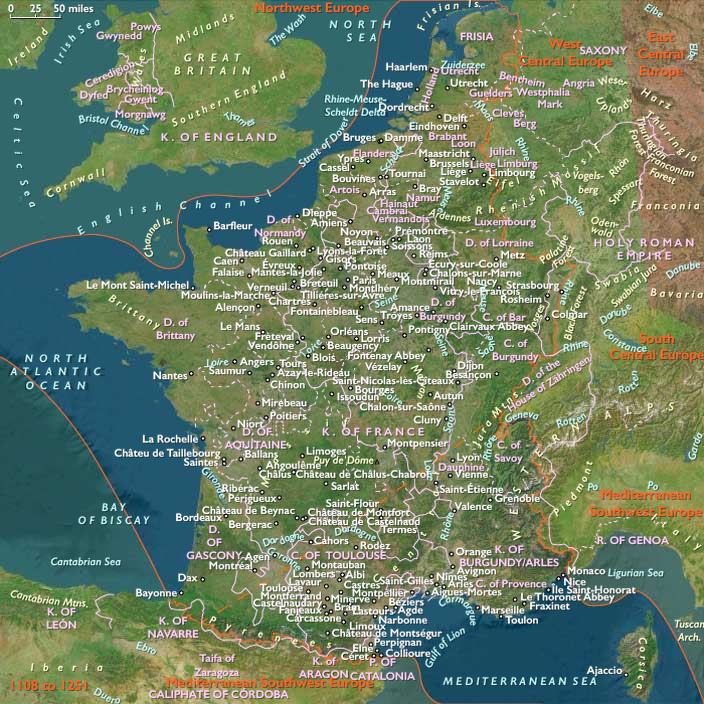
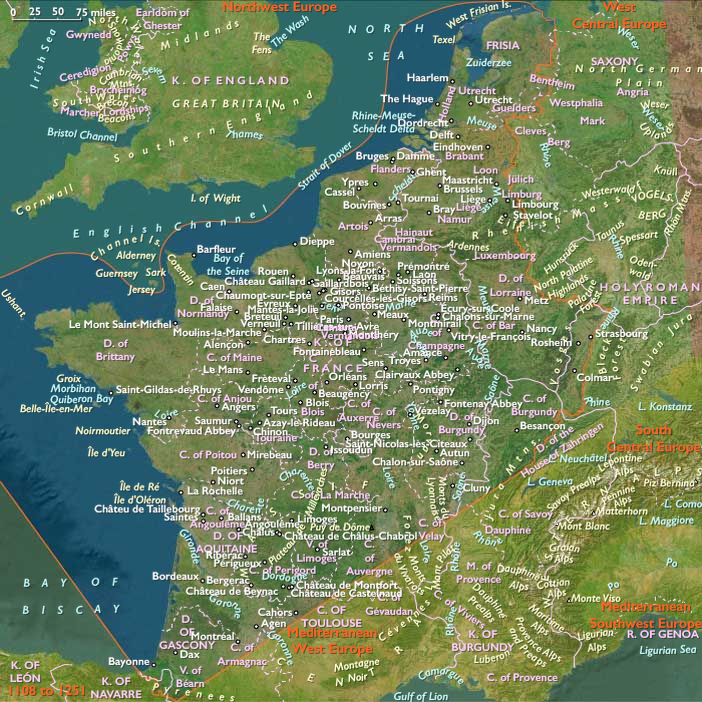
- His victory at the Battle of Bouvines (1214) secured Normandy, Anjou, Maine, Touraine, and Poitoufrom the English Plantagenets, permanently weakening English claims in France.
- His wars with John of England led to the collapse of the Angevin Empire on the continent.
-
Administrative and Legal Reforms
- Philip strengthened royal administration, centralizing power through a more efficient bureaucracy.
- He expanded the use of royal officials (baillis and prévôts) to manage territories directly under the Crown, reducing feudal autonomy.
-
Military Innovations
- Philip organized a semi-permanent royal army, shifting France away from reliance on feudal levies.
- He was one of the first European rulers to use infantry effectively, as demonstrated at Bouvines.
-
Urban and Economic Growth
- He revitalized Paris, improving its fortifications, roads, markets, and bridges, helping it emerge as a true capital city.
- He introduced monetary reforms, stabilizing the French economy and reducing noble resistance to royal taxation.
The Accession of Louis VIII
- Philip was succeeded without dispute by his son, Louis VIII, who had already acted as regent and led military campaigns, including the Capetian invasion of England in 1216–1217.
- Louis VIII would continue his father’s policies, particularly against the English in Aquitaine and the remnants of the Albigensian resistance in the south.
Philip II’s death in 1223 marked the end of an era, but his reign laid the foundations for France’s rise as the dominant power in medieval Europe. His conquests, reforms, and military successes ensured that the Capetian monarchy would continue to grow in strength under his successors.
Locations
People
Groups
Commodoties
Subjects
Regions
Subregions
Related Events
Showing 1 events out of 1 total
Years: 1223 - 1223
July
Locations
People
Groups
Commodoties
Subjects
Regions
Subregions