
Charles of Anjou Thwarted in Sicily, Turns …
Years: 1253 - 1253
Charles of Anjou Thwarted in Sicily, Turns to Flanders (1253)
King Louis IX of France firmly forbade his brother, Charles of Anjou, from pursuing the papal offer of the Sicilian crown, recognizing the dangers of entangling the Capetian dynasty in the volatile politics of Italy. Louis, ever the pragmatist, sought to maintain Capetian neutrality in the struggle between the Papacy and the Holy Roman Empire, and he viewed Sicily as a distraction from his own broader crusading and reformist aims.
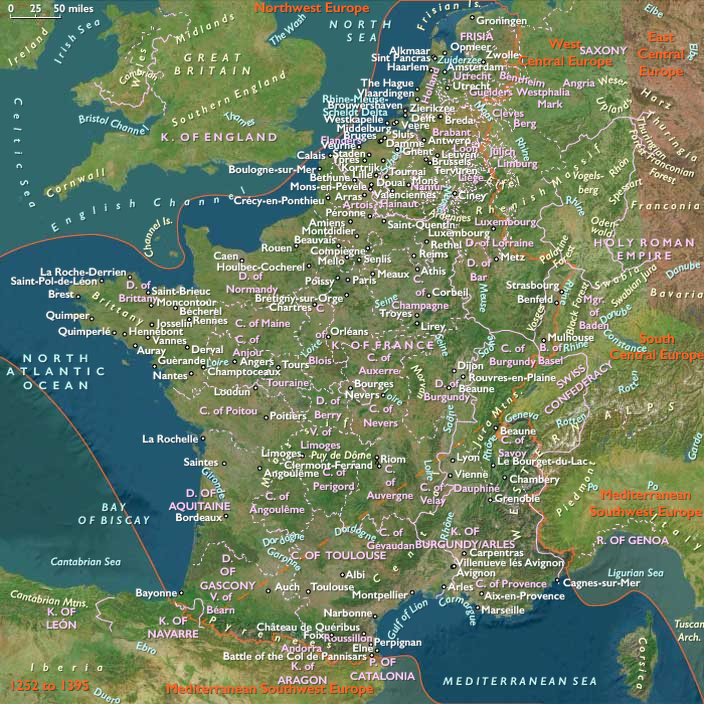
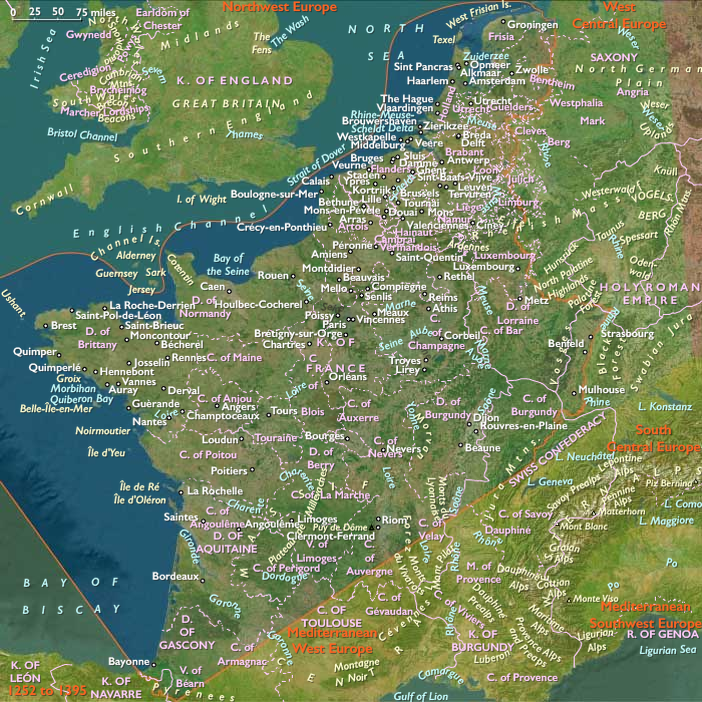
Denied his Sicilian ambitions, Charles turned his attention northward, entering the War of the Succession of Flanders and Hainaut on behalf of Margaret II of Flanders, who sought to uphold the claims of her Dampierre sons against her estranged eldest son, John of Avesnes, Count of Hainaut. By taking up Margaret’s cause, Charles inserted himself into one of the most complex dynastic conflicts in the Low Countries, reinforcing French influence in Flanders while positioning himself as an indispensable military leader.
Although initially a secondary theatre, this conflict allowed Charles to consolidate his reputation as a formidable political operator. His ambitions in Italy, however, remained unresolved, and he would later revive them—culminating in his eventual conquest of Sicily in 1266.
Locations
People
- Charles I of Naples
- Guy of Dampierre
- John of Avesnes
- Louis IX of France
- Margaret II, Countess of Flanders
- Pope Innocent IV
Groups
- Papal States (Republic of St. Peter)
- Flanders, County of
- Holy Roman Empire
- France, (Capetian) Kingdom of
- Hainaut, County of
- Sicily, Hohenstaufen Kingdom of
Topics
Commodoties
Subjects
Regions
Subregions
Years: 1253 - 1253
Locations
People
- Charles I of Naples
- Guy of Dampierre
- John of Avesnes
- Louis IX of France
- Margaret II, Countess of Flanders
- Pope Innocent IV
Groups
- Papal States (Republic of St. Peter)
- Flanders, County of
- Holy Roman Empire
- France, (Capetian) Kingdom of
- Hainaut, County of
- Sicily, Hohenstaufen Kingdom of
Topics
Commodoties
Subjects
Regions
Subregions