
The Introduction of the Ducal Title in …
Years: 1432 - 1432
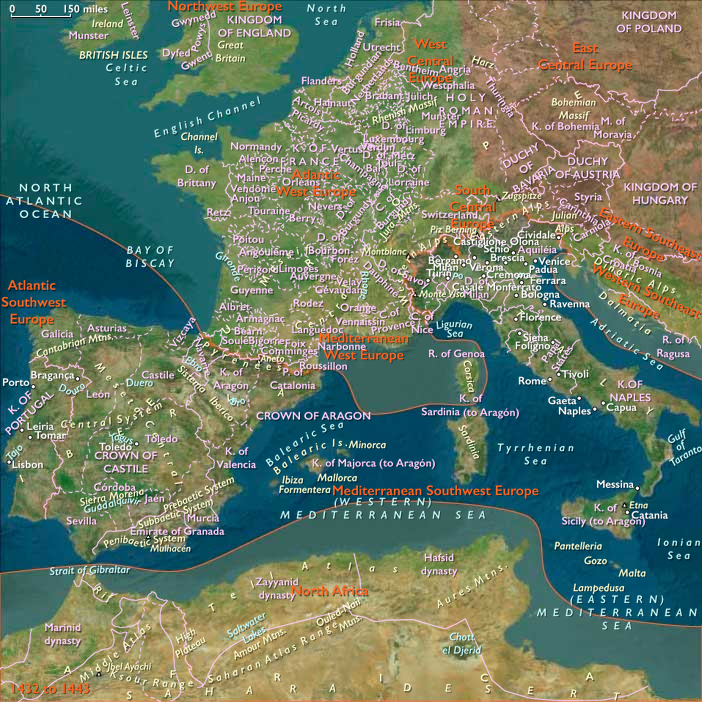
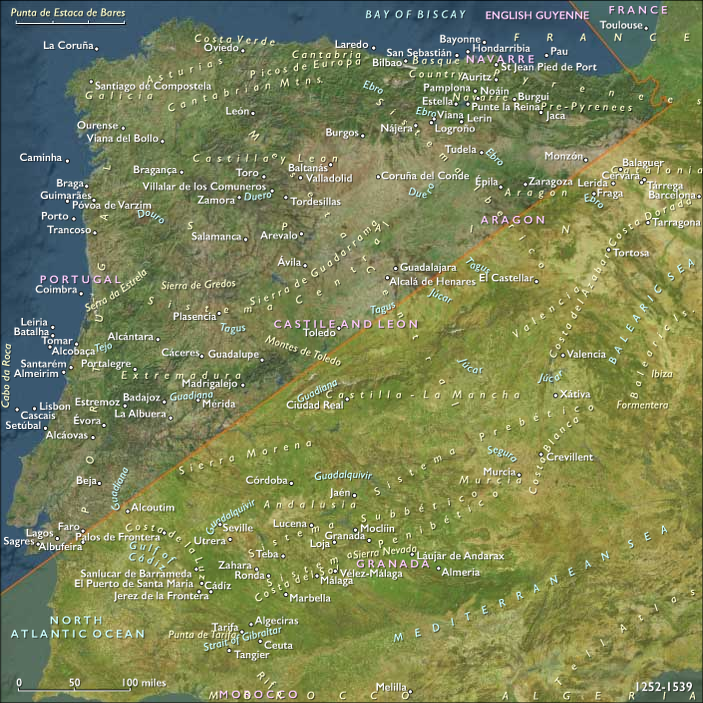
The Introduction of the Ducal Title in Portugal by John I (1415–1432)
King John I of Portugal (r. 1385–1433) introduced the title of duke into Portugal as part of his reward system for his sons and key supporters, consolidating noble power while maintaining royal authority.
The First Portuguese Dukedoms (1415): Coimbra and Viseu
- After the successful conquest of Ceuta in 1415, John I created the first Portuguese duchies for his sons, establishing the title of "Duke" in Portugal for the first time.
- The newly created titles were:
- Duke of Coimbra – Granted to Infante Peter, John I’s second legitimate son.
- Duke of Viseu – Given to Infante Henry the Navigator, John I’s third legitimate son.
- These duchies strengthened the role of the royal family in governance, ensuring that John I’s sons remained powerful but loyal to the Crown.
The Creation of the Duchy of Bragança (1432): A New Noble Powerhouse
- In 1432, John I created the Duchy of Bragança for his illegitimate son, Afonso, marking the beginning of one of the most powerful noble houses in Portugal.
- Afonso, as the first Duke of Bragança, received vast landholdings, castles, and privileges, making his family a dominant force in Portuguese politics.
- Unlike the duchies given to his legitimate sons (Coimbra and Viseu), Bragança was created as a hereditary title, ensuring its long-term influence.
Impact on Portuguese Nobility and Politics
- Elevated the nobility – The creation of duchies formalized the power of the aristocracy, giving them greater autonomy and prestige.
- Secured loyalty – By granting ducal titles to family members, John I ensured that power remained within the royal circle.
- Strengthened Portugal’s feudal structure – These duchies played a key role in governance, military campaigns, and economic administration.
Legacy of the Ducal System in Portugal
- The House of Bragança would grow into the most powerful noble house in Portugal, eventually challenging the monarchy.
- In 1640, the 8th Duke of Bragança, João IV, led the Portuguese Restoration War against Spain and became King of Portugal, establishing the Bragança dynasty, which ruled until 1910.
Thus, John I’s introduction of the ducal title in Portugal was a pivotal moment in the kingdom’s noble and political structure, shaping the balance between royal power and aristocratic influence for centuries to come.
Locations
People
Groups
Subjects
Regions
Subregions
Related Events
Filter results
Showing 10 events out of 42013 total
Mahuika crater is a proposed submarine bolide impact crater, 20 ± 2 kilometers wide and over one hundred and fifty meters deep, on the New Zealand continental shelf named after the Māori god of fire.
It was discovered by Dallas Abbott and her colleagues from the Lamont-Doherty Earth Observatory of the Columbia University.
However, there is debate about its origins.
Around the year 1400, the natives of New Zealand abandoned their southern coastal settlements.
New Zealand tsunami expert Professor James Goff attributes coastal abandonment in New Zealand at 1500 CE to an earthquake-induced tsunami event.
However, the largest historical earthquakes produced maximum tsunami runups of forty to sixty meters.
On Stewart Island, New Zealand, beach sand is present about two hundred and twenty meters above sea level at Hellfire Hut and about one hundred and fifty meters above sea level at Mason Bay.
In eastern Australia, there are megatsunami deposits with maximum run-ups of over one hundred and thirty meters and a C-14 age of ~1500 CE.
Megatsunami deposits occur on the eastern side of Lord Howe Island in the middle of the Tasman Sea, implying a source crater for the tsunami further east.
Abbott et al. (2003) will suggest that a bolide impact would explain both the geological and anthropological evidence better than an earthquake.
Based on elemental anomalies, fossils, and minerals, which are interpreted to be derived from the impact, found in an ice core from the Siple Dome in Antarctica, Abbott et al. (2005) will argue that the impact, which created the Mahuika crater occurred around 1443 CE, but other sources have placed the date as February 13, 1491 CE.
Some evidence suggests that the tsunami it caused was observed by aborigines and entered into their mythology.
A paper published in Marine Geology in 2010 critically analyzed Abbott's claims regarding the origin of the Mahuika crater.
The researchers determined that there was no evidence to indicate a comet created the crater, and therefore the possibility of an impact causing the tsunami was highly unlikely.
Islam enters the region of Indonesia along maritime trade routes in the fifteenth century.
(In less than a century, it will become the predominant religion of the archipelago.)
The Suppression of Opium Knowledge During the Inquisition
During the Inquisition, opium, once known in medieval European medicine, largely disappeared from historical records due to its association with the East, which was increasingly viewed with suspicion by Church authorities.
Opium’s Early Use in Europe
- Opium had been widely known in antiquity, used by the Greeks, Romans, and Islamic physicians for its pain-relieving and sedative properties.
- In medieval Europe, it was introduced through Arab medical texts, particularly those translated in Spain and Italy.
- Famous medieval physicians like Avicenna (Ibn Sina) promoted its use in medical treatments, and it was included in early apothecaries' inventories.
The Inquisition and the Suppression of Eastern Knowledge
- As the Catholic Church intensified its control over intellectual thought, the Inquisition targeted "heretical" knowledge, including medical texts influenced by the Muslim world.
- The Renaissance-era Church increasingly associated Eastern sciences, alchemy, and exotic substances with heresy and the Devil.
- Opium, a substance linked to Arab and Asian medical traditions, was gradually excluded from European pharmacology.
The Decline of Opium in European Records
- By the late Middle Ages and early Renaissance, references to opium became scarce in scholarly and medical texts.
- Its import and use diminished as trade routes with the East became more restricted by religious scrutiny.
- The Church’s fear of "pagan" and "heretical" knowledge led to a decline in the academic study of substances like opium.
The Reintroduction of Opium in Early Modern Europe
- Opium reemerged in Europe during the Age of Exploration (16th–17th centuries), as Portuguese, Dutch, and British merchants rediscovered it through their contacts in India and China.
- The Jesuits, traveling in Asia, played a key role in reintroducing opium-based medicines, including laudanum, in the 16th century.
- By the 17th century, opium had returned to European medicine, particularly through the writings of Paracelsus and Thomas Sydenham, who revived its use for pain relief and sedation.
Conclusion: A Temporary Erasure from Western Knowledge
During the Inquisition, the Church’s fear of Eastern influence led to the suppression of knowledge related to opium, temporarily erasing it from European medical discourse. However, with the rise of global trade and renewed scientific inquiry, opium made its way back into European medicine, becoming a key substance in early modern pharmacology.
East Europe (1432–1443 CE): Muscovite Expansion and Cultural Flourishing
Political and Military Developments
Continued Muscovite Territorial Expansion
Between 1432 and 1443 CE, Muscovy further extended its territorial control, solidifying its political influence across East Europe. Strategic acquisitions and strengthened administration allowed for greater regional governance and cohesion.
Diplomatic Success and Regional Stability
Muscovy adeptly managed diplomatic relationships with neighboring principalities, reducing tensions through political alliances, marital ties, and negotiated treaties. The resultant stability significantly enhanced Moscow's regional standing.
Further Integration of Ethnic Communities
The ethnic groups, such as the Mari, Mordvins, Udmurts, Komi, and Vepsians, experienced deeper integration into Muscovite governance and society, further promoting administrative efficiency and societal cohesion.
Economic and Technological Developments
Economic Diversification and Growth
Muscovy's economy continued to prosper, driven by a diversified internal market and sustained international trade. Major cities, including Moscow, Novgorod, and Tver, became increasingly affluent economic centers.
Advancement in Military and Infrastructure Technologies
Technological progress in military engineering, including advancements in fortifications, siege equipment, and cavalry strategies, continued to enhance Muscovy’s defensive capabilities and military preparedness.
Cultural and Artistic Developments
Cultural Renaissance and Artistic Synthesis
The continued blending of Rus', Mongol, and ethnic traditions produced a rich cultural renaissance. Architectural innovations, vibrant religious art, and expressive secular cultural works marked this period.
Literary Flourishing and Intellectual Growth
Intellectual endeavors and literary activities expanded significantly, with chroniclers documenting extensive historical, religious, and cultural developments. These scholarly efforts solidified cultural continuity and reinforced Muscovite identity.
Settlement Patterns and Urban Development
Sustained Urban Expansion and Development
Cities like Moscow witnessed ongoing demographic growth and economic expansion, supported by extensive infrastructure development and sophisticated urban planning. These improvements facilitated increased administrative efficiency and commercial activity.
Enhanced Fortifications and Urban Defense
Urban centers continued to upgrade their defensive infrastructure, strategically enhancing protection and regional stability in response to potential threats.
Social and Religious Developments
Deepened Social Cohesion and Diversity
Social structures further evolved to accommodate and integrate diverse ethnic communities effectively. This inclusive approach fostered increased social harmony and political stability.
Centralized Role of Orthodox Christianity
The Orthodox Church maintained a central position in societal development, guiding moral education, community cohesion, and cultural continuity. Its influence significantly bolstered societal stability and identity.
Long-Term Consequences and Historical Significance
The era from 1432 to 1443 CE witnessed significant Muscovite territorial growth, cultural flourishing, and strengthened regional stability. These developments reinforced foundations crucial for the emergence of a unified and culturally vibrant Russian state.
Northeast Europe (1432–1443 CE): Union Instability, Internal Rebellions, and Shifting Regional Dynamics
Between 1432 and 1443 CE, Northeast Europe faced growing internal tensions within the Kalmar Union, regional consolidation following previous conflicts, and persistent diplomatic maneuvering. This era was marked by internal rebellions, particularly in Sweden, continued diplomatic efforts involving the Teutonic Order and the Polish–Lithuanian Union, and resilient economic stability across major urban centers.
Engelbrekt Rebellion and Kalmar Union Tensions
A significant internal crisis emerged within the Kalmar Union, led by the Swedish nobleman Engelbrekt Engelbrektsson, whose rebellion from 1434 to 1436 arose from grievances against centralized Danish rule under Eric of Pomerania. Engelbrekt’s movement reflected broader discontent among the Swedish nobility and peasantry, challenging the Union's authority and leading to temporary decentralization and substantial administrative adjustments. Although the rebellion itself was eventually suppressed, it revealed deep-seated internal fractures that persisted beyond this period.
Ongoing Diplomacy and Teutonic Order Adjustments
The Teutonic Order, weakened by earlier defeats and territorial losses, continued navigating diplomatic complexities to maintain stability within its territories, notably Prussia and Estonia. Efforts to rebuild internal governance, enhance regional fortifications in cities such as Königsberg and Reval (Tallinn), and diplomatic negotiations with neighboring powers, particularly the Polish–Lithuanian Union, characterized this period. Despite lingering vulnerabilities, these measures provided a measure of regional equilibrium.
Stability and Autonomy of the Livonian Confederation
The Livonian Confederation, administered from Riga, successfully maintained its autonomy and economic resilience. Robust trade networks and strategic diplomacy allowed the Confederation to preserve internal stability and economic vitality despite surrounding political turbulence. Its continued prosperity reinforced its position as a significant player in regional trade and diplomacy.
Continued Swedish Governance in Finland
Despite internal strife within the broader Kalmar Union, Sweden maintained steady governance and defensive integration in southern Finland. Strengthened fortifications, administrative institutions, and ecclesiastical influence ensured sustained political cohesion and cultural integration, further solidifying Finland’s strategic importance within the Swedish realm.
Economic Stability in Major Urban Centers
Urban centers such as Reval (Tallinn), Riga, Königsberg, and Visby on Gotland continued to thrive economically, supported by strong maritime trade, expanding commercial networks, and effective urban governance. This economic resilience significantly contributed to broader regional stability amidst ongoing political disruptions.
Ecclesiastical Influence and Cultural Continuity
Ecclesiastical institutions, including influential regional bishoprics and the Teutonic Order, remained central in maintaining social stability, promoting educational initiatives, and reinforcing cultural continuity. Their consistent support of Latin Christian traditions provided cohesive stability across diverse communities.
Strategic Diplomacy Amid Regional Rivalries
Diplomatic initiatives among regional powers, notably involving the Kalmar Union, Teutonic Order, Livonian Confederation, and Polish–Lithuanian Union, remained crucial. Diplomacy emphasized careful strategic negotiation, conflict management, and territorial stabilization, helping to navigate ongoing regional rivalries effectively.
Legacy of the Era
The era from 1432 to 1443 CE significantly influenced Northeast Europe's future by highlighting the inherent fragility of political unions, the persistence of regional autonomy movements, and the enduring importance of strategic diplomacy. These developments shaped subsequent territorial alignments, political structures, and regional identities, leaving a lasting impact on Northeast Europe’s historical trajectory.
The rebellion against Eric of Pomerania, the king of the Kalmar Union, led by Swedish nobleman Engelbrekt Engelbrektsson in 1434-1436, results in the deposing of Eric as well as erosion of the union.
East Central Europe (1432–1443 CE): Hussite Negotiations, Ottoman Pressures, and Internal Consolidation
Between 1432 and 1443 CE, East Central Europe entered a phase of cautious recovery, diplomatic maneuvering, and internal consolidation following the intense conflicts of the Hussite Wars. The Council of Basel (1431–1449) sought compromise with Hussite Bohemia, gradually ending the period of open warfare. Meanwhile, the Kingdom of Hungary, under Sigismund of Luxemburg and his successor Albert II, grappled with escalating Ottoman threats, while the Polish-Lithuanian Union managed internal dynastic stability and economic growth, asserting regional influence.
Political and Military Developments
Council of Basel and Hussite Compromise (1431–1436)
-
Initiated in 1431, the Council of Basel negotiated intensively with moderate Hussites, known as the Utraquists, culminating in the Compactata of Basel (1436), which allowed communion under both species (bread and wine), effectively legitimizing Hussite religious reforms.
-
This agreement restored relative peace in Bohemia, facilitating the return of Emperor Sigismund as King of Bohemia in 1436. However, radical Hussite factions, particularly the Taborites, remained dissatisfied, weakening internal stability.
Death of Sigismund and Succession of Albert II (1437)
-
Sigismund of Luxemburg died in 1437, ending a complex reign marked by imperial ambitions, Hussite conflicts, and Hungarian internal struggles. He was succeeded by his son-in-law Albert II of Habsburg (r.1437–1439), briefly unifying the crowns of Hungary, Bohemia, and the German kingship.
-
Albert II's sudden death in 1439 prompted a dynastic crisis, exacerbating political fragmentation across Hungary and Bohemia, and intensifying regional instability.
Ottoman Incursions and Hungarian Defense
-
The Kingdom of Hungary increasingly confronted Ottoman incursions along its southern borders, culminating in frequent raids and heightened military preparedness under governors like John Hunyadi, who emerged as a significant military leader by the early 1440s.
Polish-Lithuanian Stability and Dynastic Continuity
-
In Poland-Lithuania, King Władysław III (r.1434–1444), successor to Władysław II Jagiełło, oversaw internal stability and diplomatic balancing acts, strengthening the union's regional standing while cautiously addressing external threats, particularly from the Teutonic Order.
Economic and Technological Developments
Post-War Economic Recovery
-
Following prolonged conflicts, Bohemia experienced cautious economic recovery after 1436, benefiting from restored peace, revitalized trade routes, and returning population stability.
-
Polish-Lithuanian cities like Kraków, Lublin, and Vilnius thrived economically, profiting from stable governance, expanding Baltic trade networks, and internal market growth.
Trade Realignments and Northern Prosperity
-
Hanseatic cities—including Lübeck, Rostock, Toruń, and Gdańsk—continued to flourish, expanding Baltic maritime trade, which compensated for disruptions elsewhere, further enhancing their economic importance and autonomy.
Cultural and Artistic Developments
Hussite Cultural Influence and Legacy
-
The Hussite movement left lasting impacts on Czech culture, strengthening vernacular literature, popular religious practice, and education, shaping Bohemia’s distinctive intellectual and religious identity.
-
Artistic and literary works in Bohemia increasingly incorporated Hussite themes, reflecting evolving religious attitudes and emphasizing Czech linguistic and cultural identity.
Courtly Culture in Hungary and Poland
-
Hungarian and Polish royal courts continued to patronize vibrant cultural and artistic activities. Gothic architecture, illuminated manuscripts, and chivalric literature flourished under aristocratic patronage, particularly in Kraków and Buda.
Settlement and Urban Development
Urban Revival and Fortification
-
Towns and cities across Bohemia, Hungary, and Poland recovered gradually from wartime disruptions. Reconstruction of urban centers such as Prague, Kutná Hora, and Pressburg (Bratislava) restored prosperity and improved fortifications.
-
Border towns and frontier fortresses in Hungary received particular attention, significantly improving defenses against Ottoman raids and incursions.
Social and Religious Developments
Religious Compromise and Hussite Legacy
-
The Compactata of Basel introduced a moderate religious settlement in Bohemia, integrating Hussite practices into official ecclesiastical structures and reducing religious tensions, though radical groups remained marginalized.
-
Hussite-inspired religious attitudes persisted, significantly influencing future religious reforms and social transformations within Bohemia.
Strengthened Aristocratic Authority
-
Throughout Hungary and Poland-Lithuania, the aristocracy solidified its political and economic influence, leveraging dynastic instability and weakened central authority to reinforce local autonomy and privileges.
Long-Term Consequences and Historical Significance
The era 1432–1443 CE represented a critical transitional phase in East Central European history. The diplomatic resolution of the Hussite Wars through the Council of Basel established lasting religious reforms and social realignments in Bohemia. In Hungary, Albert II's brief reign underscored increasing dynastic instability and escalating Ottoman threats, foreshadowing significant future conflicts. Meanwhile, Polish-Lithuanian stability under Władysław III solidified regional influence, providing a crucial foundation for subsequent economic prosperity and political strength, shaping East Central Europe's trajectory through the late medieval period.
Eastern Southeast Europe (1432–1443 CE): Ottoman Dominance and Regional Resistance
Settlement and Migration Patterns
Ottoman Expansion and Consolidation
From 1432 to 1443, the Ottoman Empire, under Murad II, solidified its hold on Eastern Southeast Europe, consolidating previously contested territories and extending control into the Balkans. Ottoman settlements expanded significantly, especially into territories of Bulgaria, Serbia, and northern Greece, transforming these areas into integral parts of the empire.
Population Shifts and Urban Development
Ottoman administration encouraged migration and resettlement policies that strengthened control over new regions. Major cities, including Adrianople (Edirne) and Salonika (Thessaloniki), saw increased Turkish settlement, becoming vibrant administrative, commercial, and cultural centers under Ottoman rule.
Economic and Technological Developments
Economic Integration and Trade Expansion
The Ottomans successfully integrated newly conquered territories into their economic system, utilizing the established Balkan trade routes to strengthen commercial exchanges between Europe and Anatolia. Adrianople, in particular, flourished as a commercial hub connecting Ottoman Europe to Asia Minor.
Further Military Refinements
Under Murad II, the Janissary corps continued to expand, becoming the backbone of Ottoman military power. Technological advancements in siege warfare and fortifications significantly enhanced Ottoman military effectiveness, crucial for capturing and holding strategic cities and fortresses throughout the Balkans.
Cultural and Artistic Developments
Ottoman Patronage and Architectural Flourishing
Murad II's patronage significantly advanced Ottoman art and architecture, blending Islamic and local traditions. New mosques, theological schools (medreses), bridges, baths, and caravanserais arose throughout Balkan territories, signifying Ottoman cultural dominance and the assimilation of previously Byzantine and Slavic regions.
Byzantine Cultural Persistence
Despite shrinking territorial control, Byzantine cultural life continued resiliently in Constantinople. Scholarly and artistic activities persisted, preserving classical heritage and Orthodox religious traditions, even as political independence rapidly diminished.
Social and Religious Developments
Religious Conversions and Tensions
The devshirme system intensified, with increasing numbers of Balkan Christian youths forcibly converted and recruited into Ottoman service. This generated resentment among Orthodox populations, who viewed these practices as direct threats to their cultural identity, leading to heightened regional religious tensions.
Strengthening of Islamic Institutions
Ottoman religious institutions further embedded Islam into the social fabric of conquered territories. The proliferation of mosques and religious schools bolstered Islamic authority and societal influence, facilitating gradual but profound shifts in regional religious demographics.
Political Dynamics and Regional Rivalries
Resistance and Rebellions
The expansion of Ottoman rule was met by frequent local resistance. Serbia and Hungary, under leadership figures such as John Hunyadi, intensified efforts to counter Ottoman advances. The rising opposition set the stage for broader conflicts, notably culminating in subsequent military confrontations.
Byzantine Diplomatic Maneuvers
The Byzantine Empire, under John VIII Palaiologos, continued seeking alliances against the Ottoman threat, fostering diplomatic relations with Hungary, Venice, and Western European powers. However, these efforts remained largely ineffective against the entrenched Ottoman presence.
Long-Term Consequences and Historical Significance
Between 1432 and 1443 CE, Ottoman dominance became firmly entrenched, transforming Eastern Southeast Europe politically, economically, and culturally. The profound consolidation of Ottoman control laid essential foundations for subsequent Ottoman expansion and the eventual fall of Constantinople in 1453, reshaping the region’s historical trajectory for centuries.
The Middle East: 1432–1443 CE
Strategic Consolidations and Cultural Flourishing
Kara Koyunlu Consolidation under Jahan Shah
By 1435, Jahan Shah emerges victorious over his brother and rival Qara Iskander, solidifying his control as the uncontested leader of the Kara Koyunlu. Under his rule, their dominance over Baghdad and western Persia is reinforced, initiating a period characterized by stability and cultural patronage, particularly evident in advancements in architecture and the arts.
Ottoman Expansion and Diplomacy
The Ottoman Empire, guided by the strategic leadership of Murad II, significantly expands its influence into the Balkans. Murad consolidates Ottoman authority through military success and adept diplomacy, setting the stage for future victories such as the decisive Battle of Varna in 1444. His policies effectively secure Ottoman dominance in the region, further entrenching the empire’s territorial ambitions.
Georgian Economic and Cultural Renaissance
The revitalized Kingdom of Georgia continues its trajectory of economic prosperity and cultural revival. Benefiting from sustained peace and enhanced trade networks, Georgia witnesses notable developments in literature, religious architecture, and fine arts. The kingdom reaffirms its status as a vital cultural intermediary between Eastern and Western traditions.
Timurid Cultural Zenith under Shah Rukh
Under the rule of Shah Rukh, the Timurid Empire experiences an unparalleled cultural zenith centered at the capital, Herat. Shah Rukh fosters a rich intellectual climate, promoting scientific inquiry, literary production, and artistic creativity. This cultural renaissance significantly enhances Persian culture, influencing subsequent artistic and intellectual traditions.
Legacy of the Era
The period from 1432 to 1443 marks a phase of strategic consolidation and vibrant cultural flourishing across the Middle East. Jahan Shah's establishment of stable rule over the Kara Koyunlu, the Ottoman Empire's notable territorial expansions under Murad II, the ongoing Georgian renaissance, and the Timurid cultural achievements under Shah Rukh collectively define a dynamic and pivotal era in Middle Eastern history.
Baysonqor, governor of Herat from 1415, establishes a famed academy of book production, thereby spurring the development of manuscript illumination in Timurid Persia.
Baysonqor is a son of Mirza Shahrukh, the ruler of Persia and Transoxania, and Shakhrukh's most prominent wife Goharshad.
In the view of modern historians, Baysonqor was actually a better statesman than his more famous elder brother, Ulugh Beg, who inherited Shahrukh's throne.
