
The Marriage of King Henry I of …
Years: 1051 - 1051
The Marriage of King Henry I of France and Anna of Kiev (1051)
After the death of his first wife, Matilda of Frisia, King Henry I of France faced significant difficulty in finding a suitable bride. The European noble courts were densely intermarried, and the Church’s strict consanguinity lawsmade it nearly impossible to locate a non-related princess within legal degrees of kinship.
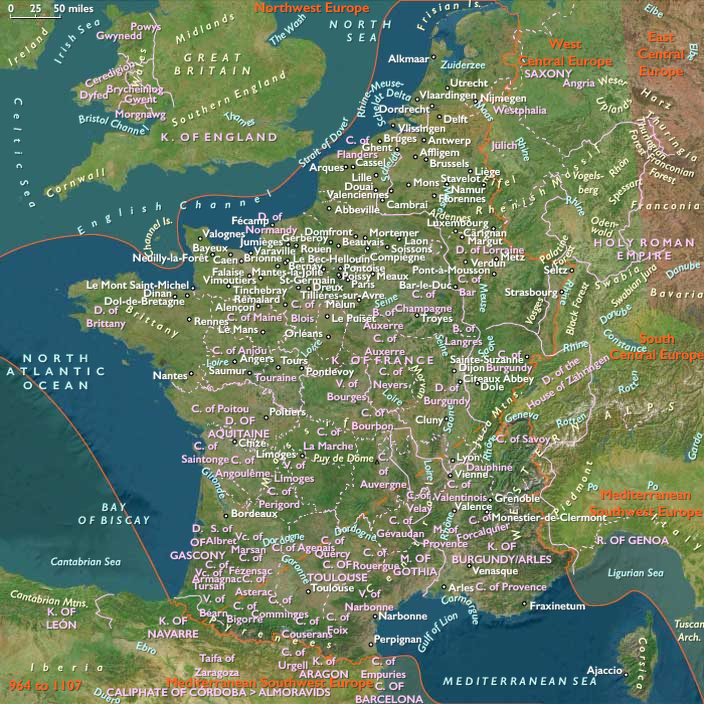
Ultimately, Henry turned to the Kievan Rus', sending an embassy to Kiev, which returned with Anna (or Agnes) of Kiev, daughter of Grand Prince Yaroslav the Wise. Their marriage, which took place on May 19, 1051, at the Cathedral of Reims, was a historic union that bridged Western and Eastern Europe.
The Wedding and Coronation of Anna of Kiev
- The wedding and coronation ceremony were conducted by Archbishop Guy de Châtillon at Reims Cathedral, the traditional site for French royal anointings.
- During the ceremony, Anna swore her oath by placing her hand on a Gospel she had brought from Kiev, written in Old Church Slavonic.
- This sacred text would go on to be used in the coronation ceremonies of French kings, with the tradition lasting until Charles X in 1824.
Anna's Impressions of France
- Anna of Kiev was highly educated, able to read and write in at least five languages, including Greek and Latin.
- She was shocked by the lack of literacy at the French court, where even Henry I and his nobles were illiterate, signing their names with simple crosses.
- In a letter to her father, Grand Prince Yaroslav, she described France as a barbaric country, complaining that:
- The houses were dark and gloomy.
- The churches were crude and lacked the grandeur of Kievan cathedrals.
- The French aristocracy lacked proper hygiene and did not bathe regularly.
- At her wedding banquet, Anna was shocked by the simplicity of the French court, having only three dishes at the feast, whereas in Kievan Rus', she was accustomed to five different dinner dishes every day.
Significance of the Marriage
- Anna’s arrival brought cultural and intellectual influences from Kievan Rus’, one of the most sophisticated and literate courts of medieval Europe.
- As Queen of France, she played an important role in royal administration, signing charters in her own name, something uncommon for medieval queens.
- Her marriage strengthened ties between France and Kievan Rus', showing the expanding diplomatic reach of both realms.
Legacy
- The Gospel of Reims, used at Anna’s coronation, remained a symbolic artifact in French royal ceremonies for centuries.
- Anna's shock at the state of France reflected the cultural divide between the Slavic East and the Latin West, highlighting how Kievan Rus' was, in many ways, more advanced than 11th-century France.
- She would go on to become one of the most influential queens of her time, playing a key role in the Capetian court and securing her son Philip I’s succession.
Though initially unimpressed by her new home, Anna of Kiev left a lasting mark on France, bringing literacy, diplomacy, and cultural refinement to the early Capetian monarchy.
Locations
People
Groups
Commodoties
Subjects
Regions
Subregions

Related Events
Showing 10 events out of 18 total
Years: 1051 - 1051
Locations
People
Groups
Commodoties
Subjects
Regions
Subregions