
Filters:
The Marriage of Edward II and Isabella …
Years: 1308 - 1308
January
The Marriage of Edward II and Isabella of France (1308) and Growing Noble Resentment
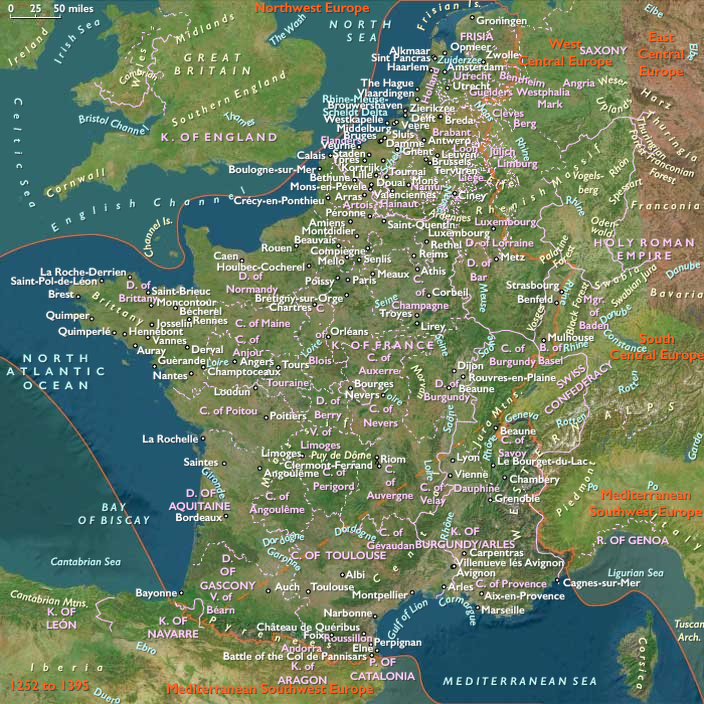
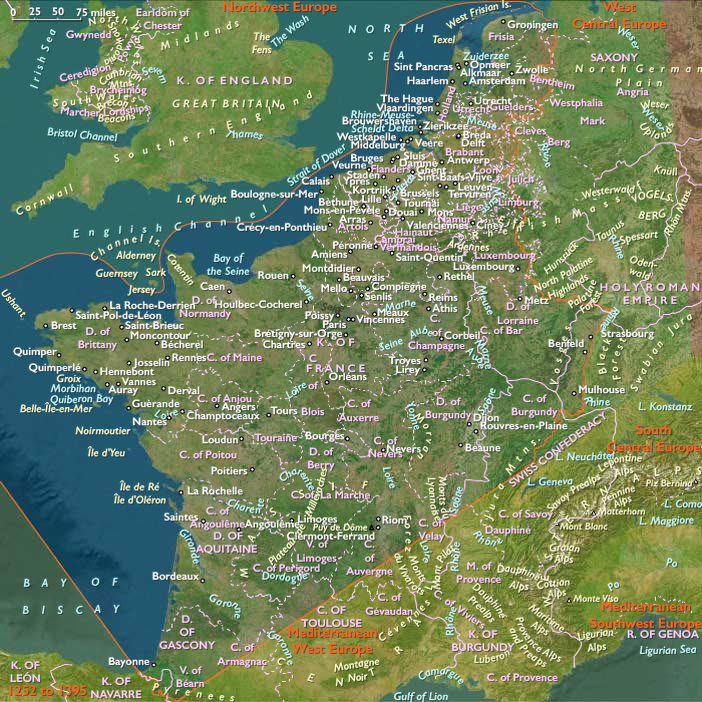
On January 25, 1308, King Edward II of England married Isabella of France, daughter of King Philip IV of France, in Boulogne. This union was intended to strengthen Anglo-French relations following the Treaty of Paris (1303), which had restored Gascony to England and sought to prevent further conflict between the two kingdoms.
Piers Gaveston as Regent and Noble Suspicion
- Before departing for France to wed Isabella, Edward II appointed his close friend and confidant, Piers Gaveston, as regent.
- Gaveston, a Gascon knight, had risen to extraordinary prominence under Edward, enjoying lavish royal favor and influence.
- This deeply alienated the English magnates, who saw Gaveston as an unworthy foreigner and a dangerous influence on the king.
- The marriage to Isabella did little to ease their suspicions, as Edward’s favoritism toward Gaveston continued unabated.
Tensions Between Edward II, Isabella, and the Barons
- Upon her arrival in England, Isabella found herself sidelined, as Edward showered attention on Gaveston, reportedly ignoring his new queen at their own coronation feast.
- The English barons, already hostile to Gaveston, grew even more determined to curtail his influence, leading to an ongoing power struggle.
- In 1308, Edward was forced to banish Gaveston under pressure from his magnates, though he would recall him soon after, further inflaming tensions.
The Road to Conflict
- The Isabella-Edward marriage alliance failed to stabilize English politics, as noble resentment toward the king’s favoritism toward Gaveston deepened.
- The crisis would escalate into baronial opposition, leading to the execution of Gaveston in 1312 and the eventual collapse of Edward II’s rule in 1327, when Isabella played a leading role in his deposition.
Edward II’s marriage to Isabella of France in 1308 was intended as a diplomatic success, but it failed to resolve internal tensions, as his continued favoritism toward Gaveston alienated his nobility, setting the stage for one of the most turbulent reigns in English history.
Locations
People
Groups
Subjects
Regions
Subregions
Years: 1308 - 1308
January
Locations
People
Groups
Subjects
Regions
Subregions