
Filters:
The Death of Chlothar II and the …
Years: 629 - 629
September
The Death of Chlothar II and the Rise of Dagobert I (629 CE)
Chlothar II, King of the Franks, dies in 629 CE, marking the end of a 45-year reign, the longest of any Merovingian ruler since his grandfather Chlothar I (511–561 CE). His reign had seen the reunification of the Frankish kingdoms but also the increasing power of the nobility, setting the stage for the rise of the Mayors of the Palaceand the later rois fainéants ("do-nothing kings").
1. Chlothar II’s Reign: A Long but Weakening Rule
- Chlothar II had consolidated power in 613 CE, defeating Brunhilda and the Austrasian nobility, briefly ruling over a united Frankish kingdom.
- However, his rule increasingly relied on the support of the aristocracy, particularly the Mayors of the Palace, leading to a decline in royal authority.
- The Edict of Paris (614 CE) had formally granted greater power to the Frankish nobility, reducing the ability of kings to govern without aristocratic support.
2. Chlothar II’s Death and the Rise of the Mayors of the Palace
- With Chlothar’s death in 629 CE, the Frankish monarchy is left weakened, as real power shifts to the Mayors of the Palace, who act as the kingdom’s chief administrators.
- This shift paves the way for the later rois fainéants ("do-nothing kings"), Merovingian monarchs who were kings in name but lacked real authority, while the Mayors of the Palace governed on their behalf.
3. The Succession of Dagobert I and the Move to Paris
- Dagobert I, Chlothar’s son and successor, ascends to the throne, becoming the first Merovingian king to rule from Paris as his capital.
- His rule is heavily influenced by two key figures:
- Bishop Arnulf of Metz, a leading ecclesiastical figure and later a saint, ensuring the Church’s continued political role.
- Pepin of Landen, the Mayor of the Palace, who represents the growing power of the Frankish aristocracy.
4. The Legacy of Chlothar II’s Reign
- His long reign ended with a monarchy diminished in power, with the real authority increasingly held by noble factions.
- The position of the Mayors of the Palace becomes entrenched, preparing the way for the rise of the Carolingians, who will later replace the Merovingians entirely.
- Dagobert I briefly restores royal prestige, but the monarchy’s decline continues after his death, leading to the final phase of Merovingian rule dominated by aristocratic power.
Conclusion: The End of Strong Merovingian Kingship
With Chlothar II’s death in 629 CE, the Merovingian monarchy enters a period of irreversible decline. While his son Dagobert I attempts to restore Frankish royal authority, the true power now lies with the Mayors of the Palace, marking the beginning of the era of aristocratic dominance that will eventually lead to the rise of the Carolingian dynasty.
Locations
People
Groups
- Franks
- Christianity, Chalcedonian
- Soissons (eventually Neustria), Frankish Kingdom of
- Aquitaine, (Frankish) Duchy of
- Austrasia, Frankish Kingdom of
- Neustria and Burgundy, Frankish Kingdom of
- Aquitaine, (Frankish) Kingdom of
Topics
Commodoties
Subjects
Regions
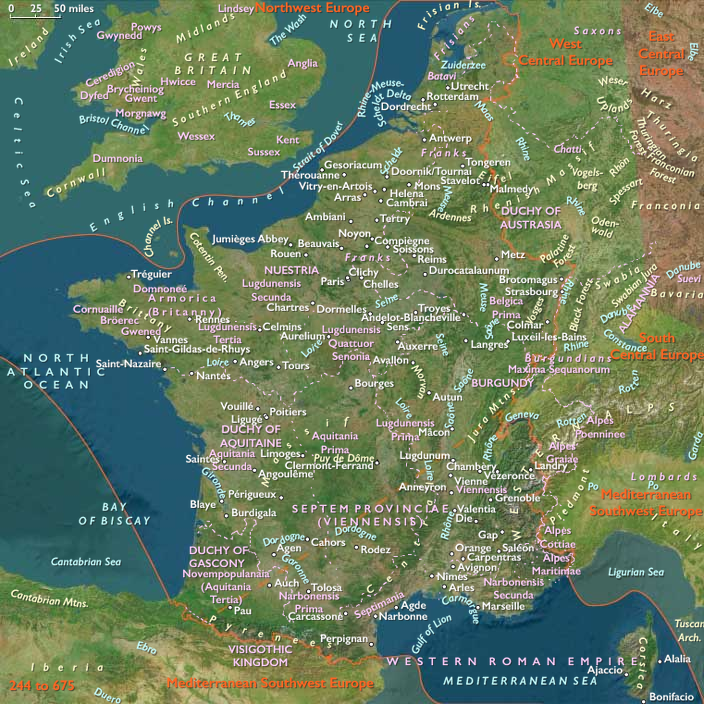
Subregions
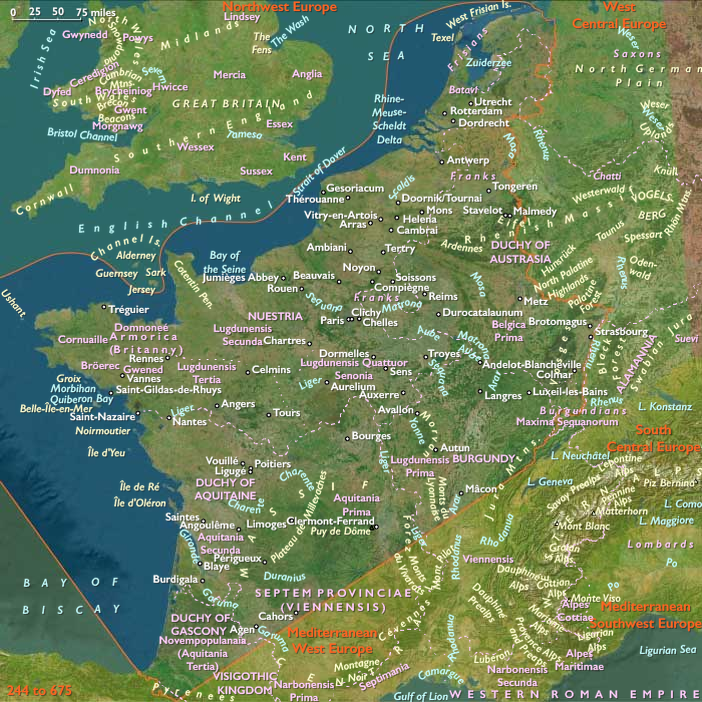
Years: 629 - 629
September
Locations
People
Groups
- Franks
- Christianity, Chalcedonian
- Soissons (eventually Neustria), Frankish Kingdom of
- Aquitaine, (Frankish) Duchy of
- Austrasia, Frankish Kingdom of
- Neustria and Burgundy, Frankish Kingdom of
- Aquitaine, (Frankish) Kingdom of
Topics
Commodoties
Subjects
Regions
Subregions