
King Andrew of Hungary has closely collaborated …
Years: 1060 - 1060
King Andrew of Hungary has closely collaborated with his brother Béla for several years following his elevation to the Hungarian throne.
According to the Illuminated Chronicle, they together worked out a military strategy against the Germans, who were frequently invading the kingdom in the early 1050s.
The chronicler emphasizes that Andrew and Béla "lived in a great tranquillity of peace" even after Andrew fathered a son, Solomon, in 1053.
Béla had been one of the lords witnessing the deed of the foundation of the Tihany Abbey, a Benedictine monastery that his brother established in 1055.
The two brothers' good relationship had deteriorated after King Andrew had the child Solomon crowned king in 1057 or 1058.
The coronation had been the consequence of the peace negotiations with the Holy Roman Empire, because the Germans would not acquiesce in a marriage between Solomon and Judith—the sister of the young German monarch, Henry IV—unless Solomon's right to succeed his father was declared and publicly confirmed.
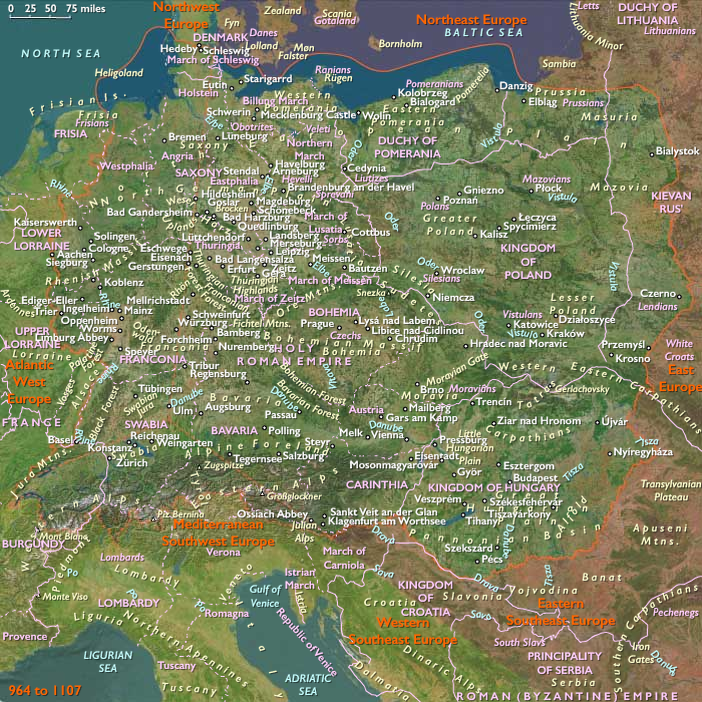
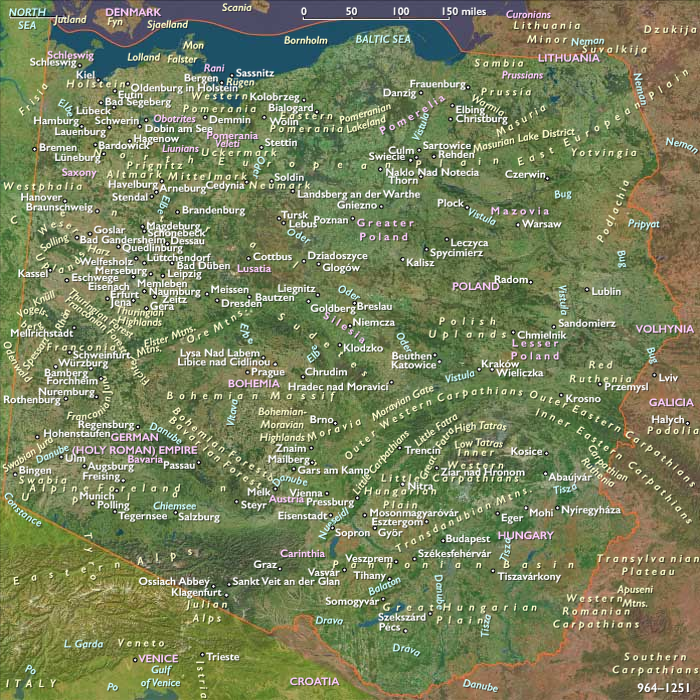
Andrew, determined thereafter to secure the throne for his son, had invited Béla to his manor in Tiszavárkony, and there offered his brother a seemingly free choice between a crown and a sword (the symbols of the royal and ducal power, respectively).
However, he had ordered that Béla be murdered if he chose the crown.
Having been informed of his brother's secret plan by one of his own partisans in the royal court, Béla had opted for the sword, but departed for Poland after the meeting.
He returns to Hungary, in the autumn of 1060, with Polish troops that Duke Boleslaus the Bold of Poland has provided.
Around the same time, German reinforcements arrive in Hungary to assist King Andrew against Béla.
The ensuing civil war ends with the victory of Béla, who defeats his brother in two successive battles fought at the river Tisza and at Moson.
The king is seriously injured and dies soon afterward.
His partisans take his son, the child Solomon, to Germany.
Béla is crowned king in Székesfehérvár on December 6, 1060.
He orders that "the wives and sons and all the property of all those who had followed" his nephew to Germany "should be protected and kept safe and sound", which induces many of Solomon's partisans to reconcile themselves to Béla's rule and return to Hungary.
He reforms the coinage and introduces "large coins of purest silver" into circulation.
In order to stabilize the new currency, Béla maximizes the prices and eliminates the black market.
He also orders that weekly markets should be held on Saturdays, instead of Sundays, in the kingdom.
The historian Nora Berend says that the latter measure "may have adversely affected Jewish activities", because Jews, who observed the Sabbath, could not work on Saturdays.
Locations
People
- Andrew I of Hungary
- Boleslaw II the Generous
- Béla I of Hungary
- Henry IV, Holy Roman Emperor
- Judith of Swabia
- Solomon
Groups
- Jews
- Germans
- Hungarian people
- German, or Ottonian (Roman) Empire
- Poles (West Slavs)
- Hungary, Kingdom of
- Poland of the first Piasts, Kingdom of
Commodoties
Subjects
Regions
Subregions
Years: 1060 - 1060
Locations
People
- Andrew I of Hungary
- Boleslaw II the Generous
- Béla I of Hungary
- Henry IV, Holy Roman Emperor
- Judith of Swabia
- Solomon
Groups
- Jews
- Germans
- Hungarian people
- German, or Ottonian (Roman) Empire
- Poles (West Slavs)
- Hungary, Kingdom of
- Poland of the first Piasts, Kingdom of
Commodoties
Subjects
Regions
Subregions