
King Albert I of Germany had finally …
Years: 1303 - 1303
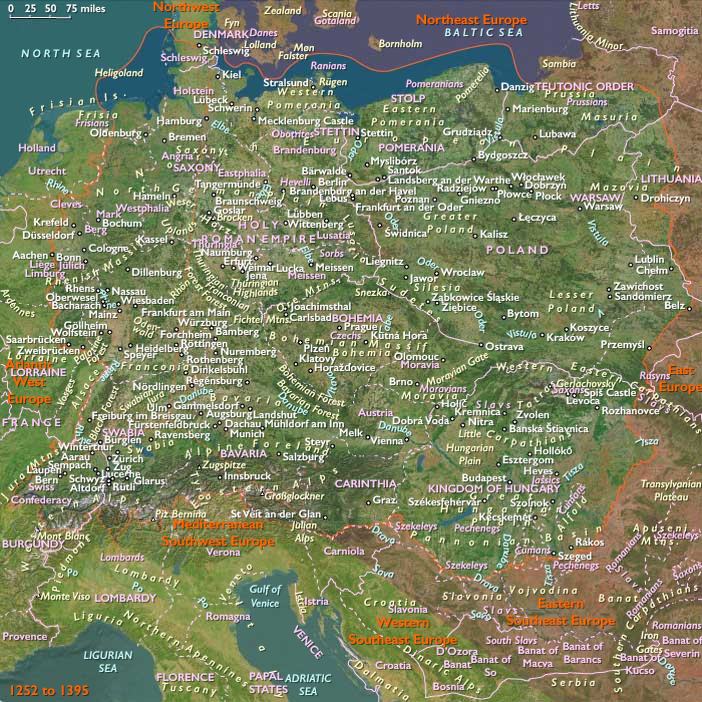
King Albert I of Germany had finally crushed the Boniface-backed revolt in the Rhineland in 1302.
Although a hard, stern man, Albert has a keen sense of justice when his own interests are not involved, and few of the German kings possess so practical an intelligence.
He has encouraged the cities, and not content with issuing proclamations against private war, has formed alliances with the princes in order to enforce his decrees.
The serfs, whose wrongs seldom attract notice in an age indifferent to the claims of common humanity, find a friend in this severe monarch, and he protects even the despised and persecuted Jews.
Seeking to play an important part in European affairs, Albert had seemed at first inclined to press a quarrel with France over the Burgundian frontier, but the refusal of Pope Boniface to recognize his election had led him to change his policy.
After failing in his attempt to seize Holland and Zeeland, as vacant fiefs of the Empire, on the death of Count John I in 1299, he had made a treaty with Philip IV of France, by which his son Rudolph was to marry Blanche, a daughter of the French king.
He had afterwards become estranged from Philip, but in 1303, Boniface recognizes him as German king and future emperor; in return, Albert recognizes the authority of the pope alone to bestow the imperial crown, and promises that none of his sons should be elected German king without papal consent.
Locations
People
Groups
Commodoties
Subjects
Regions
Subregions
Related Events
Showing 10 events out of 45031 total
Years: 1303 - 1303
Locations
People
Groups
Commodoties
Subjects
Regions
Subregions