
The Tragic Love Affair of Peter I …
Years: 1357 - 1357
The Tragic Love Affair of Peter I and Inês de Castro (1339–1355)
The passionate and politically fraught love affair between Prince Peter (Pedro I) of Portugal and Inês de Castro—a noblewoman of Galician descent—became one of the most enduring and tragic romances in Iberian history.
Maria of Portugal and the Castilian Royal Scandal (1328–1335)
- King Afonso IV of Portugal had arranged for his eldest daughter, Maria, to marry Alfonso XI of Castile in 1328.
- The marriage produced a son in 1334, who would later become Peter of Castile.
- However, Alfonso XI soon abandoned Maria for the widowed Leonor de Guzmán, refusing to end the affair.
- Maria, humiliated and neglected, fled back to Portugal in 1335, sparking outrage in her father, Afonso IV.
Political Alliances: The Marriage of Peter and Constanza (1339)
- Seeking revenge on Castile, Afonso IV allied with Juan Manuel, Prince of Villena, a powerful Castilian noble who had been humiliated by Alfonso XI when his daughter's child marriage to the king was annulled in 1327.
- In a new alliance, Afonso IV arranged for his son, Peter, to marry Constanza Manuel, the daughter of Juan Manuel, in 1339.
- When Constanza arrived in Portugal, she was accompanied by her lady-in-waiting, Inês de Castro, a beautiful aristocrat of Galician origin, whose family had illegitimate links to both the Portuguese and Castilian royal families.
Peter and Inês: A Love That Defied the Throne
- Peter soon fell in love with Inês, and they conducted a secret affair that continued for years.
- Constanza died in 1345, shortly after giving birth to Fernando, who would later become King Fernando I of Portugal.
- After Constanza's death, Peter refused to marry anyone else and insisted on marrying Inês, but his father, Afonso IV, forbade it.
- Afonso IV banished Inês from court, but Peter and Inês continued their relationship in secret, living together.
Afonso IV’s Growing Fear and Inês’s Murder (1355)
- Inês’s brothers, exiled from Castile, had gained influence at Peter’s court, and Peter appointed them to key positions.
- This alarmed Afonso IV, who feared:
- That Portugal would be drawn into a civil war after his death.
- That the Portuguese throne would fall under Castilian control through Inês’s family ties.
- In 1355, Afonso IV made the fateful decision to eliminate Inês.
- He sent three men to the Monastery of Santa Clara-a-Velha in Coimbra, where she was detained, and they executed her by decapitation in front of one of her young children.
Peter’s Revenge and Coronation (1355–1357)
- Enraged by Inês’s murder, Peter revolted against his father, leading to a brief civil war.
- Afonso IV defeated his son, but died soon after in 1357.
- Peter succeeded to the throne as Peter I of Portugal, immediately seeking vengeance for Inês.
- According to legend, Peter later exhumed Inês’s body, crowned her posthumously as queen, and forced the court to kiss her decayed hand as a symbol of respect.
A Love Story Immortalized in Literature and Opera
The tragic romance of Peter and Inês has inspired over 20 operas and countless literary works, including:
- Portugal's national epic, Os Lusíadas (1572) by Luís de Camões.
- Spanish plays, including Nise Lastimosa and Nise Laureada (1577) by Jerónimo Bermúdez and Reinar Después de Morir by Luis Vélez de Guevara.
- French drama La Reine Morte by Henry de Montherlant.
- English tragedy Inez de Castro by Mary Russell Mitford.
Legacy of Peter and Inês
- Their ill-fated romance became one of the most famous love stories in Portuguese history, often compared to Romeo and Juliet.
- Inês’s tomb in Alcobaça Monastery, alongside Peter’s, remains a symbol of eternal love and loss.
- The legend of Inês de Castro continues to be retold and reinterpreted, keeping alive one of the most tragic royal love stories in medieval Europe.
Locations
People
Groups
Commodoties
Subjects
Regions
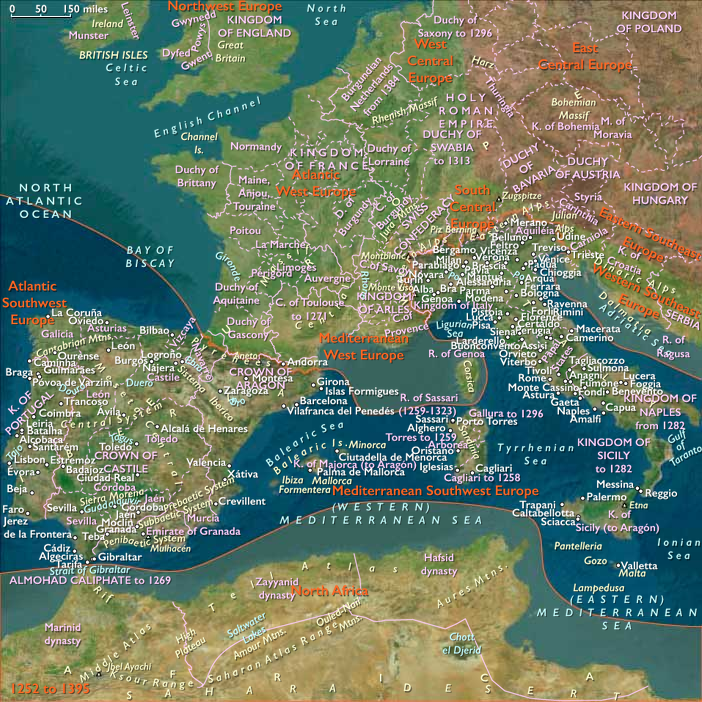
Subregions
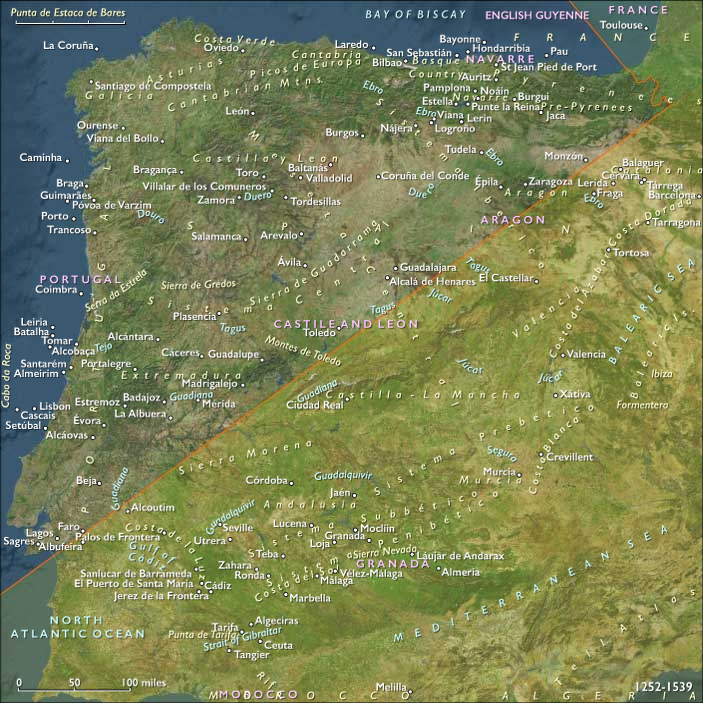
Related Events
Showing 10 events out of 44085 total
Years: 1357 - 1357
Locations
People
Groups
Commodoties
Subjects
Regions
Subregions