
Kimmei, the twenty-ninth emperor of Japan according …
Years: 572 - 572
Kimmei, the twenty-ninth emperor of Japan according to the traditional order of succession, and the first to whom contemporary historiography assigns clear dates, was the son of Emperor Keitai and Princess Tashiraka, Emperor Ninken's daughter.
Known during his lifetime by the name Amehara Oshiharaki Hironiwa or Amekuni Oshiharaki Hironiwa, he has established or moved his court to Shikishima no Kanazashi Palace in Yamato.
Mononobe no Okoshi and Nakatomi no Kanamura are both appointed Ōmuraji, and Soga no Iname is appointed Ōomi.
Although the imperial court will not move to the Asuka region of Japan until 592, Emperor Kimmei's rule is considered by some to be the beginning of the Asuka period of Yamato Japan, particularly those who associate the Asuka period primarily with the introduction of Buddhism to Japan from Korea.
With the introduction of a new religion to the court, a deep rift has developed between the Mononobe clan, who supported the worship of Japan's traditional deities, and the Soga clan, who supported the adoption of Buddhism.
Because of several temporal discrepancies in the account of Emperor Kimmei in the Nihon Shoki (sometimes translated as The Chronicles of Japan, an early eighth-century work written in classical Chinese, as is common for official documents at this time), some believe that his is actually a rival court to that of successive Emperors Ankan and Senka.
Bidatsu, the second son of Emperor Kimmei by his consort Iwahime, a daughter of Emperor Senka, had been appointed crown prince by his father; after Kimmei dies in 572, Bidatsu ascends to the throne within a few days.
Locations
People
Groups
Topics
Subjects
Regions
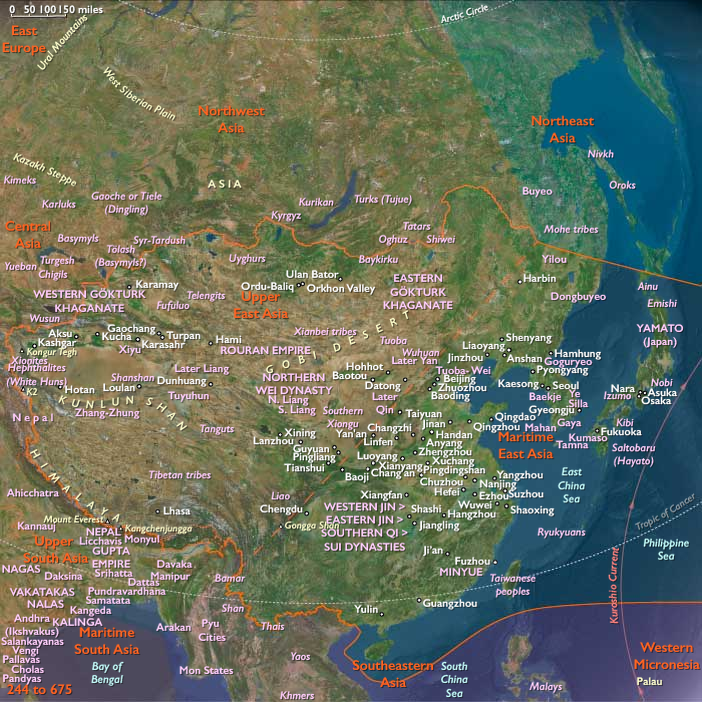
Subregions
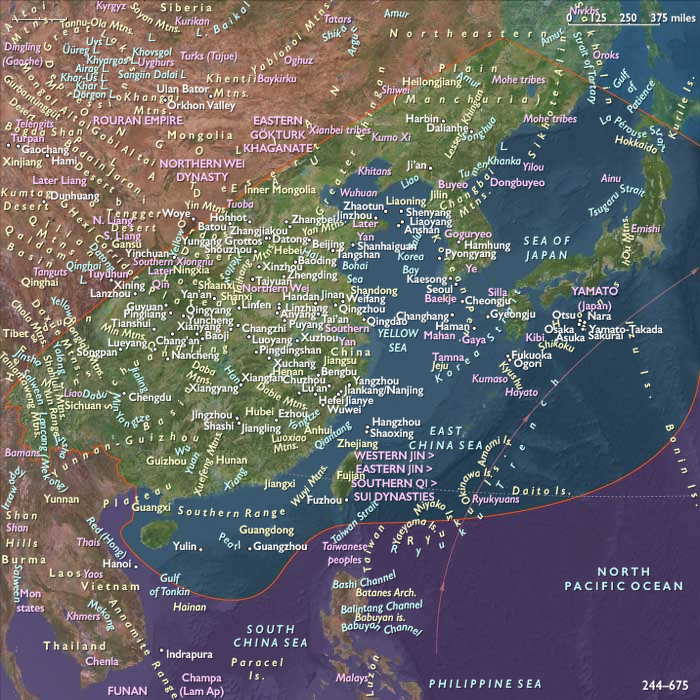
Related Events
Showing 10 events out of 57436 total
Years: 572 - 572
Locations
People
Groups
Topics
Subjects
Regions
Subregions