
Kepler's primary obligation as imperial mathematician is …
Years: 1602 - 1602
Kepler's primary obligation as imperial mathematician is to provide astrological advice to the emperor: though Kepler takes a dim view of the attempts of contemporary astrologers to precisely predict the future or divine specific events, he has been casting detailed horoscopes for friends, family and patrons since his time as a student in Tübingen.
In addition to horoscopes for allies and foreign leaders, the emperor will seek Kepler's advice in times of political trouble (though Kepler's recommendations are based more on common sense than the stars).
Rudolph is actively interested in the work of many of his court scholars (including numerous alchemists) and keeps up with Kepler's work in physical astronomy as well.
Officially, the only acceptable religious doctrines in Prague are Catholic and Utraquist, but Kepler's position in the imperial court allows him to practice his Lutheran faith unhindered.
The emperor nominally provide an ample income for his family, but the difficulties of the overextended imperial treasury mean that actually getting hold of enough money to meet financial obligations is a continual struggle.
Partly because of financial troubles, his life at home with Barbara is unpleasant, marred with bickering and bouts of sickness.
Court life, however, brings Kepler into contact with other prominent scholars (Johannes Matthäus Wackher von Wackhenfels, Jost Bürgi, David Fabricius, Martin Bachazek, and Johannes Brengger, among others) and astronomical work proceeds rapidly.
Locations
People
Groups
Topics
- Protestant Reformation
- Counter-Reformation (also Catholic Reformation or Catholic Revival)
- Scientific Revolution
Subjects
Regions
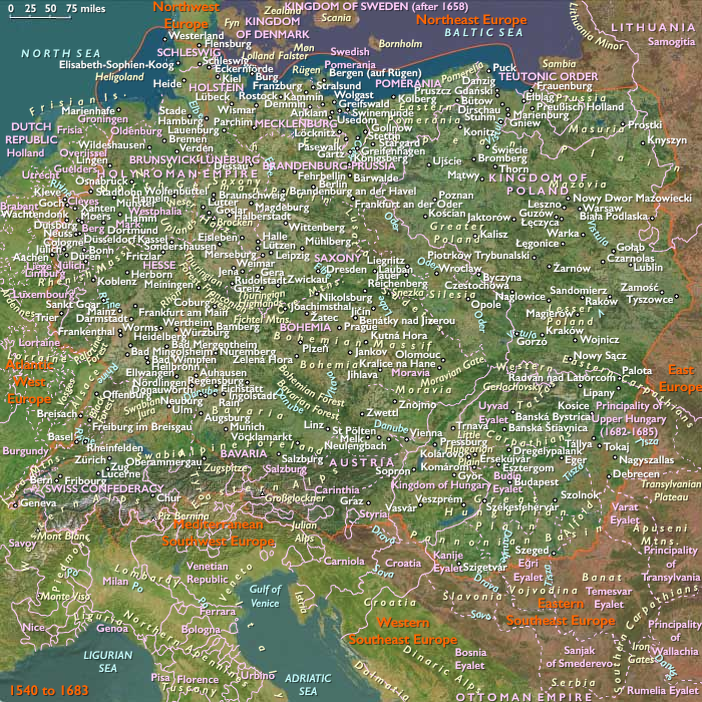
Subregions

Related Events
Showing 10 events out of 33859 total
Years: 1602 - 1602
Locations
People
Groups
Topics
- Protestant Reformation
- Counter-Reformation (also Catholic Reformation or Catholic Revival)
- Scientific Revolution
Subjects
Regions
Subregions