
Kansas, erroneously described in 1806 by the …
Years: 1854 - 1854
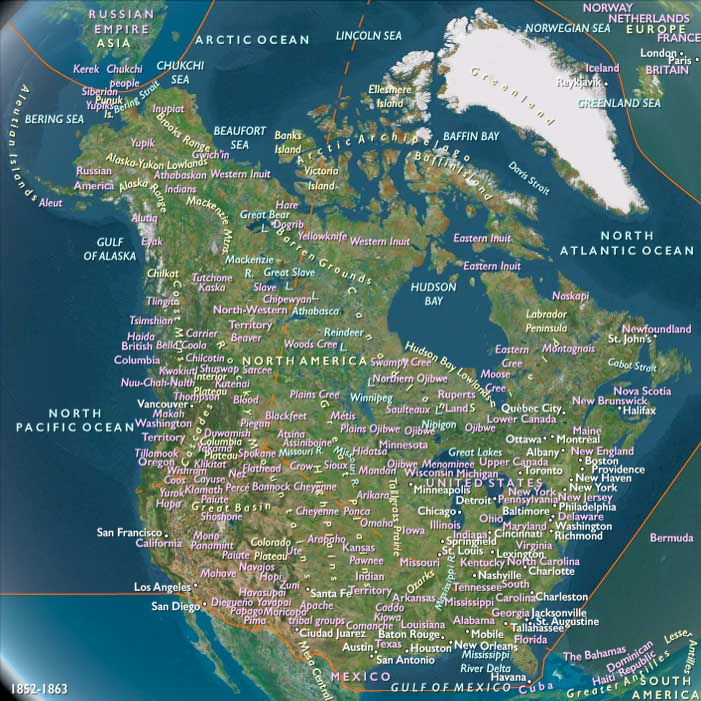
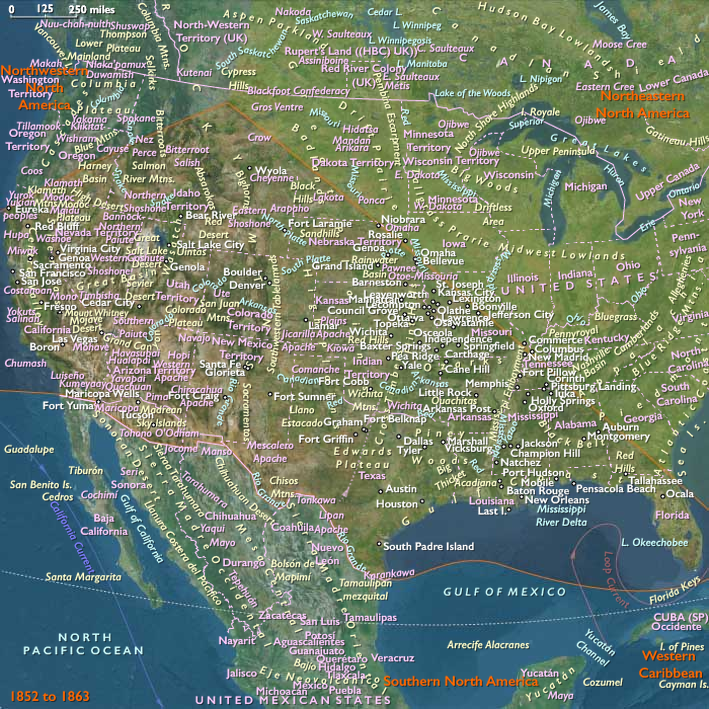
Kansas, erroneously described in 1806 by the explorer Zebulon M. Pike as the “great American Desert”, had been thoroughly explored during the first half of the 19th century, but westward-bound settlers and miners had passed through it without staying.
Sparsely settled by Euramericans, principally antislavery New Englanders of Anglo-Saxon stock, the region is home to five Amerindian nations as well as twenty tribes that the U.S. government has relocated to the territory.
With the passage of the Kansas-Nebraska Act of 1854, Leavenworth, first settled in 1827 by Colonel Henry H. Leavenworth to protect travelers on the Santa Fe Trail, becomes the territorial capital of Kansas; Andrew Reeder is the first territorial governor.
The rush to populate the new territory begins, and Kansas becomes a major breeding ground for the sectional conflict as North and South each attempt to send the most settlers into the new territory.
The Kansas-Nebraska Act of 1854 creates two territorial governments designed to ease the construction of the Central Pacific Railroad, itself a compromise between the anti-slavery forces who favor a Northern Pacific Line and the South’s insistence on a Southern Pacific route (which results in the Gadsden Purchase).
To gain the necessary support, the Kansas-Nebraska legislation means allowing slavery into both territories.
Anti-slavery northerners pour in to settle Kansas, but pro-slavery thugs from Missouri take over the polls, enabling the passage of a state constitution allowing slavery.
Terrorist activities escalate on both sides as the constitution awaits ratification.
President James Buchanan, in an attempt to maintain the Union, approves the constitution, as does the Senate, but the House links its approval to a favorable referendum.
Locations
People
Groups
- United States of America (US, USA) (Washington DC)
- Indian Territory
- Nebraska, Territory of (U.S.A.)
- Kansas, Territory of (U.S.A.)
Topics
Commodoties
Subjects
- Origins
- Commerce
- Engineering
- Labor and Service
- Conflict
- Faith
- Government
- Custom and Law
- Technology
- Movements
Regions
Subregions
Years: 1854 - 1854
Locations
People
Groups
- United States of America (US, USA) (Washington DC)
- Indian Territory
- Nebraska, Territory of (U.S.A.)
- Kansas, Territory of (U.S.A.)
Topics
Commodoties
Subjects
- Origins
- Commerce
- Engineering
- Labor and Service
- Conflict
- Faith
- Government
- Custom and Law
- Technology
- Movements
Regions
Subregions