
Justin's forces had invaded Persia in the …
Years: 573 - 573
Justin's forces had invaded Persia in the late summer of 572.
The Persians, however, have not only repulsed the Romans but themselves invaded Roman territory, capturing a number of important cities, including …
Locations
People
Groups
- Persian people
- Mesopotamia (Roman province)
- Persian Empire, Sassanid, or Sasanid
- East, Diocese of the
- East, or Oriens, Praetorian prefecture of
- Roman Empire, Eastern: Justinian dynasty
- Greeks, Medieval (Byzantines)
- Armenia, (Roman vassal) Principality of
Topics
Commodoties
Subjects
Regions
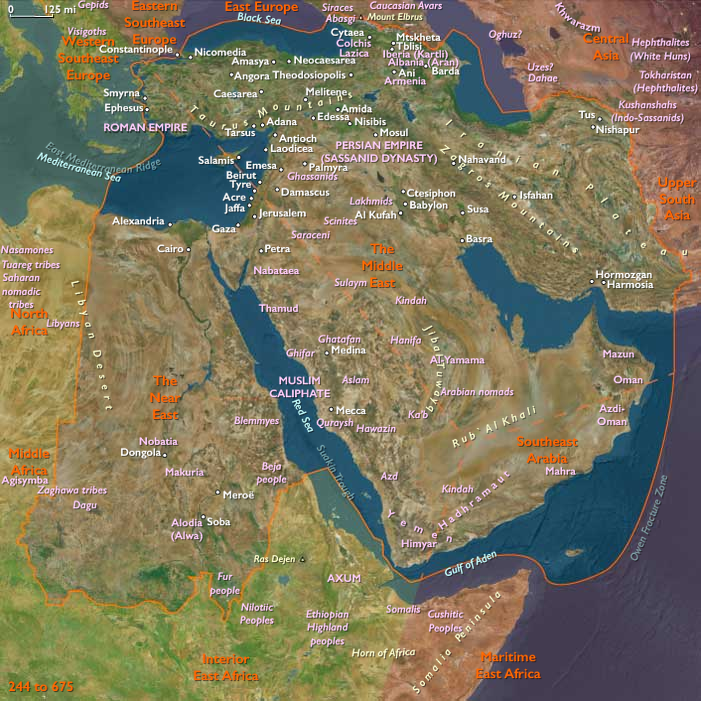
Subregions
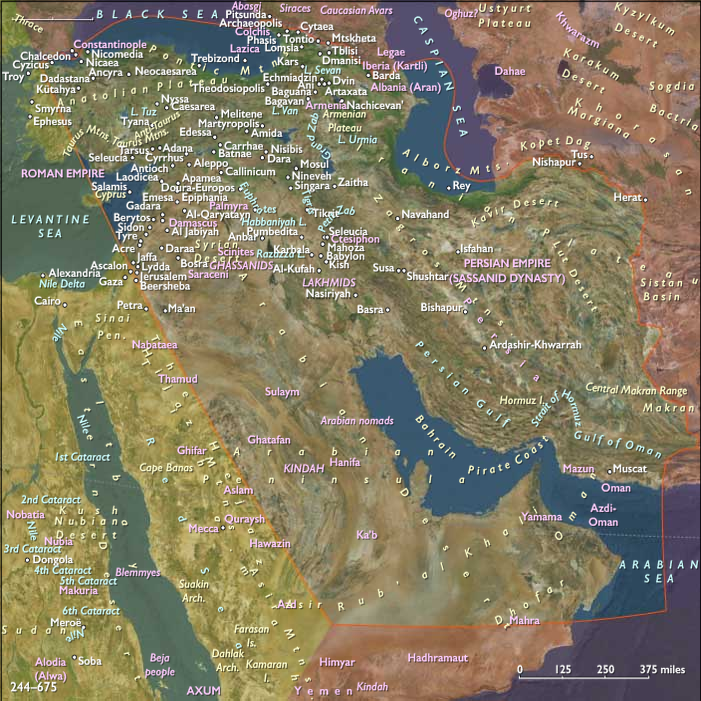
Related Events
Showing 10 events out of 57427 total
Years: 573 - 573
Locations
People
Groups
- Persian people
- Mesopotamia (Roman province)
- Persian Empire, Sassanid, or Sasanid
- East, Diocese of the
- East, or Oriens, Praetorian prefecture of
- Roman Empire, Eastern: Justinian dynasty
- Greeks, Medieval (Byzantines)
- Armenia, (Roman vassal) Principality of
Topics
Commodoties
Subjects
Regions
Subregions