
Justinian had offered to make peace with …
Years: 540 - 540
May
Justinian had offered to make peace with Vitiges, but Belisarius had refused to transmit the message.
The Ostrogoths now offer to support Belisarius as emperor of the West.
In May, Belisarius conquers Mediolanum and …
Locations
People
Groups
- Goths (East Germanic tribe)
- Christianity, Arian
- East, or Oriens, Praetorian prefecture of
- Christianity, Chalcedonian
- Italy, Praetorian prefecture of
- Ostrogoths, Italian Kingdom of the
- Roman Empire, Eastern: Justinian dynasty
Topics
Commodoties
Subjects
- Commerce
- Environment
- Labor and Service
- Conflict
- Mayhem
- Faith
- Government
- Technology
- Movements
- Theology
- Christology
Regions
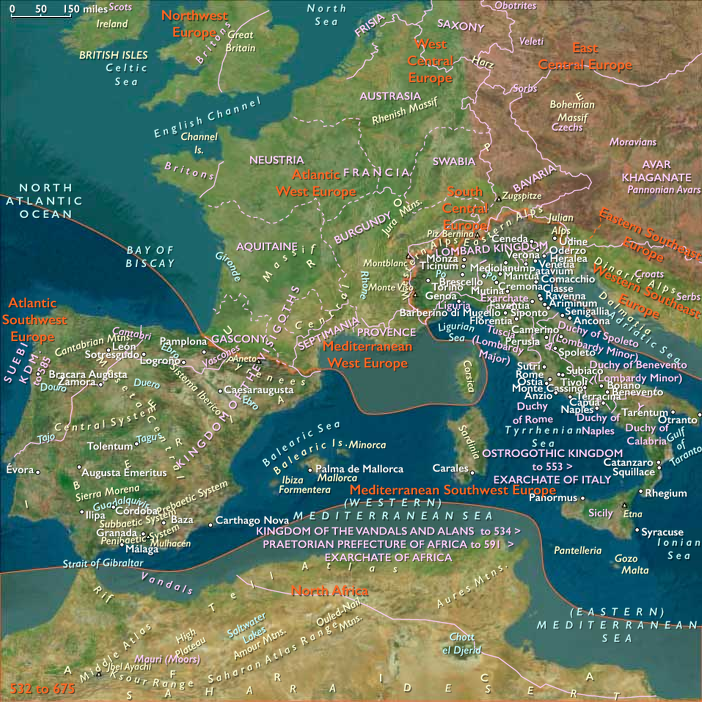
Subregions
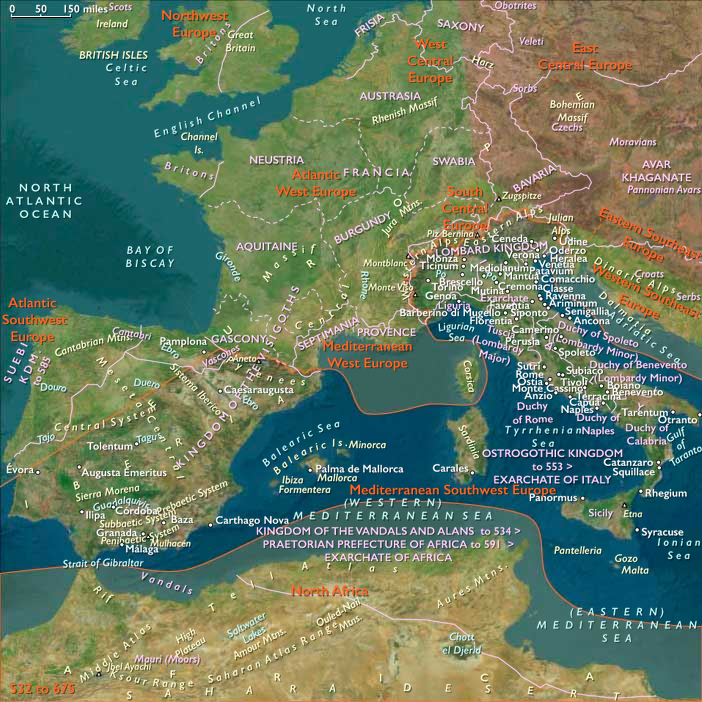
Related Events
Showing 10 events out of 57751 total
Years: 540 - 540
May
Locations
People
Groups
- Goths (East Germanic tribe)
- Christianity, Arian
- East, or Oriens, Praetorian prefecture of
- Christianity, Chalcedonian
- Italy, Praetorian prefecture of
- Ostrogoths, Italian Kingdom of the
- Roman Empire, Eastern: Justinian dynasty
Topics
Commodoties
Subjects
- Commerce
- Environment
- Labor and Service
- Conflict
- Mayhem
- Faith
- Government
- Technology
- Movements
- Theology
- Christology
Regions
Subregions