
Filters:
British army officer John Forbes, promoted to …
Years: 1758 - 1758
August
British army officer John Forbes, promoted to brigadier general in In December 1757, has been assigned to command an expedition to capture Fort Duquesne, which guards the vital forks of the Ohio River.
General Edward Braddock had tried and failed to capture the fort in 1755, with disastrous consequences for both the British army and Braddock himself, who was mortally wounded in a bloody engagement nine miles short of the objective.
Forbes begins his campaign in the summer of 1758.
His plan is to complete slow and methodical march to Fort Duquesne, taking great pains to secure his lines of supply and communication with a string of forts along a newly constructed road from the Pennsylvania frontier.
Rather than move on Fort Duquesne via Braddock’s road, which begins in western Maryland, Forbes begins his march in eastern Pennsylvania.
This decision leads to major political infighting among the Pennsylvanians and Virginians in his expedition, as both colonies claim the Ohio River country.
Forbes is able to quell the dissent by agreeing to improve Braddock's original road, but travel the route through Pennsylvania, which is longer but requires fewer river crossings.
This also gives the tactical advantage of forcing the French to divide their assets and defend both approaches.
With just under seven thousand regular and provincial troops, Forbes begins his push from his main stores in Carlisle, Pennsylvania into the trackless wilderness of western Pennsylvania.
Born on his family's Pittencrieff Estate in Dunfermline, Fife, Scotland in 1707, the son of an army officer, Forbes had decided in his second year as a medical student to become a soldier and was accepted and commissioned as a lieutenant in the Scots Greys in 1735.
He saw action in the War of the Austrian Succession and in the Jacobite rising of 1745, serving under the Duke of Cumberland as acting quartermaster-general.
Promoted to a Lieutenant-colonelcy in the Scots Greys in 1750 and in 1757 made Colonel of the 17th Regiment of Foot, he had been sent to the fighting in the New World at the outbreak of the war with France.
His first action in North America had come in 1757 when he was dispatched to reinforce an attack on the French fortress of Louisburg.
General Edward Braddock had tried and failed to capture the fort in 1755, with disastrous consequences for both the British army and Braddock himself, who was mortally wounded in a bloody engagement nine miles short of the objective.
Forbes begins his campaign in the summer of 1758.
His plan is to complete slow and methodical march to Fort Duquesne, taking great pains to secure his lines of supply and communication with a string of forts along a newly constructed road from the Pennsylvania frontier.
Rather than move on Fort Duquesne via Braddock’s road, which begins in western Maryland, Forbes begins his march in eastern Pennsylvania.
This decision leads to major political infighting among the Pennsylvanians and Virginians in his expedition, as both colonies claim the Ohio River country.
Forbes is able to quell the dissent by agreeing to improve Braddock's original road, but travel the route through Pennsylvania, which is longer but requires fewer river crossings.
This also gives the tactical advantage of forcing the French to divide their assets and defend both approaches.
With just under seven thousand regular and provincial troops, Forbes begins his push from his main stores in Carlisle, Pennsylvania into the trackless wilderness of western Pennsylvania.
Born on his family's Pittencrieff Estate in Dunfermline, Fife, Scotland in 1707, the son of an army officer, Forbes had decided in his second year as a medical student to become a soldier and was accepted and commissioned as a lieutenant in the Scots Greys in 1735.
He saw action in the War of the Austrian Succession and in the Jacobite rising of 1745, serving under the Duke of Cumberland as acting quartermaster-general.
Promoted to a Lieutenant-colonelcy in the Scots Greys in 1750 and in 1757 made Colonel of the 17th Regiment of Foot, he had been sent to the fighting in the New World at the outbreak of the war with France.
His first action in North America had come in 1757 when he was dispatched to reinforce an attack on the French fortress of Louisburg.
Locations
People
Groups
- Lenape or Lenni-Lenape (later named Delaware Indians by Europeans)
- New France (French Colony)
- Shawnees, or Shawanos (Amerind tribe)
- France, (Bourbon) Kingdom of
- Ohio Country
- Delaware Bay, Lower Counties on the (English Colony)
- Pennsylvania, Province of (English Colony)
- Maryland, Province of (English Colony)
- Virginia (English Crown Colony)
- Britain, Kingdom of Great
- North Carolina, Province of (British Colony)
- Mingo (Seneca-Cayuga Tribe of Oklahoma)
Topics
Subjects
Regions
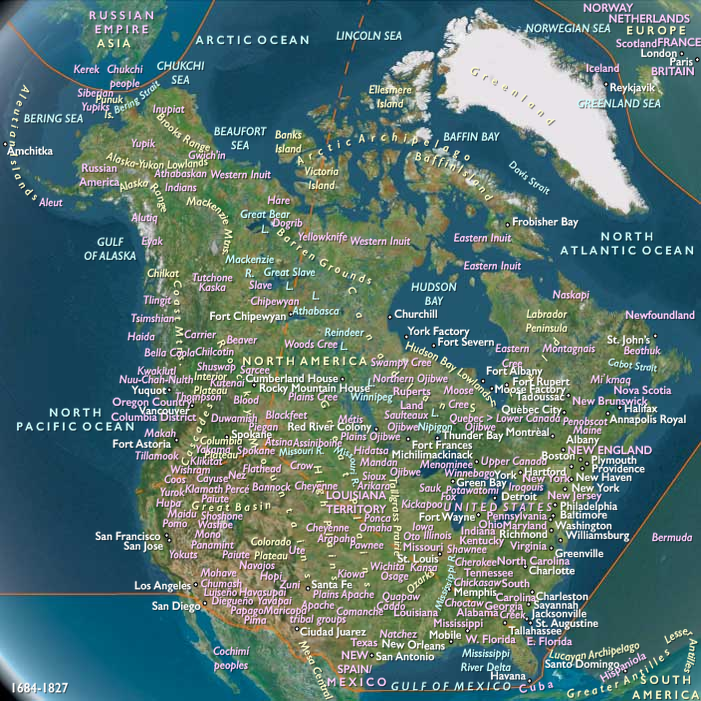
Subregions
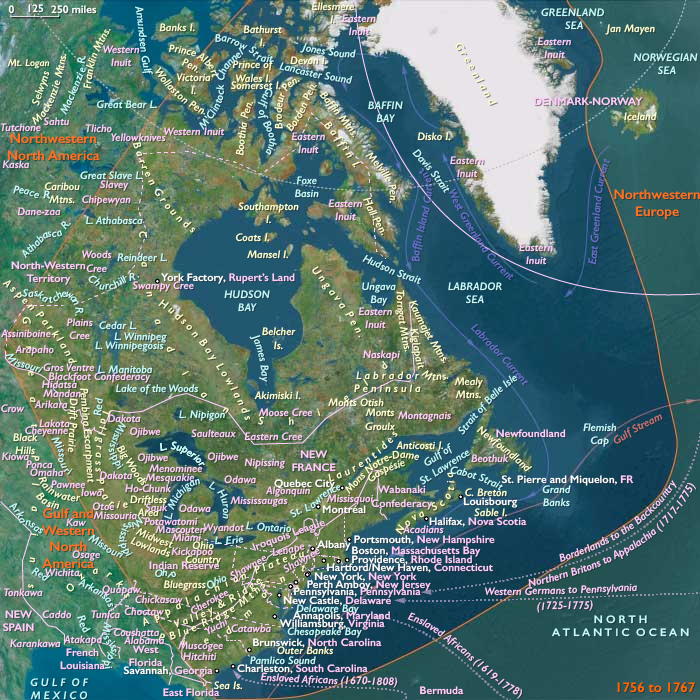
Years: 1758 - 1758
August
Locations
People
Groups
- Lenape or Lenni-Lenape (later named Delaware Indians by Europeans)
- New France (French Colony)
- Shawnees, or Shawanos (Amerind tribe)
- France, (Bourbon) Kingdom of
- Ohio Country
- Delaware Bay, Lower Counties on the (English Colony)
- Pennsylvania, Province of (English Colony)
- Maryland, Province of (English Colony)
- Virginia (English Crown Colony)
- Britain, Kingdom of Great
- North Carolina, Province of (British Colony)
- Mingo (Seneca-Cayuga Tribe of Oklahoma)
Topics
Subjects
Regions
Subregions