
Julius Caesar, having in 58 BCE initiated …
Years: 57BCE - 57BCE
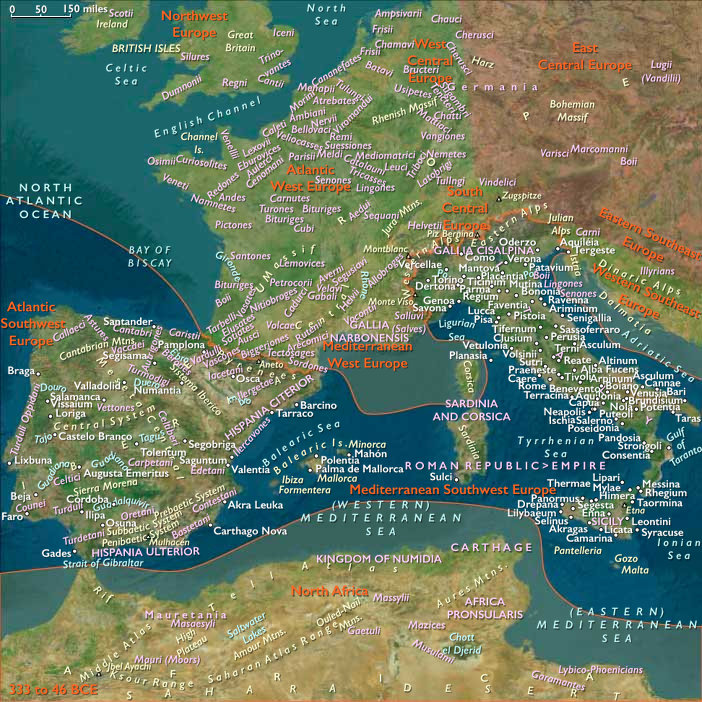
Julius Caesar, having in 58 BCE initiated the conquest of Gaul, has been equally busy in preserving and improving his position at home, using part of his growing wealth from Gallic loot to hire political agents in Rome.
Marcus Linius Crassus, soon slighted by Caesar and Pompey, becomes the odd man out in the Triumvirate.
Pompey, meanwhile, has become jealous over Caesar's success in Gaul.
Clodius Pulcher, an innovative urban politician who as Tribune in 58 had passed many reforms, had soon overplayed his hand at Rome.
When Clodius turns on Pompey, Pompey defends himself by supporting Cicero's recall from exile after the intervention of recently elected tribune Titus Annius Milo.Clodius, casting cast the single vote against the decree, resorts to force to prevent the passing of the decree.
His effort is foiled by Milo, who leads an armed gang sufficiently strong to hold him in check.
Cicero returns to Italy on August 5, 57 BCE, landing at Brundisium, where he is greeted by a cheering crowd, and, to his delight, his beloved daughter Tullia.
Clodius subsequently attacks the workmen who are rebuilding Cicero's house at public cost, assaults Cicero himself in the street, and sets fire to the house of Cicero's younger brother Q. Tullius Cicero.
Cicero, once back in Rome, steps back into his role as Pompey's defender and Clodius' antagonist, but Pompey himself retreats to his lovely young wife and his theater plans; such behavior is not expected of the once dazzling young general.
Pompey might equally have been obsessed, exhausted and frustrated.
His own party has not forgiven him for allowing Cicero's expulsion.
Some try to persuade him that Crassus is plotting his assassination.
Caesar meanwhile seems set on outstripping both his colleagues in generalship and popularity.
Ptolemy XII Auletes, the recently deposed Macedonian ruler of Hellenistic Egypt, continues to reside at Pompey's villa at Rome and to dispense bribes to senators with the aim of securing military aid from the Senate.
He falls deeper into debt to Roman moneylenders.
The Senate late in 57 passes a resolution to support Ptolemy, but when a prophecy forbids the granting of active aid, the king departs for Ephesus in Asia Minor.
Locations
People
- Berenice IV of Egypt
- Cleopatra VII
- Julius Caesar
- Marcus Licinius Crassus
- Pompey
- Ptolemy XII Auletes
- Publius Clodius Pulcher
Groups
Topics
Commodoties
Subjects
Regions
Subregions
Years: 57BCE - 57BCE
Locations
People
- Berenice IV of Egypt
- Cleopatra VII
- Julius Caesar
- Marcus Licinius Crassus
- Pompey
- Ptolemy XII Auletes
- Publius Clodius Pulcher
Groups
Topics
Commodoties
Subjects
Regions
Subregions